












Ground broken on Phnom Penh-Sihanoukville expressway full of special features

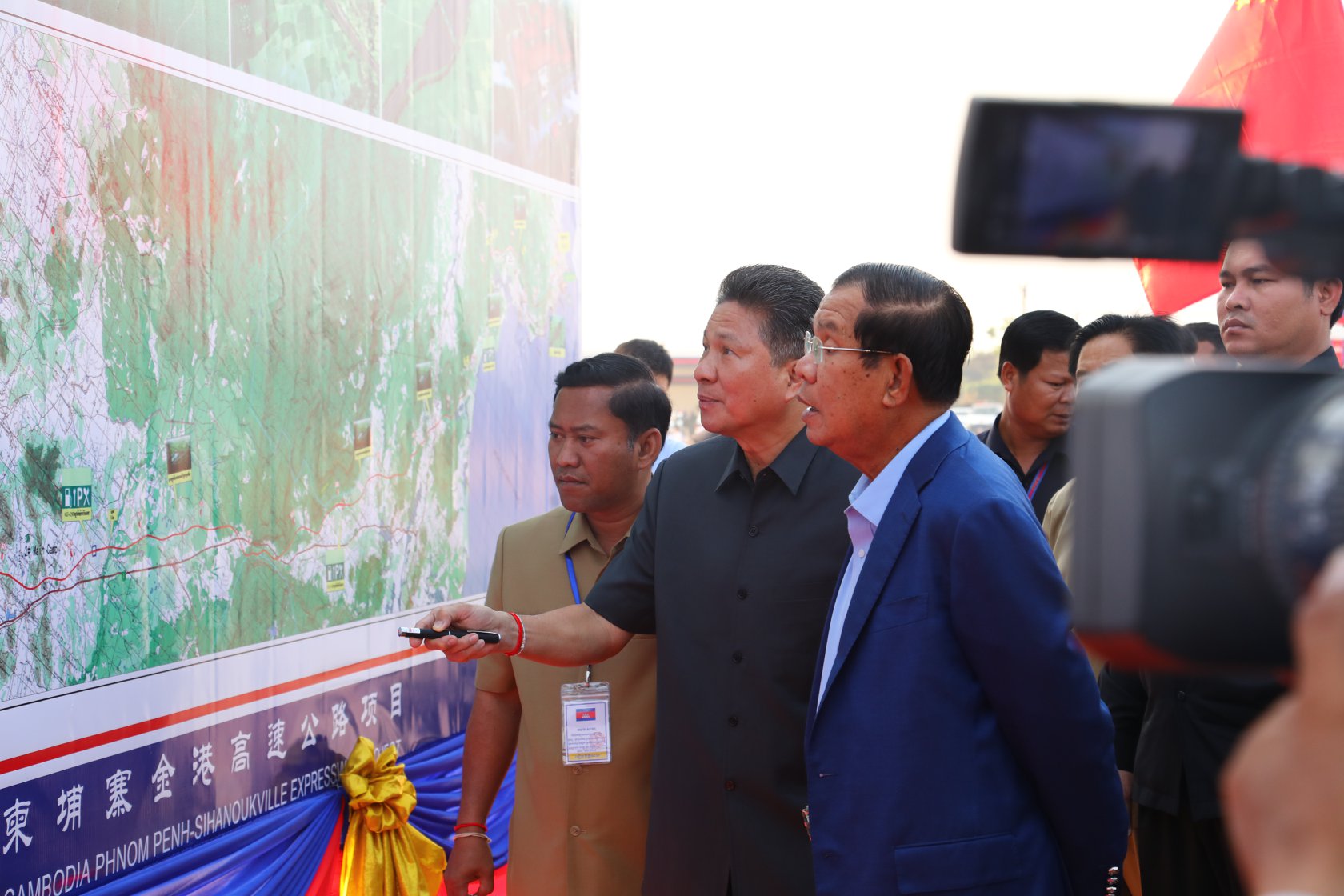
After waiting more than 13 years, the Phnom Penh-Sihanoukville expressway finally saw ground officially broken by Samdech Techo Hun Sen, Prime Minister of Cambodia on 22 March 2019. Since this project represented the largest investment project in recent Cambodian history, it has been welcomed by many who are eager to know more details.

This major infrastructure project is being undertaken thanks to the investment by China Road and Bridge Corporation (CRBC) and is scheduled to finish construction by March 2023.

“The project is one thing we hope that will push our economic poles connecting Phnom Penh and Cambodia’s coast to become a gateway of economic growth, that is what we want it to be,” Samdech Techo Hun Sen said.

What makes this multi-billion-dollar project so important to Cambodia?
  • Investment capital for Phnom Penh – Sihanoukville
This huge project has been studied by CRBC since 2006. By 2018, the company signed an agreement with Cambodia to construct the road with a capital investment of about US$2 billion through a ‘build-operate-transfer’ scheme. The company will use US$600 million of its own funds while the remaining US$1.4 billion will come in the form of loans to CRBC from China Bank. In addition, the project will use US$150 million in grant aid from the People’s Republic of China.
  • Build – Operate – Transfer (BOT) scheme
According to H.E Sun Chanthol, Senior Minister, Minister of the Ministry of Public Works and Transport (MPWT), BOT scheme for this project is different from BOT schemes implemented in other countries around the world.
“Normally, with BOT systems in other countries the state gives land to investors, but in Cambodia, the government has no land, so the company has to give money to the Cambodian government to buy the land, and Cambodia gives the company the right to use it for a certain period of time as stated in the agreement,” he said.
The BOT agreement for this project is set for a 50-year period.
  • Government contribution to the project
According to H.E Sun Chanthol, the Royal Government of Cambodia is contributing to this project through a tax deduction of goods imported into Cambodia for the construction of this road but is not providing any loans or grants.
  • Job creation for citizens
According to Mr Weng Gang, Vice President of CRBC, the project will provide 6,000 direct jobs to local people during the construction period. In addition, the company expects to create about 10,000 jobs after the completion of construction, and when operations begin, the project will create jobs for over 2,000 people annually. The company also plans to train staff at all levels and on all skills within the construction and infrastructure sectors.
  • Location of Phnom Penh-Sihanoukville Expressway project
With a total construction length of about 190 km, the Phnom Penh – Sihanoukville expressway will connect from Village 1, Samrong Krom, Khan Por Sen Chey, Phnom Penh to Village 1, Sangkat 3, Sihanoukville. The route will pass through about 8.3km of Phnom Penh, 9.1km of Kandal province, 80.8km of Kampong Speu province, 1.92km of Koh Kong province, and 89.89km of Sihanoukville.
  • Time and cost of travelling
After completion, people can travel from Phnom Penh to Sihanoukville in 90 minutes. CRBC will allow all kinds of vehicles to drive on this route free of charge for one month when it opens on March 2023. Then, the company will give a 20% discount on all vehicles for up to one year. However, for the full fee for this expressway, H.E Sun Chanthol said that the company has the right to set the price itself, but he believed that prices would be lower than expressways across other ASEAN countries. The region’s general price for expressways is calculated by kilometres on different vehicles ranging from between US$0.10 and US$0.13 per kilometre.
  • Road type
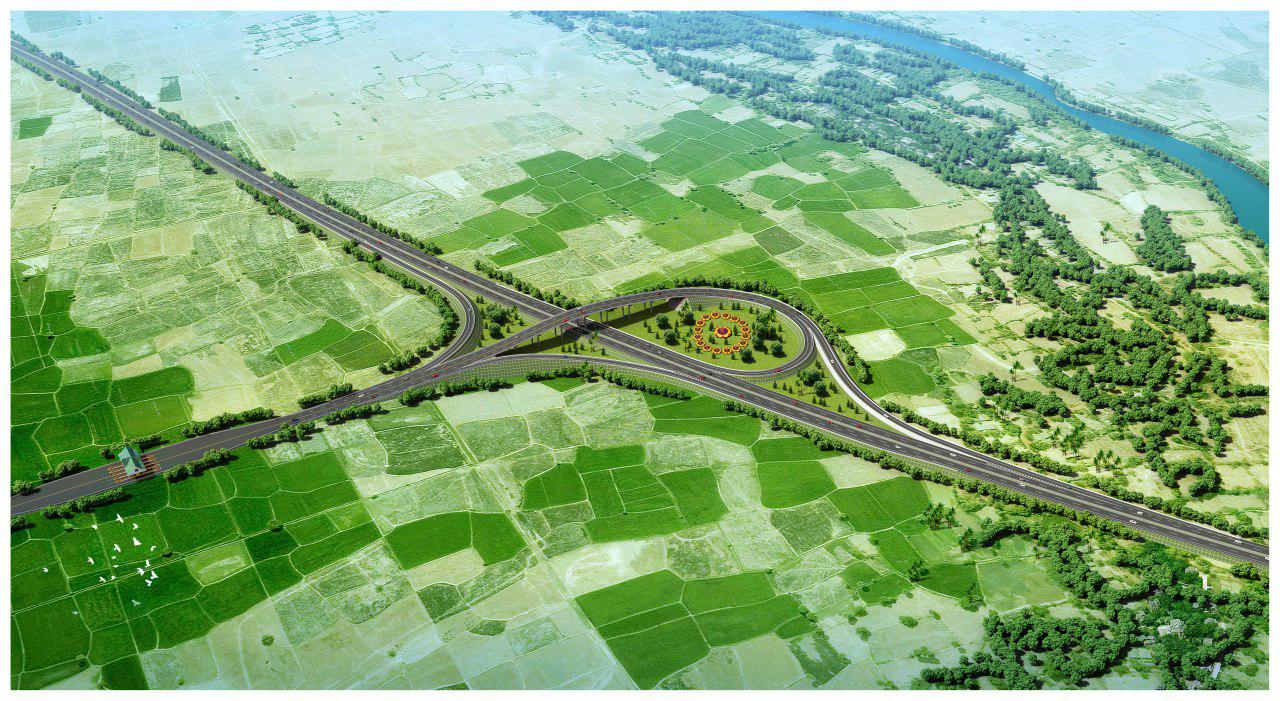
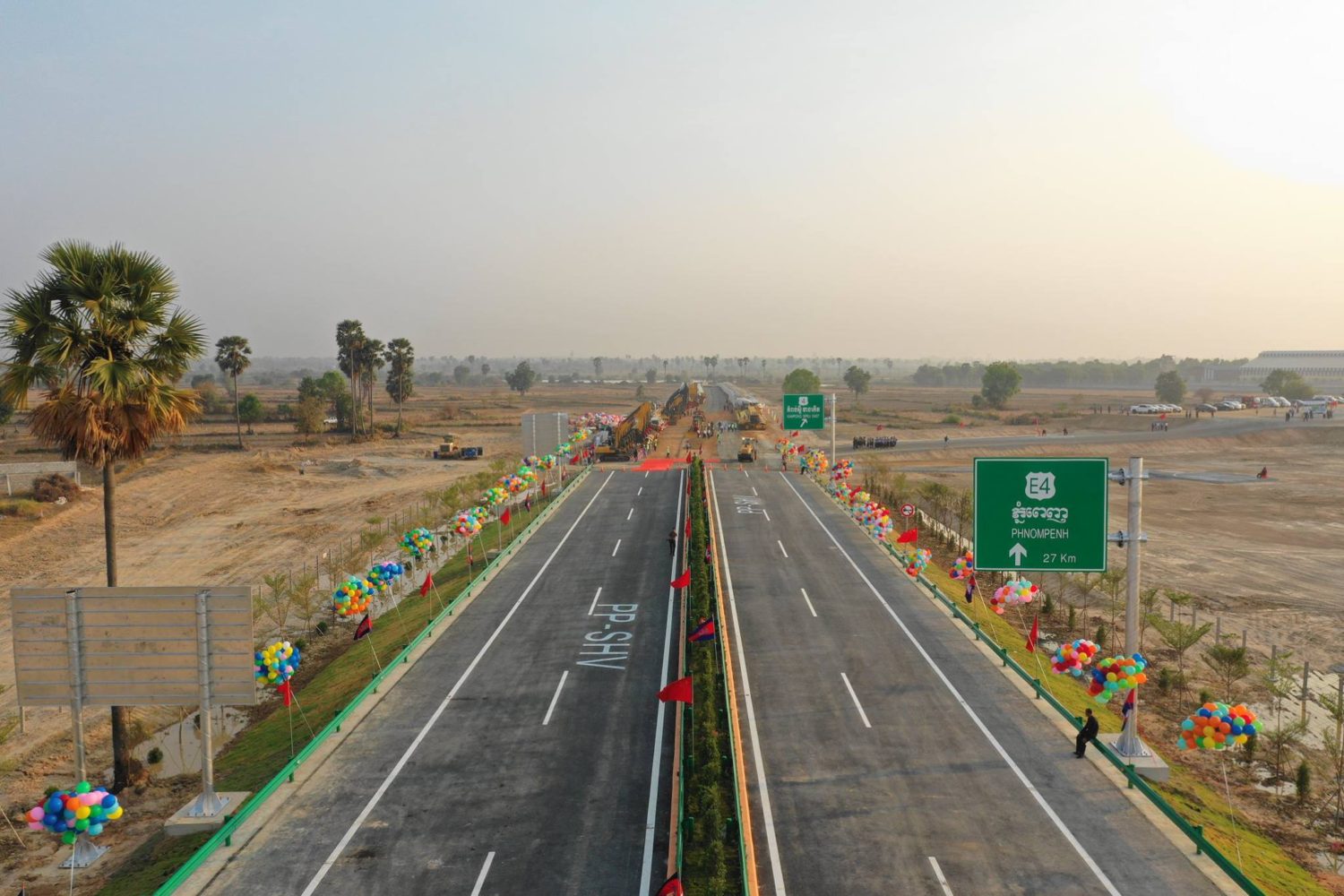
The Phnom Penh – Sihanoukville expressway will be 10cm-thick asphalt concrete road stretching over 4 lanes with each lane is 3.75 metres wide allowing all kinds of vehicles to drive at speeds of between 100km to 120km per hour. Other road facilities include a garden between the directional lanes, 263 pipes, 5 small bridges (total length is 105 metres), 80 large and medium-sized bridges (total length is 6015 metres), 6 traffic intersections (vehicles can cross to National Road No.4), 28 intersections, 237 underground places, and 20 flyovers. It also includes the construction of 3 commercial areas (rest areas), 1 parking lot, 4 road maintenance departments and 8 toll gates and other road equipment like traffic signs, traffic lights, and traffic direction sign.
- Video Advertisement -

Related Post

Cambodia Launches Institute of Automotive Technology and New Energy Industry

In a significant step towards bolstering innovation in the automotive sector, Cambodia officially inaugurated the Institute of Automotive Technology and New Energy Industry, led by HE Hem Vandy, Minister of Industry, Science, Technology, and Innovation. During the launch event, Minister Vandy highlighted that the institute aims to equip individuals with essential skills, foster industrial innovation, […]

Nobel Prize Winner in Physics Plans to Establish Laboratory in Cambodia to Empower Youth

In a groundbreaking announcement, Professor Sir Konstantin (Kostya) S. Novoselov FRS, an esteemed Nobel Prize winner in physics, has unveiled his ambition to set up a state-of-the-art laboratory in Cambodia. This initiative aims to nurture and expand the skills of Cambodian youth in the fields of science and technology. During a pivotal discussion with Samdech […]

Cambodia and China Join Forces to Enhance Vocational Training Standards

In a significant move to elevate vocational training standards, Cambodia and China have announced the joint establishment of a Vocational Development and Skills Enhancement Center. The initiative was formalized through a Memorandum of Understanding (MoU) signed between the Ministry of Labor and Vocational Training of Cambodia and the Education Development Foundation of Anhui Province, China. […]

Cambodia and China Sign Skills Training Pact to Enhance Workforce Readiness

Cambodia and China celebrated a significant milestone in skills development with the signing of a Memorandum of Understanding (MoU) between Zhejiang Construction Technician College (ZCTC) and Cambodia’s Polytechnic Institute of Pursat Province (PIPP) in Zhejiang. This agreement aims to bolster Cambodia’s technical and vocational education and training (TVET) system to meet the demands of emerging […]

Yalong Partners with the Cambodian Ministry of Labor to Enhance Technical Education

In a significant move to elevate technical and vocational education in Cambodia, Yalong Intelligent Equipment Group Co., Ltd has officially signed a memorandum of understanding with the Ministry of Labor and Vocational Training. The agreement aims to foster international learning exchanges and collaborative efforts geared towards improving the quality of training in this vital sector. […]

Toyota to Plan Technical Training Center for the Automotive Industry in Cambodia

In a significant development for Cambodia’s automotive sector, Toyota Tsusho Manufacturing (Cambodia) Co., Ltd. has unveiled plans to establish a technical training center aimed at enhancing skills within the industry. During a recent meeting between H.E. Chea Wutthy, Secretary General of the Cambodia Investment Committee, and Mr. Kensuke Tsuchiya, President of Toyota Tsusho Manufacturing (Cambodia), […]