


 ខ្មែរ
ខ្មែរ





A New Era of Realism: Transforming Digital Twins with Gaussian Splatting
Digital twins, the virtual replicas of physical infrastructure, are undergoing a major transformation thanks to a new technology called Gaussian splatting. Traditionally, these models were built using “meshes,” which acted like a hollow, polygonal skin stretched over objects. While useful, meshes often struggled to capture fine details like thin wires, complex lighting, or reflective surfaces, […]
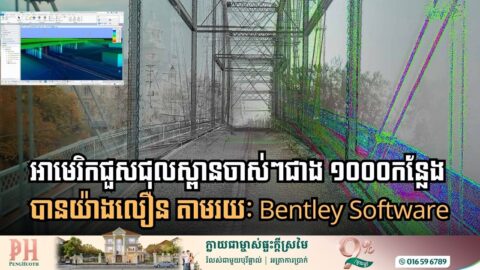
High-Tech “Digital Twins” Save Kentucky Millions in Bridge Repairs
Kentucky has discovered a high-tech solution to a massive infrastructure problem, proving that fixing 1,000 aging and flood-damaged bridges doesn’t have to take a decade or cost a fortune. By using Artificial Intelligence and “Digital Twin” technology, the engineering firm Qk4 has modernized the state’s bridge program, cutting inspection times by 90% and saving taxpayers […]

How Smart Software Connects Colombia’s Most Remote Towns
Colombia’s state-owned airline, SATENA, is now using advanced engineering software to make life-saving flights safer and more frequent. While most people think of infrastructure as physical things like bridges or roads, SATENA uses a tool called Bentley MicroStation to build “invisible” roads in the sky. In the rugged mountains and dense jungles of Colombia, a […]

Julien Moutte: The Tech Leader Breaking Down Barriers to Build a Better World
Julien Moutte, the Chief Technology Officer of Bentley Systems, lives by a simple philosophy: removing barriers is the best way to move forward. Unlike many top executives, you won’t find him in a private corner office. Instead, he sits at a plain wooden desk in the middle of an open-plan floor, surrounded by his team […]

Dublin Uses “Digital Twins” to Build a Safer, Smarter Future
The city of Dublin is turning into a high-tech testing ground to solve everyday urban problems. By using “digital twins”—which are virtual, 3D copies of the physical city—leaders are finding new ways to protect residents from floods, fires, and traffic jams. This project is part of a partnership between Dublin city officials and the technology […]

Digital Transformation Fast-Tracks Success for Arcadis Rail
Arcadis, a global leader in infrastructure, is proving that the secret to massive railway projects isn’t just heavy machinery—it’s the digital tools and the people who master them. Andrew Germain, Associate Technical Director at Arcadis, recently shared how the division is using advanced 3D software to overhaul the UK’s rail network. By moving away from […]