





Impact Report 2024: How Bentley Systems Is Helping Make the World and Our Infrastructure More Sustainable and Resilient

Kathleen Moore

Not too long ago, students at an elementary school in eastern Pakistan’s Pakpattan district faced a daunting problem: Their source of drinking water was a drum filled by a contaminated tap.

Bentley Systems, the global infrastructure software company, offered a solution. Through its STEM Grant program, which funds education projects selected by staff, Bentley helped the school build a water filtration room with a new submersible pump. The room also has a 500-gallon water storage tank and two large electric water coolers. The setup draws power from a new solar system with enough spare capacity to churn classroom fans and cool the school’s 400 young scholars.

The Pakistani school is among 240 beneficiaries worldwide that shared $800,000 in grants—all donated by Bentley employees—through the STEM Grant program last year. The funding supports projects that not only utilize Bentley’s cutting-edge technology in digital twins and artificial intelligence (AI), but also illustrate the heart of Bentley’s mission: to advance sustainable and resilient infrastructure necessary for a better quality of life, for everyone.

On Tuesday, which is also Earth Day, Bentley released its 2024 Impact Report highlighting several of these projects. The annual report also shows how Bentley is shrinking its own environmental footprint while helping Bentley software users develop more sustainable, resilient infrastructure.

“Around the world, the demand for better, more resilient infrastructure is surging—whether it is to expand and smarten energy grids, modernize transportation networks, or retrofit existing structures to meet sustainable development goals,” Bentley Systems CEO Nicholas Cumins said in a message introducing the report. “Yet we cannot simply build our way out of these challenges. More than 95% of the infrastructure that will be in use in 2030 already exists today. So, the focus of sustainable development must shift to adapting and optimizing the infrastructure that is already in place, ensuring that it is resilient, efficient, and capable of meeting the demands of tomorrow.”

Describing the digitization of critical infrastructure as “a generational opportunity to improve the way the world works,” Cumins noted that Bentley took several key steps in 2024 to help its software users advance their goals. They include Bentley’s acquisition of Cesium, the 3D geospatial company; a strategic partnership with Google to integrate Google Maps’ high-quality geospatial content into Bentley’s digital twin platform; and Bentley’s new Carbon Analysis capability that enables designers to quickly measure and reduce their projects’ embodied carbon footprints.

Thanks to Carbon Analysis, “what used to take six months of specialized labor now takes more like six minutes of compute time, producing analytical insights that are poised to grow even more powerful and valuable thanks to coming advancements in AI,” Cumins said.

CSEO Chris Bradshaw speaking at the Year in Infrastructure 2024 conference.

Chris Bradshaw, Bentley’s chief sustainability and education officer, noted in the report that truly resilient infrastructure depends on weighing the perspectives and priorities of everyone with a stake in its success—and being able to then strike the right balance.

That’s one reason why digital twins, in combination with AI, are a “game-changing dynamic” for infrastructure, Bradshaw said. They give everyone, from high-level policy makers to local communities, the ability to visualize and understand the trade-offs involved in public works.

“As they say, a picture is worth a thousand words,” Bradshaw said.

Read the full Bentley Impact Report here.

- Video Advertisement -

Related Post

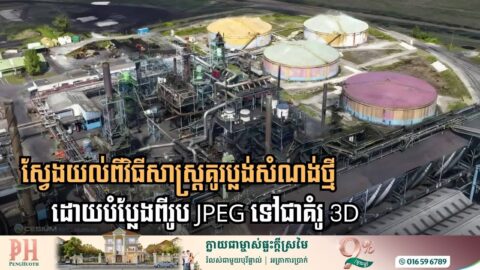
“JPEG for 3D”: New Open Standard Set to Revolutionize Infrastructure Monitoring

The Khronos Group has announced a major milestone in 3D imaging with the release of KHR_gaussian_splatting, a new extension that standardizes “Gaussian splatting” within the glTF 2.0 ecosystem. Often referred to as the “JPEG for 3D,” this move aims to turn a breakthrough photorealistic capture technique into a universal language for engineers, developers, and tech […]
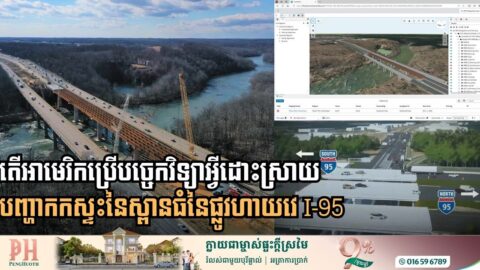
Digital Twin Tech Breaks Decades-Old Deadlock on Major I-95 Bridge Project

Engineering firm Johnson, Mirmiran & Thompson (JMT) has successfully utilized high-tech 3D modeling and connected data known as digital twin to solve congestion on I-95 crossing over the Rappahannock River in eastern Virginia, in the United States. For decades, the I-95 crossing over the Rappahannock River was defined by chronic congestion and a “not-in-my-backyard” stalemate. […]

Saudi Arabia Sets Global Smart City Benchmark with “Manarah” Urban Data Platform

The Al Madinah Region Development Authority (MDA) has successfully launched the Manarah Urban Data Platform (MUDP), a state-of-the-art digital twin initiative that balances the rapid expansion goals of Saudi Vision 2030 with the preservation of ancient Islamic heritage. By utilizing a specialized suite of Bentley Systems software, the MDA has mapped 55 square kilometers of […]

Bentley Systems 2025: A Year of Infrastructure Innovation and Global Collaboration

As 2025 draws to a close, Bentley Systems is reflecting on a landmark year defined by global expansion, open-source breakthroughs, and a renewed focus on the next generation of engineers. From the streets of Philadelphia to the tech hubs of Berlin, the company’s event calendar highlighted a strategic shift toward integrated digital twins and geospatial […]
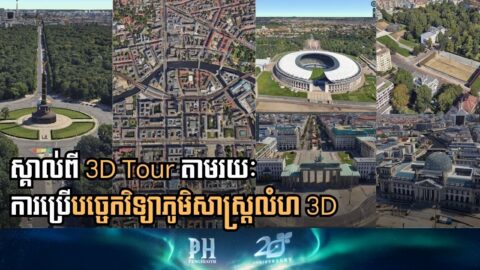
Bentley Launches Berlin 3D Tour Ahead of Tech Summit

Bentley Systems has launched a highly detailed, Cesium-powered 3D tour of Berlin in anticipation of its largest-ever in-person technical learning event, the Bentley Tech Summit 2025, set to take place in the German capital from December 9-11. The interactive, city-scale visualization invites users to explore Berlin’s iconic landmarks, celebrating the city’s history of engineering resilience […]
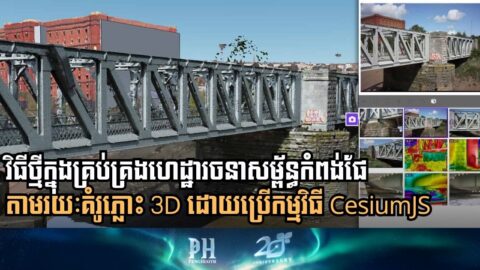
Bristol Harbor Goes Digital: 3D Twin Revolutionizes Asset Management and Safety

Bristol City Council has successfully completed a pioneering project to digitally future-proof its vital harbor infrastructure, embracing advanced remote sensing and 3D visualization. Partnering with Mott MacDonald, the city has created a sophisticated “digital twin” of its 21-kilometer harbor, dramatically overhauling how it manages over 300 above and below-water assets. Tired of costly, dangerous, and […]