
LSU Launches America’s First Industry-Backed Digital Twin Certificate

Louisiana State University (LSU) has announced the launch of the nation’s first Digital Twin Design and Production Certificate, a landmark educational program co-developed with industry leaders, including Bentley Systems.

The online initiative aims to bridge the growing skills gap in “digital twin” technology—a field that has become essential to the design, construction, and operation of global infrastructure.

Digital twins—virtual, real-time replicas of physical assets—are no longer futuristic concepts; they are core tools used to simulate performance, monitor structural health, and integrate AI into engineering workflows.

Recognizing that formal training has lagged behind rapid industry adoption, LSU partnered with Bentley Systems and consultancy DigiTwin Global to create a curriculum rooted in practical application.

The program offers several key advantages for students and professionals:

Hands-on Software Experience: Participants gain direct experience using Bentley’s commercial software platforms, the same tools used to manage large-scale industrial and infrastructure projects worldwide.

Comprehensive Curriculum: The seven-course program covers the entire lifecycle of a digital twin, from data integration and risk assessment to legal considerations like data governance and intellectual property.

Accessible Learning: Designed for both engineers and business executives, the certificate requires no prior coding experience, focusing instead on strategic decision-making and execution.

The importance of this technology is already visible in Louisiana. Local engineering firm Forte & Tablada recently earned Founders Honors at Bentley’s Year in Infrastructure Awards for creating a digital twin of the 17th Street Canal Pump Station—a critical asset in defending New Orleans against catastrophic flooding.

“The engineers and business leaders of tomorrow need digital twin skills today,” said Vicki Colvin, Dean of LSU’s College of Engineering. “Understanding how these systems are built and used is no longer optional.”

The launch of this certificate is part of a broader “education pipeline” at LSU. The university is currently exploring the development of a full Bachelor’s degree focused on digital twin technology. This move ensures that the next generation of the workforce is prepared to manage the increasingly complex and data-driven infrastructure the world depends on.

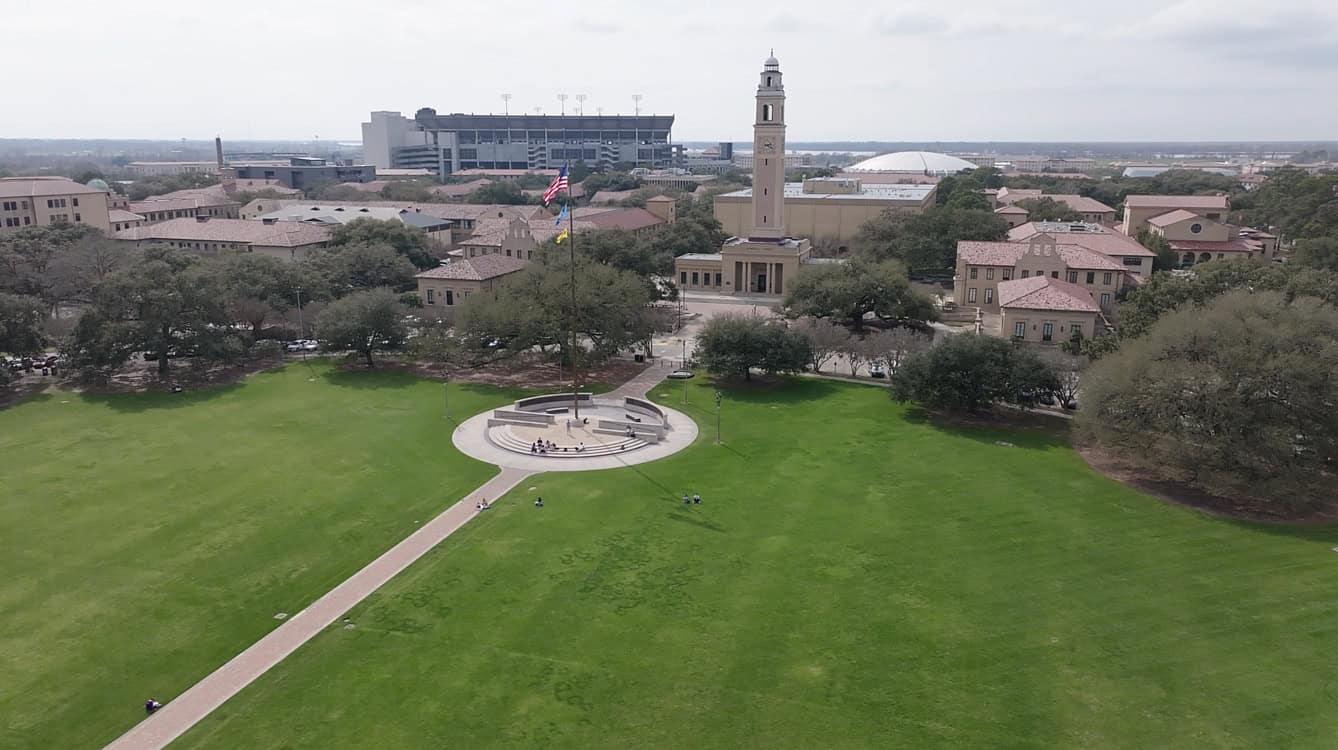
Louisiana State University
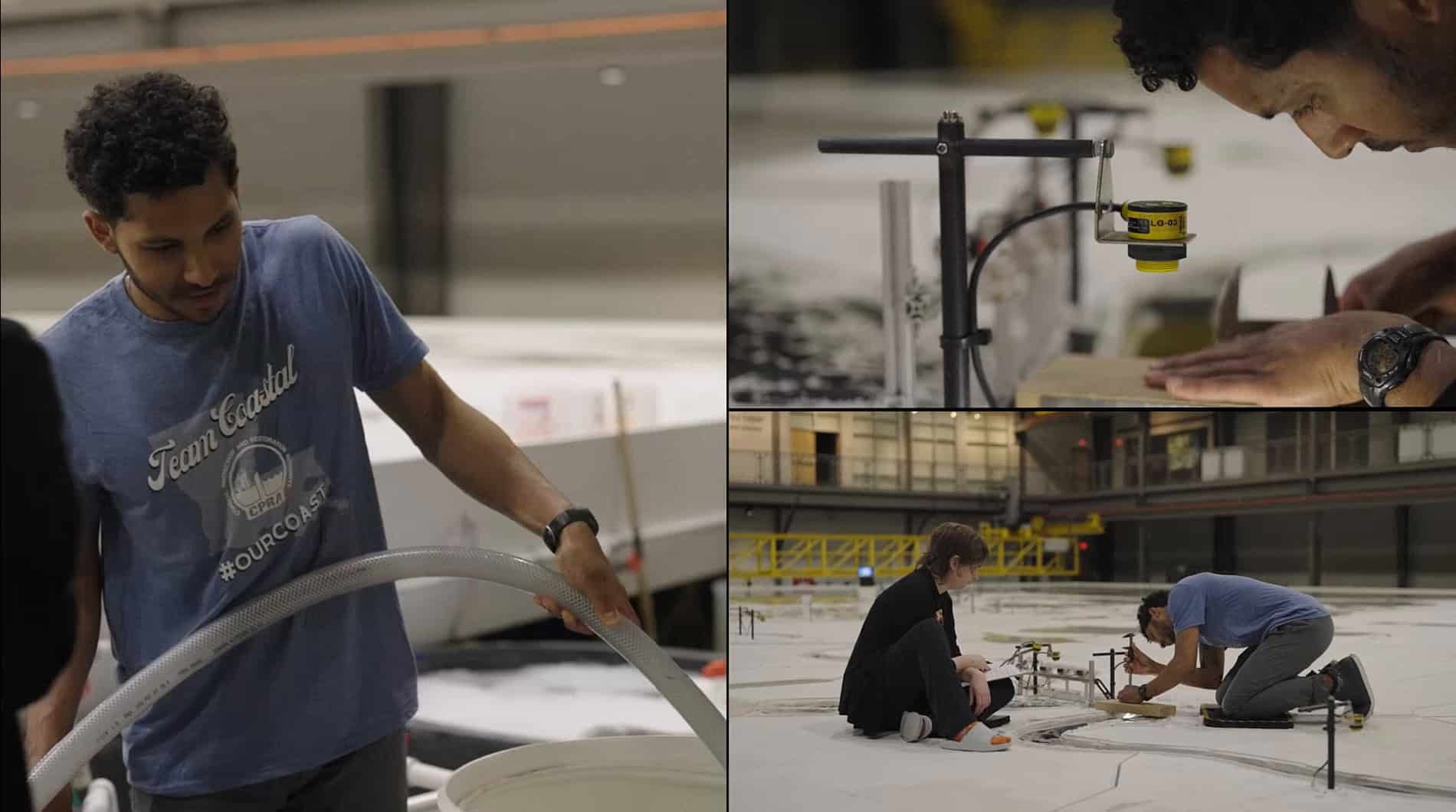
LSU students gather sensor data from a model of the Mississippi River which can be used with a digital twin to simulate and track flooding conditions.
- Video Advertisement -

Related Post

Why Infrastructure Needs Better Conversations, Not Just Better Tools

As climate-related disasters like wildfires and severe flooding become more frequent, communities across the United States are finding that their current infrastructure is struggling to keep up. Recent research suggests that moving from traditional asset management to digital one is a great move, but what is more crucial is cooperation. Duke University and industry partners […]

A New Era of Realism: Transforming Digital Twins with Gaussian Splatting

Digital twins, the virtual replicas of physical infrastructure, are undergoing a major transformation thanks to a new technology called Gaussian splatting. Traditionally, these models were built using “meshes,” which acted like a hollow, polygonal skin stretched over objects. While useful, meshes often struggled to capture fine details like thin wires, complex lighting, or reflective surfaces, […]
High-Tech “Digital Twins” Save Kentucky Millions in Bridge Repairs

Kentucky has discovered a high-tech solution to a massive infrastructure problem, proving that fixing 1,000 aging and flood-damaged bridges doesn’t have to take a decade or cost a fortune. By using Artificial Intelligence and “Digital Twin” technology, the engineering firm Qk4 has modernized the state’s bridge program, cutting inspection times by 90% and saving taxpayers […]

How Smart Software Connects Colombia’s Most Remote Towns

Colombia’s state-owned airline, SATENA, is now using advanced engineering software to make life-saving flights safer and more frequent. While most people think of infrastructure as physical things like bridges or roads, SATENA uses a tool called Bentley MicroStation to build “invisible” roads in the sky. In the rugged mountains and dense jungles of Colombia, a […]

Dublin Uses “Digital Twins” to Build a Safer, Smarter Future

The city of Dublin is turning into a high-tech testing ground to solve everyday urban problems. By using “digital twins”—which are virtual, 3D copies of the physical city—leaders are finding new ways to protect residents from floods, fires, and traffic jams. This project is part of a partnership between Dublin city officials and the technology […]

Digital Transformation Fast-Tracks Success for Arcadis Rail

Arcadis, a global leader in infrastructure, is proving that the secret to massive railway projects isn’t just heavy machinery—it’s the digital tools and the people who master them. Andrew Germain, Associate Technical Director at Arcadis, recently shared how the division is using advanced 3D software to overhaul the UK’s rail network. By moving away from […]