


Mass Transport Systems? The Future for Phnom Penh?

Phnom Penh is growing, but is the transport system that keeps the city moving, much like blood through the arteries and veins of a body, keeping up with the pace?

If a city ceases to be able to move people and goods from point A to B, it no longer performs one of its major functions. Jakarta has experienced rapid growth without proper investment in transport infrastructure, inhibiting movement of people, the functioning of businesses and the satisfaction or wellbeing of its inhabitants and visitors.

Phnom Penh is estimated to have a population of 2 million people. Currently 80 percent of the population live in rural areas. The United Nations reports that when a country reaches middle income status it is characterised by an urbanisation rate of 50 percent. If the population of Cambodia is currently 14 million, and growing at 2 percent per annum then in 15 years the population could be close to 20 million. If half the population live in urban areas, mostly concentrated in Phnom Penh, then we could see a doubling or tripling of the population of Phnom Penh by 2030. Of course a lot depends on the speed of growth, and the development of the manufacturing and service sectors versus the agricultural sector.

The Royal Government of Cambodia has made road building a priority, but much of the work has been in rural areas. The logic to develop the rural areas to release the pressure on urban areas is a sound one; however, patterns of urban development show us that people are naturally drawn to urban areas to seek better wages, access to education, health and housing. It is often a hope for a better life rather than a reality.

Vietnam is building a mass transport Metro system in Hanoi and HCMC. The task is vast and they have the advantage of a centrally planned economy and greater resources. How will Phnom Penh deal with this challenge?

WHAT KIND OF MASS TRANSPORT? WHO PAYS?

In the past, the Japanese through JICA have provided the majority of Overseas Development Aid (ODA) to improve roads and drainage in Cambodia. Now, China is providing cash through long term low interest loans. However, the projects are piecemeal and lack the scale to resolve the entirety of the problem. The ADB and the government are encouraging Public Private Partnerships (PPP’s) as a way forward.

WHAT IS A PPP?

PPP involves a contract between a public sector authority and a private party, in which the private party provides a public service or project and assumes substantial financial, technical and operational risk in the project.

The problem with PPP’s is that private companies are not always guaranteed an economic return and the difficulties of doing business can make such a venture seem too risky.

The issue of transportation is of the highest importance to Phnom Penh. If it is not dealt with it could cause real and lasting problems for the future of this city and the development of the country.

- Video Advertisement -

Related Post

Massive Industrial Expansion Set for Kampong Speu as Chinese Firm Proposes New Special Economic Zone

Strategic development project spanning over four hundred hectares aims to bolster Cambodia’s manufacturing capacity and create thousands of local employment opportunities The industrial landscape of Kampong Speu province is poised for a significant transformation following a formal proposal by a Chinese firm to establish a sprawling special economic zone. On January 6, 2026, the Council […]
Cambodia Records Surge in Investment with Ten Billion Dollars in New Projects for 2025

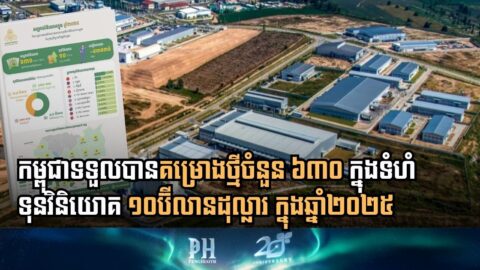
Cambodia has reached a major economic milestone in 2025, securing 630 new investment projects with a total capital value of approximately 10 billion dollars. This performance represents a significant 45 percent increase in investment volume compared to the previous year, highlighting the Kingdom’s growing appeal as a strategic hub for international capital. The Council for […]

Cambodia Strengthens Environmental Guardrails as Natural Resource Crimes Decline in 2025

Enhanced ranger patrols and advanced monitoring technologies drive a fifteen percent drop in violations across protected landscapes while boosting legal accountability Cambodia has marked a significant shift in its environmental protection efforts throughout 2025, reporting a notable decrease in natural resource crimes across the Kingdom. According to the latest data from the Ministry of Environment, […]

Kandal Province Launches Official Construction of Prek Thnot Riverbank Park to Enhance Urban Beauty

Provincial authorities and Ministry officials join forces to transform the southern riverbank into a modern recreational space for residents and tourists The landscape of Takhmao city is set for a significant aesthetic upgrade following the official groundbreaking of the Prek Thnoat riverbank park project on January 3, 2026. This ambitious development, situated along the southern […]

Cambodia Surpasses $600 Million Revenue Milestone in Global Rice Exports

Strategic expansion into European and ASEAN markets drives record-breaking year for the Kingdom’s agricultural sector as total exports exceed nine hundred thousand tons Cambodia’s agricultural sector has achieved a significant economic victory in 2025, recording over $602.41 million in revenue from the export of milled rice to international markets. Over the course of the twelve […]

LSU Launches America’s First Industry-Backed Digital Twin Certificate

Louisiana State University (LSU) has announced the launch of the nation’s first Digital Twin Design and Production Certificate, a landmark educational program co-developed with industry leaders, including Bentley Systems. The online initiative aims to bridge the growing skills gap in “digital twin” technology—a field that has become essential to the design, construction, and operation of […]