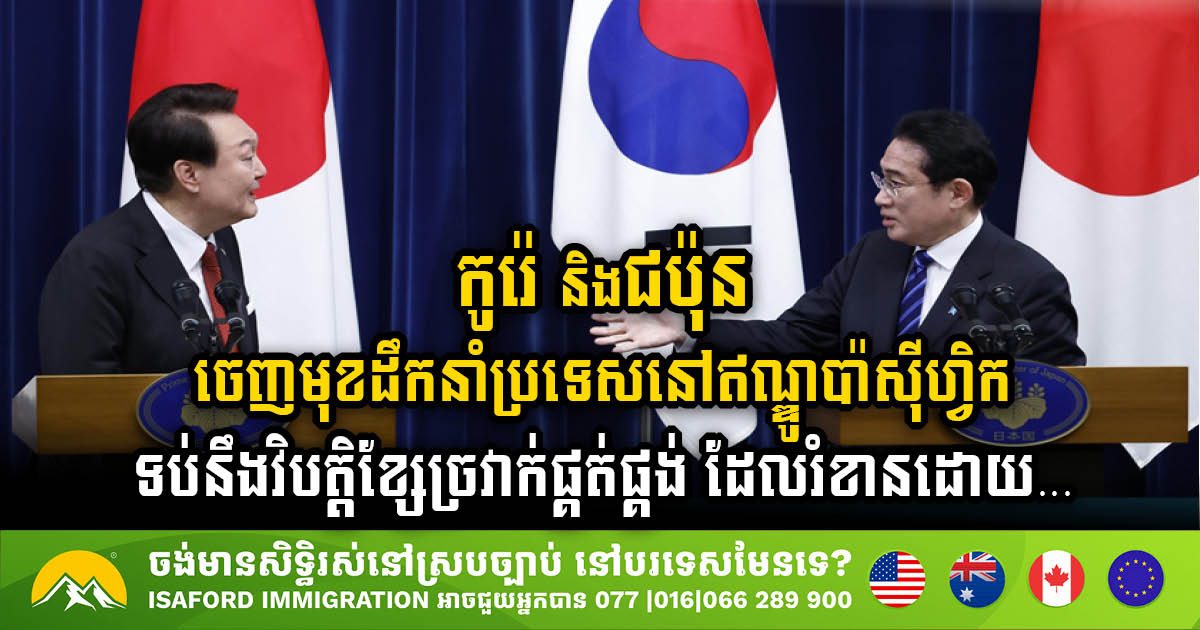


South Korea & Japan Lead Indo-Pacific Supply Chain Crisis Response Initiative

In a significant move to safeguard the Indo-Pacific region’s supply chains, South Korea and Japan have taken the lead in establishing a crisis response network under the Indo-Pacific Economic Framework (IPEF). Announced by the South Korean government on 20 August, this network aims to ensure that member nations maintain access to vital supplies during emergencies, with South Korea chairing the body and Japan serving as vice chair, according to Asia.nikkei dated 31 July 2024.

The initiative highlights a commitment to rapid response, with emergency meetings triggered within 15 days of supply chain disruptions caused by natural disasters or cyberattacks.

The network’s primary function is to enable the 14 IPEF member countries to share critical information on inventories and coordinate the distribution of essential goods, such as semiconductors, medical supplies, and critical minerals, in the event of a shortage. This collaboration will prevent panic buying and hoarding by facilitating the sharing of stockpiles and exploring alternative supply routes among partner nations. The IPEF also plans to conduct drills to enhance crisis preparedness, including granting export control exceptions during emergencies.

The crisis response initiative draws on lessons from past disruptions, such as South Korea’s 2021 urea shortage, which prompted a reassessment of its China-reliant supply chain. This experience, coupled with the improved relations between Japan and South Korea, is expected to bolster the implementation of the supply chain agreement.

The IPEF, launched by the U.S. under President Joe Biden in 2022, represents a strategic effort to counterbalance China’s influence in the region. The partnership includes key players such as Australia, New Zealand, India, Fiji, and seven Southeast Asian countries. Cambodia, Laos, and Myanmar were excluded from the initial membership.

Despite past tensions over semiconductor materials, South Korea’s Ministry of Trade, Industry and Energy believes that the know-how gained by Japan and South Korea will be invaluable in reinforcing this agreement. The Comprehensive and Progressive Agreement for Trans-Pacific Partnership (TPP), despite lacking U.S. participation, remains effective and underscores the significance of this cooperative effort.

“Although Japan and South Korea have had a standoff over semiconductor materials, relations have thawed under the current administrations,” Sim Jin-su, the director-general for new trade strategy and policy at South Korea’s Ministry of Trade, Industry and Energy, said.

This announcement comes against the backdrop of former U.S. President Donald Trump’s criticism of the IPEF as a “TPP 2,” with pledges to withdraw the U.S. from the framework if re-elected. Nonetheless, the TPP continues to function, with Sim Jin-su, Director-General for New Trade Strategy and Policy at South Korea’s Ministry of Trade, Industry and Energy, emphasizing that “it is a group that unites manufacturing powerhouses like Japan and South Korea with resource-rich nations like Australia will ensure the continuity of this meaningful partnership.”

South Korea’s proactive approach in chairing this initiative signals a strong commitment to fortifying regional supply chains and ensuring resilience in the face of future crises.

- Video Advertisement -

Related Post

Cambodia’s Rice Exports Surge, Raking in Nearly USD 350 Million in 8 Months

In an impressive display of agricultural prowess, Cambodia has earned approximately USD 348.18 million from the export of nearly 473,000 tons of rice in the first eight months of 2025. This significant achievement was reported by the Cambodian Rice Federation on August 10, 2025. From January to August, 51 rice exporting companies facilitated the shipment […]

Agro King Plans Major Purchase of Cambodian Agricultural Products for Export to Vietnam

In a significant move for the agricultural sector, Agro King Trading Co., Ltd. has announced its intent to purchase four types of Cambodian agricultural products for export to Vietnam. This initiative aims to strengthen trade ties between the two neighboring countries and boost the local economy. The announcement was made by His Excellency Ky Chanromduol, […]

US Firm Argentem Creek to Invest in Cambodia’s Financial Sector

In a significant move for Cambodia’s financial landscape, US-based Argentem Creek has announced its intention to invest in the country’s financial sector. The announcement was made following a pivotal meeting between Ms. Chea Serey, Governor of the National Bank of Cambodia, and Mr. Maarten Terlouw, President and Co-CEO of Argentem Creek, held on August 4, […]

Cambodia’s Special Economic Zones Drive Export Growth and Employment

Cambodia’s special economic zones (SEZs) are proving to be pivotal in boosting the nation’s export capacity, contributing to more than 23% of total exports. As of 2024, the country boasts 44 SEZs, which are instrumental in enhancing domestic product exports, with projections estimating their contribution to total exports could reach between 23%-25% from 2022 to […]

US Tourists Propel Angkor Wat Ticket Sales to New Heights in Early 2025

In a remarkable start to the year, Cambodia has welcomed a surge of American tourists, leading the charge in ticket sales for the iconic Angkor Wat temple complex during the first five months of 2025. According to a recent report from the Angkor Foundation, the number of international visitors to Angkor reached an impressive 527,577, […]

Cambodia Sees Surge in Tourism Revenue, Generating Over USD 25 Million in Ticket Sales

  In an impressive display of recovery and growth, Cambodia has successfully generated more than USD 25 million from tourist ticket sales in the first 5 months of 2025. The figures, highlighted in a report released by the Angkor Foundation on 1 June, reveal that from January to May 2025, tourism hotspots such as Angkor […]