


Japan Explores Maglev Technology for Earthquake-Resistant “Floating Homes”

Of course, the quake did not kill people directly, but the buildings or houses where people lived were the ones that killed people in the quake. If we look at the statistics or photos of earthquakes, we will see that most of the deaths due to earthquakes, large or small, are from buildings or parts of buildings collapsing on people. In response to this critical challenge, Japanese researchers in modern building engineering are pioneering a novel initiative: developing “floating houses” utilising magnetic levitation technology specifically designed to withstand the damaging effects of earthquakes.

Research & Development of Magnetic Levitation for Buildings

The concept draws inspiration from the principles of magnetic levitation (Maglev) technology used in high-speed trains. A research study by Furuya, M. Fujishita, and their team, published in 2020 at the Earthquake Response Engineering Conference and on the Airdanshin website (a leading Japanese earthquake-resistant construction firm), explored the development of Tuned Mass Damper (TMD) models for long-term construction.

TMDs are passive vibration control devices that mitigate the dynamic response of structures to external forces like earthquakes.  The research focused on a magnetic levitation technique leveraging the TMD truss method. This method employs wind pads and magnetic or electromagnetic repulsive forces to minimise friction and enhance the TMD system’s performance in reducing earthquake-induced vibrations on buildings.

The study’s findings demonstrate the effectiveness of a low-friction, highly controllable TMD model with broad applications beyond earthquake engineering.  This technology holds promise for reducing vibrations in buildings, bridges, and other structures, thereby improving overall stability.

Challenges and Considerations

While the Maglev concept appears groundbreaking, significant challenges remain.  Building earthquake-resistant structures using magnetic levitation would necessitate immense amounts of energy and a highly stable magnetic field to counteract gravity. Implementing such technology on a large scale would likely be complex and expensive.

Existing Earthquake-Resistant Technologies

Japan is already a leader in earthquake-resistant building techniques. Established methods include seismic isolation bearings and air-bag foundation systems. Seismic isolation utilizes bearings at the base of a structure to decouple it from the shaking ground during an earthquake, minimising damage.

The air-bag foundation system, developed by Air Danshin, features sensors that detect tremors and activate air compressors to inflate airbags beneath the house, lifting it slightly during an earthquake. While this approach offers some protection, it’s primarily effective for lateral shaking earthquakes with limited vertical movement.

Limitations & Future Considerations

While the Maglev concept presents exciting possibilities, Deke Smith, Executive Director of the Earthquake Safety Council and the BuildingSMART Alliance, cautions against over-optimism.  In a statement, Smith acknowledged the technology’s potential to mitigate the effects of mild earthquakes.  However, he expressed concerns about its ability to completely prevent damage during strong earthquakes. Smith highlighted two key limitations:

Limited Scope of Current Testing: He pointed out that Air Danshin’s current seismic tests primarily focus on lateral (side-to-side) vibrations. Real-world earthquakes often involve a combination of vertical and horizontal movement. Therefore, the effectiveness of the system against strong earthquakes with significant vertical forces remains unclear.

Protection Threshold: The air-bag foundation system, designed to lift buildings by three centimetres, might not provide sufficient protection for earthquakes exceeding this vertical displacement. In such cases, the building could potentially slip off its foundation.

Despite the technical hurdles, this innovative “floating home” initiative signifies a significant leap forward in Japan’s quest for enhanced earthquake preparedness.  As Smith concludes, Trying new ideas can lead to breakthroughs. This could be the spark that ignites further innovation and ultimately contributes to a more comprehensive earthquake solution.”

- Video Advertisement -

Related Post

What is the Bentley Tech Summit—and why does it matter?

As Germany prepares for a historic US$500 billion investment in its national infrastructure, Bentley Systems has convened its second annual Tech Summit in the heart of Berlin. The event marks a strategic shift for the software giant, moving beyond simple product training toward a “community of technologists” dedicated to solving global infrastructure challenges. In a […]
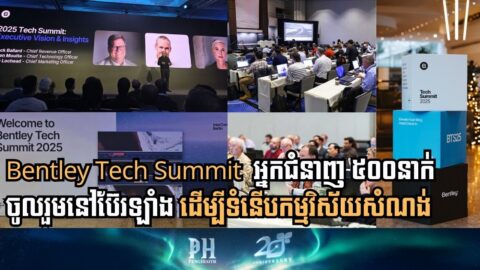
Bentley Tech Summit Unites 500 Experts in Berlin Amidst Germany’s Modernization Push

Set against the ambitious backdrop of Germany’s half-trillion-euro national investment in modernizing its transport, energy, and public-works systems, the Bentley Tech Summit 2025 convened its global community of 500 infrastructure experts in Berlin. This year’s summit marked a significant shift in focus, emphasizing the principle that the future of infrastructure is being built by the […]

Infrastructure Sector Worldwide Embraces AI Amid $10 Trillion Boom Forecast

The infrastructure sector is weighing the risks and returns of Artificial Intelligence (AI) usage as global construction value is projected to reach $10 trillion by 2025, yet productivity in this sector remains stagnant. A new survey—The Impact of Artificial Intelligence on the Built Environment—conducted by Bentley Systems and partners, including law firm Pinsent Masons and […]

Cambodia Launches Institute of Automotive Technology and New Energy Industry

In a significant step towards bolstering innovation in the automotive sector, Cambodia officially inaugurated the Institute of Automotive Technology and New Energy Industry, led by HE Hem Vandy, Minister of Industry, Science, Technology, and Innovation. During the launch event, Minister Vandy highlighted that the institute aims to equip individuals with essential skills, foster industrial innovation, […]

Japan Aims to Strengthen Financial Technology Ties with Cambodia

In a significant move to enhance bilateral cooperation, Japan’s regulatory sandbox committee convened with the National Bank of Cambodia on October 17, 2025. The meeting aimed to explore new avenues for collaboration in the burgeoning field of financial technology (fintech). The discussions took place between Dr. Chea Serey, Governor of the National Bank of Cambodia, […]

European Snack Food Manufacturers Promote Modern Technology for Cambodian Products

In a significant move to enhance the processing of Cambodian products, three prominent European snack food manufacturers have expressed their commitment to introducing modern technology to the region. This initiative was discussed during a meeting on October 9, 2025, between His Excellency Samheng Bora, Secretary of State of the Ministry of Commerce and Head of […]