Robert Street Bridge Rehab Pioneers Cutting-Edge Digital Innovations in Bridge Engineering
Robert Street Bridge Rehab Pioneers Cutting-Edge Digital Innovations in Bridge Engineering
Historic Bridge Renovation Utilises Artificial Intelligence & Digital Twins to Enhance Inspection Process
For nearly a century, the iconic rainbow arch of the Robert Street Bridge has stood as a landmark in St. Paul, Minnesota. This Moderne-style structure has not only been a significant feature of the city’s landscape but has also served as a crucial thoroughfare for traffic crossing the Mississippi River, connecting the west side of the city to downtown St. Paul.
The Minnesota Department of Transportation (MnDOT) is embarking on a substantial renovation project to fortify this historic bridge for the next 50 years. The primary objective of this project is to preserve this piece of St. Paul’s history while showcasing technological advancements that will set new standards in the bridge industry.
“This marks the most significant advancement in bridge inspection since the inception of formal bridge inspections in the United States in 1971,” stated Barritt Lovelace, Vice President of UAS, AI, and reality modelling at Collins Engineers, Inc.
MnDOT engaged Collins Engineers to conduct an inspection of the Robert Street Bridge in preparation for its first major rehabilitation since 1989. In this endeavour, the inspection team enhanced traditional methods, which typically involve manual crack and spall measurements, along with hand-drawn sketches, notes, and photographs for critical assessments.
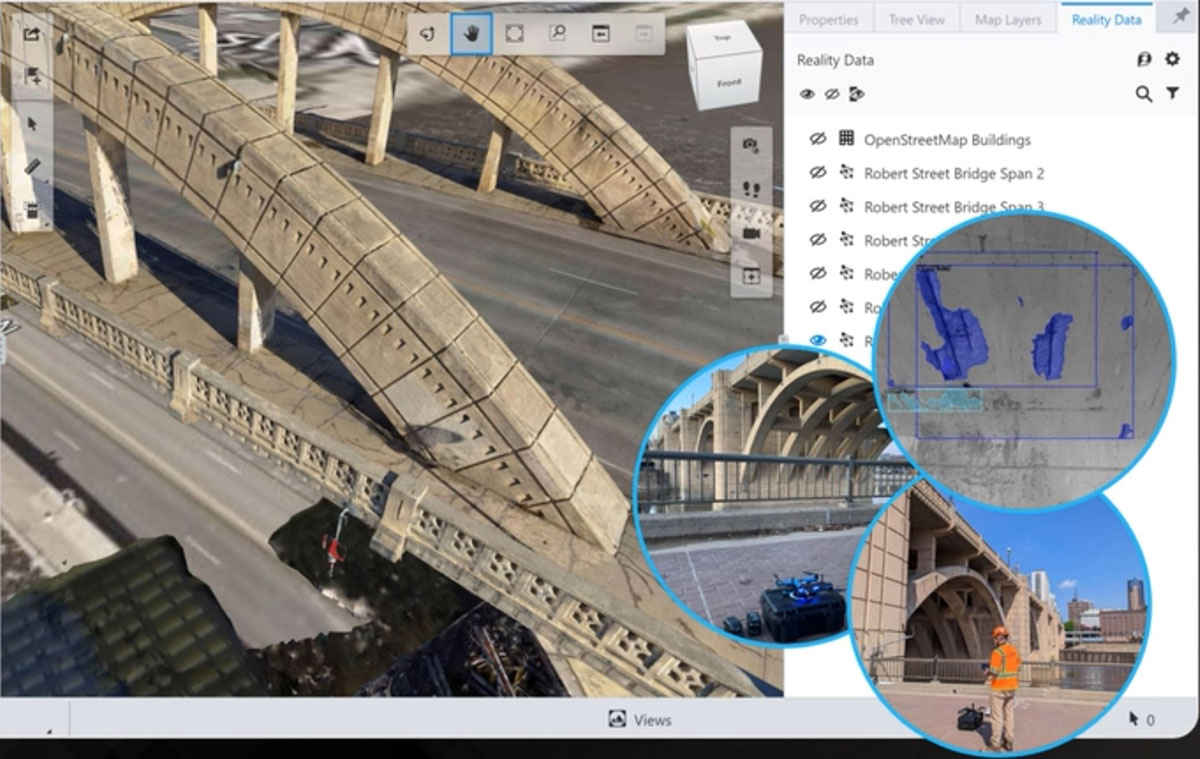
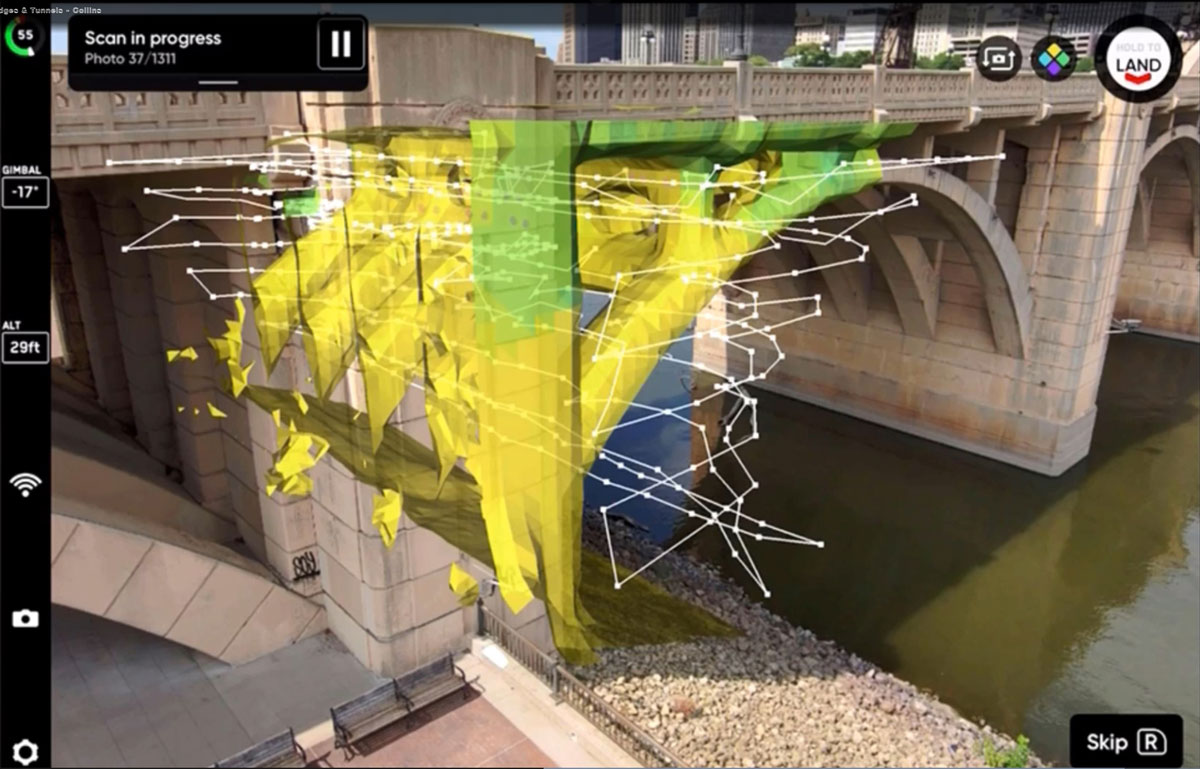
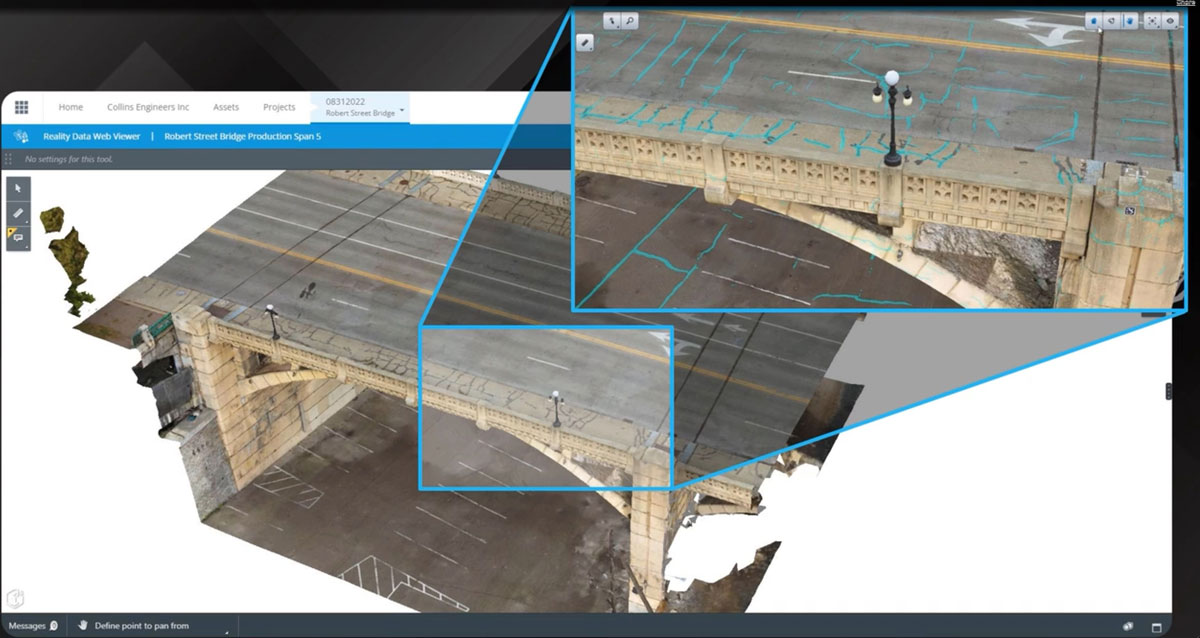
Collins Engineers leveraged Skydio drones to capture over 57,000 images of the bridge, enabling them to maximise the data collected. By utilising Bentley’s reality modeling software, the inspection team processed the drone-captured images to generate a detailed digital twin of the bridge. This capability allowed senior engineers to conduct a preliminary inspection of the bridge, assess its condition, document defects, and annotate the model with additional findings before physically visiting the site. While on-site, engineers could reference the 3D digital replica on internet-enabled tablet computers, streamlining the inspection process.
Lovelace highlighted that his team managed to gather a minimum of 70% of the total inspection information for the project before setting foot on the bridge. He emphasised the shift from discovering defects in the field to verifying their presence based on pre-inspection data and artificial intelligence analysis.
Shared Benefits
The adoption of digital delivery methods enabled Collins Engineers to reduce on-site time by a minimum of 20%, leading to fewer road closures and traffic disruptions for commuters. This efficiency allowed engineers to focus on crucial tasks such as evaluating the bridge’s load-carrying capacity and developing a comprehensive bridge management plan for presentation to project designers.
“Engineers were able to allocate their time to decision-making rather than data collection,” Lovelace remarked.
The advantages of digital delivery methods extended beyond the engineering team to other stakeholders involved in the Robert Street Bridge rehabilitation project. Inspection and testing data integrated into the digital twin were shared among project collaborators, including design and construction teams, facilitating a seamless process for cross-verification of the inspection team’s work. This approach eliminated the need for commissioning independent inspections to validate the inspector’s findings, enhancing accountability from the project’s outset.
Lovelace emphasised that “this method reduced the likelihood of errors, thereby lowering risks for both Collins Engineers and their clients.”
Furthermore, by providing potential contractors access to the digital twin for detailed insights into the bridge’s structural condition, Collins Engineers anticipates saving approximately 20% in rehabilitative construction costs. This information sharing is expected to result in up to US$15 million in savings for MnDOT and a 10% reduction in construction materials usage.
Addressing Workforce Challenges
Digital innovations played a pivotal role in helping the engineering team address the ongoing workforce shortage prevalent in the bridge industry. Lovelace noted the insufficient influx of new engineers to meet the escalating demand for their expertise, as numerous American bridges and infrastructure surpass the 50-year mark, necessitating repairs.
“[American] infrastructure is in the second generation of needing repairs,” said Lovelace.
During the Robert Street Bridge inspection, artificial intelligence capabilities compensated for the limited workforce available for fieldwork, significantly reducing the time and labour required on-site and resulting in savings exceeding US$90,000. Looking ahead, Lovelace envisions the possibility of virtual consultations by experienced engineers who are unable to travel to project sites on future endeavours.
Given the substantial benefits derived from these digital advancements, Lovelace anticipates a shift towards a digital-first workflow becoming standard practice for him and his colleagues.
“Even in scenarios where clients do not explicitly request it, we propose digital methods because we are confident in delivering a superior product at a reduced cost compared to traditional approaches,” he affirmed.
Spotlight on Barritt Lovelace
Collins Engineers Vice President Pioneers the Integration of Drones, Artificial Intelligence, and Digital Twins in Bridge Inspection
Barritt Lovelace brings a wealth of experience and expertise to his role as Vice President of UAS, AI, and reality modelling at Collins Engineers, Inc. With nearly three decades as a structural engineer and bridge inspector, Lovelace has explored bridges from various vantage points, including underwater inspections and assessments of structures accessible only by rope.
“I was always interested in bridges for the same reason everybody’s interested in bridges,” Lovelace said. “They tend to be landmarks that connect people and communities.”
Lovelace has contributed to several prominent projects, including the restoration of Minneapolis’ iconic Stone Arch Bridge and, most recently, the historic Robert Street Bridge in St. Paul. His journey into the realm of digital innovation began in 2015 when Collins Engineers received grant funding from MnDOT to explore the use of drones for bridge inspections. As demand for his digital expertise grew, Lovelace transitioned into a leadership role dedicated to driving technological advancements in the bridge industry.
“We became the standard-bearers during the nascent stages of using drones for bridge inspections,” he reflected.
Currently, Lovelace not only spearheads the technological aspects of major bridge inspection projects but also advises state agencies seeking to enhance their digital inspection capabilities. He finds it gratifying to contribute to the industry-wide progress in adopting cutting-edge technologies.
“Working with DOTs across the country in recent years has been incredibly rewarding,” he shared. “Assisting agencies in implementing and leveraging this technology has been a fulfilling experience.”
Lovelace is optimistic about the potential of these technologies to attract new engineering talent to an industry facing increased demand due to ageing infrastructure nationwide. He believes that the integration of artificial intelligence, drones, and digital twins has made the field more appealing to talented engineers who may have previously encountered barriers to bridge inspection work due to its physical demands.
“Incorporating these technologies – artificial intelligence, drones, and digital twins – has made the field more high-tech, attracting some of the brightest engineering minds,” Lovelace observed.

Image caption/courtesy: Information sharing via the digital twin will result in up to USD 15 million in savings for MnDOT and a 10% reduction in materials used during the construction process. Image courtesy of Collins Engineers, Inc.
Author: Oana Crisan is a senior product marketer focused on bridge design and analysis applications at Bentley Systems. She holds a BA in business information systems from Dublin Business School, Ireland, and a BA in international relations and European studies from Petru Maior University, Târgu Mureș, Romania. She can be reached at oana.crisan@bentley.com.
2023 Going Digital Awards Finalist
© 2023 Bentley Systems, Incorporated. Bentley and the Bentley logo are either registered or unregistered trademarks or service marks of Bentley Systems, Incorporated or one of its direct or indirect wholly-owned subsidiaries. All other brands and product names are trademarks of their respective owners.
- Video Advertisement -


 English
  ខ្មែរ
ខ្មែរ