

The Future of Infrastructure Engineering is Open

By Nicholas Cumins, Chief Executive Officer

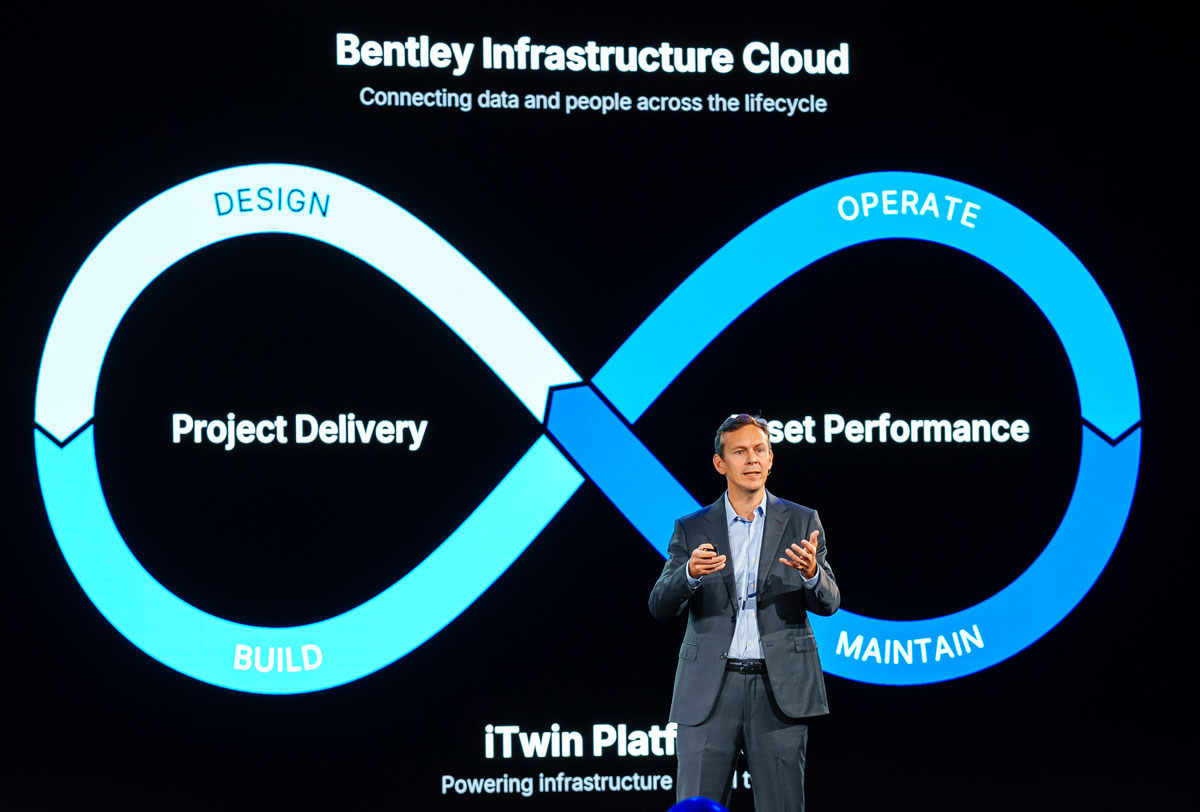
This post is an excerpt from the keynote delivered by Bentley CEO Nicholas Cumins to open the 2024 Year in Infrastructure conference.

Infrastructure today is facing unprecedented challenges. Around the world, demand for better, more resilient infrastructure is surging—whether it is to expand energy grids, modernize transportation networks, or retrofit existing structures to meet sustainable development goals. These are massive undertakings, requiring trillions of dollars in investment and decades of effort.

Despite the urgent needs, there are not enough engineers to meet this demand. Backlogs are growing, and projects are stacking up. The shortage of skilled engineers and technical professionals is widening the gap between what is needed and what can realistically be delivered.

“The future of infrastructure engineering is open,” said Bentley Chief Executive Officer Nicholas Cumins during his keynote at the 2024 Year in Infrastructure conference.

While we have a shortage of engineers, we do not have a shortage of data. And there lies the biggest paradox of our industry. We have so much data, but comparatively few insights. Many assets generate gigabytes of data every day—whether from sensors on a bridge, a utility network, or any other system. But only a small fraction of this data is ever analyzed. Some say 10% of collected data is used, others say not even that much.

As we advance toward more sophisticated asset operations and AI-driven insights, one thing has become abundantly clear: to unlock the full potential of these innovations, we must connect them to a broader data ecosystem.

Openness is vital given the long lifecycle of infrastructure. A road, a bridge, or a dam might be in operation for 50 years or more, undergoing repairs, upgrades, and expansions. During this time, the software and platforms used to manage these assets will evolve. By ensuring that our systems remain open, we allow organizations to adopt new technologies and innovations while still being able to access and build on historical data.

But openness is not just about connecting different software—it is about structuring and organizing data so that it can be queried, analyzed, and reused across multiple platforms. This is where Bentley’s Base Infrastructure Schema comes into play. Over the past 10 years, we have developed a robust, open-source schema specifically for infrastructure. It is a mature, proven framework that goes beyond basic data exchange. Our schema ensures that data is not just accessible, but its meaning can also be understood. Whether dealing with materials, structures, or subsurface data, the schema organizes information in a way that enables engineers, constructors, and organizations to reuse and fully leverage the value of their data.

By ensuring that data aligns to a common schema, we are allowing infrastructure teams to work better together, and make better-informed decisions. Openness will drive infrastructure forward.

A perfect example of how we are expanding the boundaries of openness is our partnership with Google—a partnership based on a shared vision of sustainable infrastructure. By integrating Google’s geospatial data into Bentley’s applications and platforms, we are elevating our capabilities to a whole new level. Google’s massive scale of geospatial data is unmatched. When this data is combined with Bentley’s infrastructure engineering expertise, the result is an ecosystem where data can flow seamlessly, providing users with the most comprehensive and actionable geospatial insights available.

Consider a large urban development project where multiple infrastructure systems—roads, bridges, energy and water networks—must be coordinated across various stakeholders. By integrating Google’s vast 3D geospatial data with Bentley’s Cesium technology and iTwin platform, stakeholders can visualize their assets (both existing and planned) in full, real-world context. This integration enables teams to make better-informed decisions about everything from design to operations, from improving project outcomes to reducing the risk of service outages.

Our partnership with Google reflects the reality within infrastructure: the reality is that no single vendor can address the complexity of today’s challenges alone. By bringing together the best of both worlds—Google’s unmatched geospatial data and Bentley’s industry-leading infrastructure engineering software—we are creating an open ecosystem that allows organizations to access the tools, data, and insights they need, whenever they need them. We are unleashing the potential of 3D geospatial data for infrastructure.

The future of infrastructure engineering is open. It is flexible, collaborative, and built on a foundation of data that can be shared securely. And at Bentley, we are leading the way—ensuring that the applications, platforms, and solutions we create meet the evolving needs of our industry.

- Video Advertisement -

Related Post

What is the Bentley Tech Summit—and why does it matter?

As Germany prepares for a historic US$500 billion investment in its national infrastructure, Bentley Systems has convened its second annual Tech Summit in the heart of Berlin. The event marks a strategic shift for the software giant, moving beyond simple product training toward a “community of technologists” dedicated to solving global infrastructure challenges. In a […]

Bentley Tech Summit Unites 500 Experts in Berlin Amidst Germany’s Modernization Push

Set against the ambitious backdrop of Germany’s half-trillion-euro national investment in modernizing its transport, energy, and public-works systems, the Bentley Tech Summit 2025 convened its global community of 500 infrastructure experts in Berlin. This year’s summit marked a significant shift in focus, emphasizing the principle that the future of infrastructure is being built by the […]

Infrastructure Sector Worldwide Embraces AI Amid $10 Trillion Boom Forecast

The infrastructure sector is weighing the risks and returns of Artificial Intelligence (AI) usage as global construction value is projected to reach $10 trillion by 2025, yet productivity in this sector remains stagnant. A new survey—The Impact of Artificial Intelligence on the Built Environment—conducted by Bentley Systems and partners, including law firm Pinsent Masons and […]

Cambodia Launches Institute of Automotive Technology and New Energy Industry

In a significant step towards bolstering innovation in the automotive sector, Cambodia officially inaugurated the Institute of Automotive Technology and New Energy Industry, led by HE Hem Vandy, Minister of Industry, Science, Technology, and Innovation. During the launch event, Minister Vandy highlighted that the institute aims to equip individuals with essential skills, foster industrial innovation, […]

Japan Aims to Strengthen Financial Technology Ties with Cambodia

In a significant move to enhance bilateral cooperation, Japan’s regulatory sandbox committee convened with the National Bank of Cambodia on October 17, 2025. The meeting aimed to explore new avenues for collaboration in the burgeoning field of financial technology (fintech). The discussions took place between Dr. Chea Serey, Governor of the National Bank of Cambodia, […]

European Snack Food Manufacturers Promote Modern Technology for Cambodian Products

In a significant move to enhance the processing of Cambodian products, three prominent European snack food manufacturers have expressed their commitment to introducing modern technology to the region. This initiative was discussed during a meeting on October 9, 2025, between His Excellency Samheng Bora, Secretary of State of the Ministry of Commerce and Head of […]