




Network News: How Digital Twins and Analytics Are Shaping the Future of Connectivity And 5G

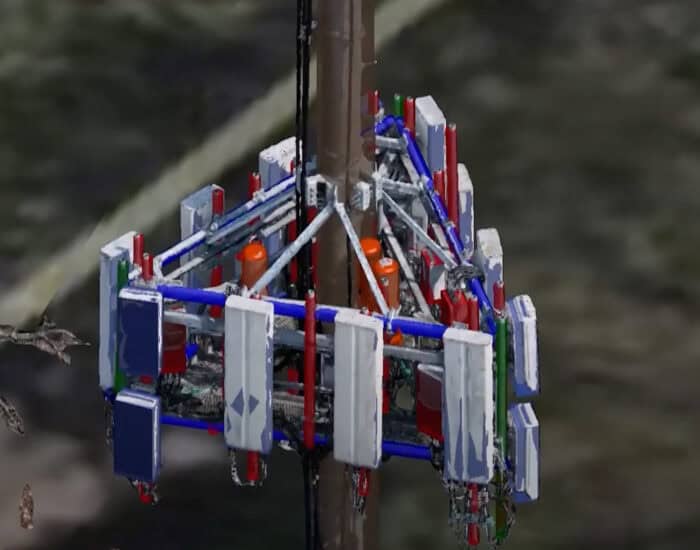
Not entirely out of sight, but almost always out of mind, cell towers quietly form the backbone of modern communication, powering everything from texts and phone calls to TikTok videos. Some topping 200 feet, they can stand tall like sentinels along roads or poke up from the roofs of high buildings. Their thistle-like tops bristle with antennas, transmitters, and other equipment that keep us connected.

Now, as the shift from 4G to 5G networks gains momentum, telecom companies are under pressure to modernize them. This labor-intensive process typically involves tower inspections, upgrades, equipment swaps, and maintenance to improve data speed, boost capacity, and lower latency to customers.

Now there’s a way to make the process easier, help telecom companies bring 5G to their customers faster, and keep the signal strong. The approach involves digital twins. These 3D digital models of infrastructure assets—roads, bridges, and even entire cities—can span their entire life, from design and construction to operations and maintenance.

Enhanced with artificial intelligence (AI) and machine learning (ML), digital twins of cell towers can help the telecommunications industry to optimize tower operations by accurately accounting for the equipment attached to the top of each tower and improve maintenance and upgrades planning. They can also help uncover and fix potential defects and anomalies before they start affecting customers.

Can you hear me now?

Bentley Systems, the infrastructure engineering software company, has already helped operators digitize more than 25,000 cell towers across the United States.

The technology gathers data and images from drones, satellites, Internet of Things (IoT), and other sources and sends it to iTwin, Bentley’s open platform for infrastructure digital twins. There, the company’s cloud-based OpenTower iQ solution uses AI and ML to generate automated reports and drawings, and integrate them into plans for upgrades, inspections, and maintenance.

“At the end of the day, we’re trying to deliver valuable insights about operating conditions to our users to ensure these asses remain safe, reliable, and resilient,” explains Mike Schellhase, vice president for asset analytics at Bentley. “The goal is to couple sophisticated digital twin models with reality data and our AI and ML capabilities to present a complete and measurable view of how these towers are operating in the field.”

From weeks to days

In the competitive telecom industry, carriers are under pressure to quickly activate expensive spectrum purchased from regulators. They must do so within strict timeframes to avoid costly penalties or even lose the spectrum entirely due to use-it-or-lose-it provisions.

Typically, upgrades and equipment swaps have been a manual process that involves climbers and cranes, and engineers looking at paper manufacturer catalogs for antennas and part numbers. “We’re shortening the analyses needed for asset deployment from three to six weeks or longer to just a few days,” said Rand Knight, senior business development director at Bentley. “Our reality models measure all distances down to the centimeter. The collection of cables, which run from the ground up to an antenna, can cost more than $2,000 a foot. So if you’re off by a few feet, that’s a lot amount of money either lost or saved.”

In the Blyncsy of an eye

The telecom sector isn’t the only one where Bentley is using asset analytics. For example, Blyncsy, which Bentley acquired in 2023, helps local and state transportation departments maintain roads.

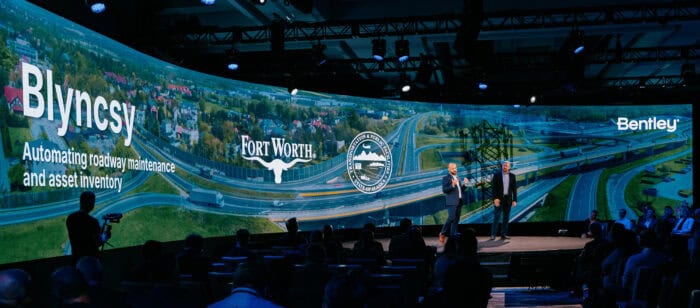
Blyncsy gathers crowd-sourced images from dashcams and other sources in the iTwin platform, where they are analyzed and used for real-time condition monitoring. The City of Fort Worth, Texas and the Alaska DOT are use Blyncsy to automate inspections and detect everything from fading lane markings and faulty streetlights to fresh potholes. By detecting and repairing safety more quickly and efficiently, customers can extend the life of vital roadways.

There are other solutions. The New Bullards Bar Dam in California’s eastern foothills recently modernized its remote monitoring system with a digital twin. “For a digital twin to be truly useful, we have to augment the model with engineering, information, and operating technology, basically, the idea that there are many genres of data streams that interact with the model,” Schellhase says. “What Asset Analytics really drives home is the power of bringing to bear a matrixed view of other sources of truth and using AI to extract value and meaning for the user.”

- Video Advertisement -

Related Post

OpenRail Designer 2025: Redefining Efficiency for Global Rail Infrastructure

Bentley Systems has officially launched OpenRail Designer 2025, a major update designed to eliminate the manual bottlenecks that have long challenged rail engineers. By focusing on advanced automation, data integrity, and high-fidelity geospatial integration, this release transforms how complex rail networks—from routine maintenance to high-speed megaprojects—are designed and managed. As global demand for resilient infrastructure […]
How Portugal Uses Digital Tools to Manage Water Network During Heat Waves

As summer temperatures in northern Portugal consistently climb past 38°C, regional water utility Águas do Norte has successfully pivoted from reactive repairs to proactive management by leveraging Bentley Systems’ OpenFlows Water solution. Serving nearly 2 million residents across 63 municipalities, the utility faced recurring crises where extreme heat caused water tanks to hit critical lows, […]
ALDOT Integrates Bentley’s AI to Refine Performance-Based Highway Budgeting

Alabama Utilizes Bentley Tech to strengthen data-driven maintenance planning The Alabama Department of Transportation (ALDOT) is enhancing its long-standing performance-based budgeting model by integrating Blyncsy, an AI-powered solution from Bentley Systems. For more than 15 years, ALDOT has led the way in using data to drive financial decisions, but the manual collection of condition data […]

Bentley Systems Technology Predicts Grid Failures Before the Storm Hits

As extreme weather events continue to expose the vulnerabilities of an aging electrical grid, Bentley Systems is deploying advanced “digital twin” technology to transform how utilities prepare for disasters. By utilizing its Power Line Systems (PLS) software, Bentley can now predict exactly which poles and wires will fail under specific weather conditions, allowing for surgical, […]
Why “Smart” Pumps Aren’t Always Smart

Think a “variable speed” pump is a guaranteed money-saver? Think again. A recent analysis has revealed that a common engineering “shortcut” could actually be draining thousands of dollars from utility budgets every year. Junior engineers often fall for the “Pump Affinity Law”—a simple formula suggesting that if you slow a pump down by 20%, you […]

What is the Bentley Tech Summit—and why does it matter?

As Germany prepares for a historic US$500 billion investment in its national infrastructure, Bentley Systems has convened its second annual Tech Summit in the heart of Berlin. The event marks a strategic shift for the software giant, moving beyond simple product training toward a “community of technologists” dedicated to solving global infrastructure challenges. In a […]