



Bentley Systems Technology Predicts Grid Failures Before the Storm Hits

As extreme weather events continue to expose the vulnerabilities of an aging electrical grid, Bentley Systems is deploying advanced “digital twin” technology to transform how utilities prepare for disasters.

By utilizing its Power Line Systems (PLS) software, Bentley can now predict exactly which poles and wires will fail under specific weather conditions, allowing for surgical, proactive repairs.

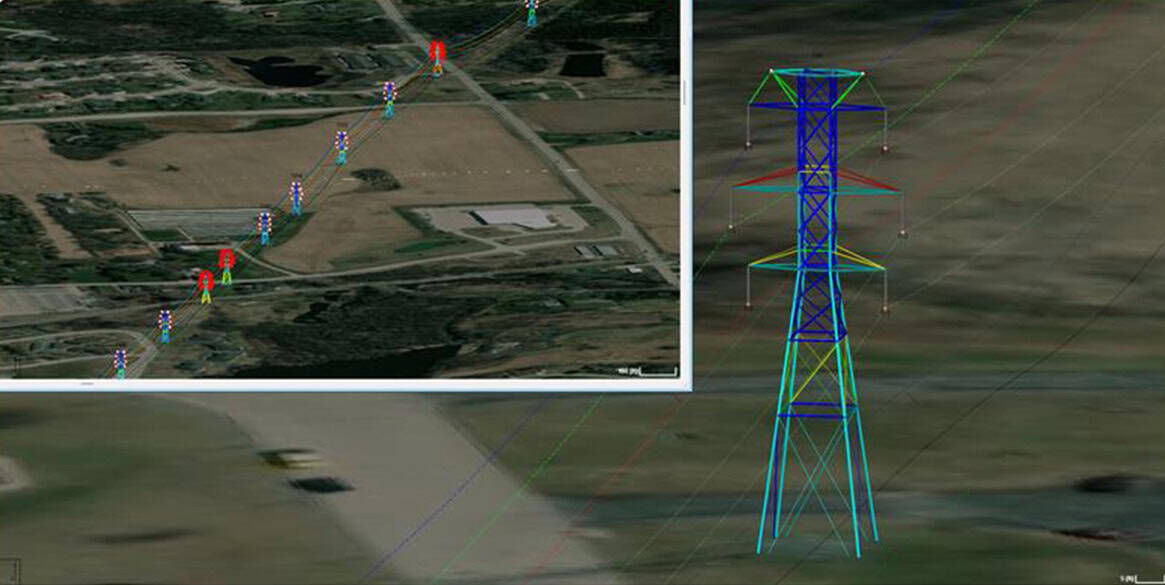
A screenshot of several towers and a close-up of a tower where four hangers are failing (the four members in red).

Current safety codes often allow distribution lines (poles under 60 feet) to bypass extreme weather requirements. This creates a cycle where utilities replace downed poles with the same undersized components that just failed.

Otto Lynch, Vice President at Bentley Systems and head of PLS, said that the industry must move toward a “predictive maintenance” model similar to aviation.

“We can model the entire grid and stress-test it against any weather scenario. The software instantly shows which structures will fail—and where—showing red blobs on a heat map,” said Lynch.

Software can model and stress-test every pole, crossarm, and wire on the grid, simulate any windstorm and ice cover, and identify which structures are likely to fail.

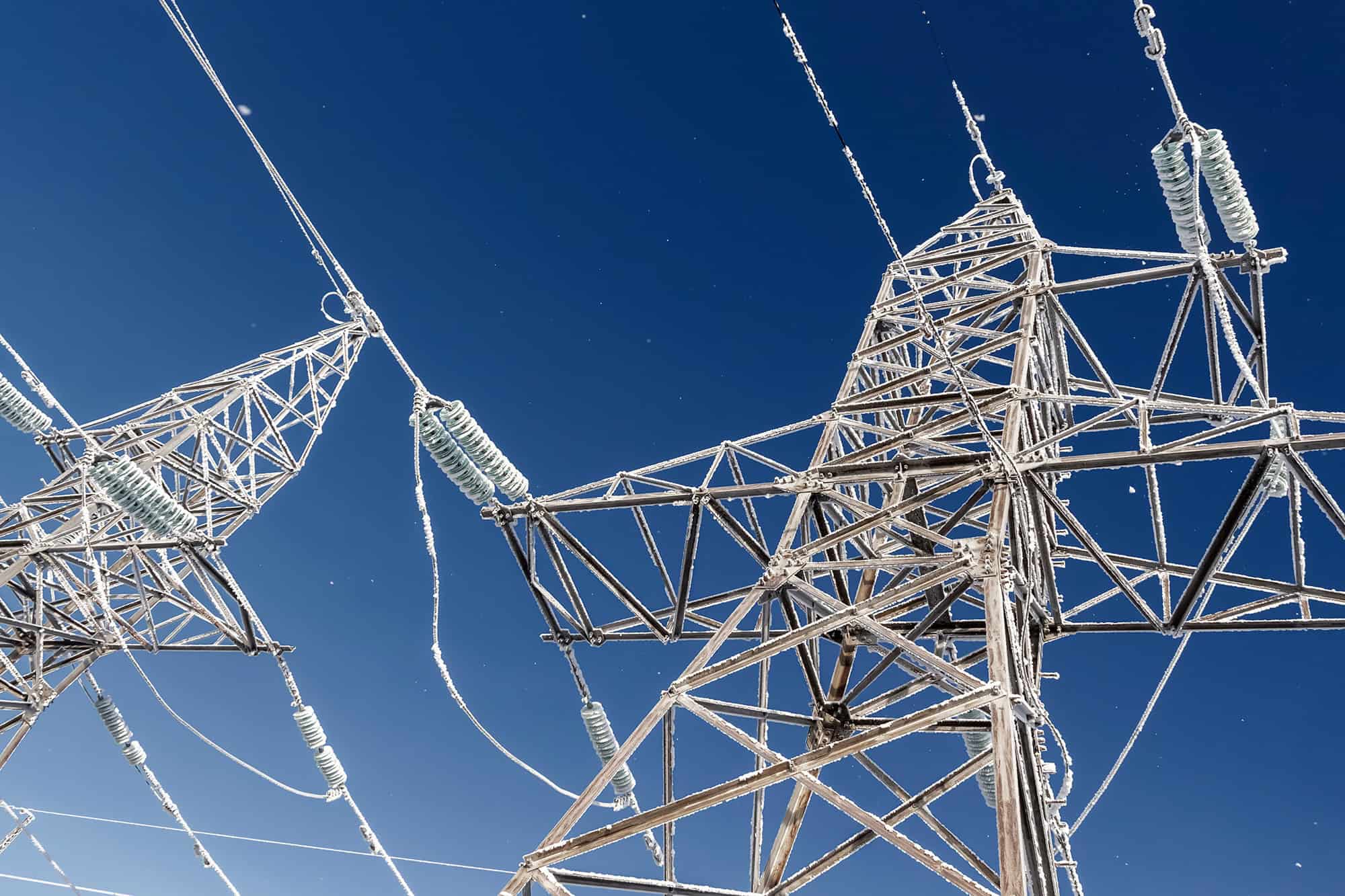
Bentley’s integrated software suite offers a granular look at infrastructure health. It creates a virtual replica of every tower, crossarm, and wire, factoring in the physics of how materials react to ice, wind, and heat.

Besides, instead of multi-million dollar capital projects, the software can identify if a failure can be prevented by simply swapping out a single steel member or bracket. Moreover, structural analysis that used to take days can now be performed on miles of transmission lines in minutes.

While 98% of new transmission lines are designed with PLS software, modeling the millions of local distribution poles has historically been too labor-intensive. Bentley is bridging this gap through its acquisition of Talon Aerolytics.

By combining drone imagery with machine learning, Bentley aims to automate the creation of engineering models. This workflow interprets drone data to identify components and automatically builds a PLS-CADD model, potentially accelerating the modeling process from one structure per hour to hundreds.

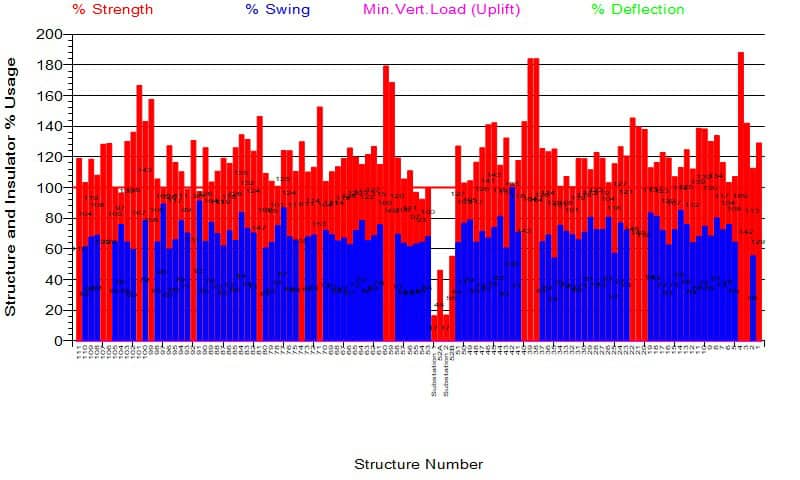
The structure usage for a 1.5″ future ice storm. Red lines over 100% indicate a potential failure. “A line is only as good as its weakest link,” Lynch says. “One crossarm, one bolt, one ‘pole, or one insulator fails—in the graph above 100%—and the electricity stops flowing.”

“The tools exist to make this grid reliable. We can find the vulnerabilities and fix them before the next ice storm or hurricane… the alternative is what we saw in late January,” Lynch added.

- Video Advertisement -

Related Post

OpenRail Designer 2025: Redefining Efficiency for Global Rail Infrastructure

Bentley Systems has officially launched OpenRail Designer 2025, a major update designed to eliminate the manual bottlenecks that have long challenged rail engineers. By focusing on advanced automation, data integrity, and high-fidelity geospatial integration, this release transforms how complex rail networks—from routine maintenance to high-speed megaprojects—are designed and managed. As global demand for resilient infrastructure […]

How Portugal Uses Digital Tools to Manage Water Network During Heat Waves

As summer temperatures in northern Portugal consistently climb past 38°C, regional water utility Águas do Norte has successfully pivoted from reactive repairs to proactive management by leveraging Bentley Systems’ OpenFlows Water solution. Serving nearly 2 million residents across 63 municipalities, the utility faced recurring crises where extreme heat caused water tanks to hit critical lows, […]

ALDOT Integrates Bentley’s AI to Refine Performance-Based Highway Budgeting

Alabama Utilizes Bentley Tech to strengthen data-driven maintenance planning The Alabama Department of Transportation (ALDOT) is enhancing its long-standing performance-based budgeting model by integrating Blyncsy, an AI-powered solution from Bentley Systems. For more than 15 years, ALDOT has led the way in using data to drive financial decisions, but the manual collection of condition data […]

Why “Smart” Pumps Aren’t Always Smart

Think a “variable speed” pump is a guaranteed money-saver? Think again. A recent analysis has revealed that a common engineering “shortcut” could actually be draining thousands of dollars from utility budgets every year. Junior engineers often fall for the “Pump Affinity Law”—a simple formula suggesting that if you slow a pump down by 20%, you […]

What is the Bentley Tech Summit—and why does it matter?

As Germany prepares for a historic US$500 billion investment in its national infrastructure, Bentley Systems has convened its second annual Tech Summit in the heart of Berlin. The event marks a strategic shift for the software giant, moving beyond simple product training toward a “community of technologists” dedicated to solving global infrastructure challenges. In a […]

Bentley Tech Summit Unites 500 Experts in Berlin Amidst Germany’s Modernization Push

Set against the ambitious backdrop of Germany’s half-trillion-euro national investment in modernizing its transport, energy, and public-works systems, the Bentley Tech Summit 2025 convened its global community of 500 infrastructure experts in Berlin. This year’s summit marked a significant shift in focus, emphasizing the principle that the future of infrastructure is being built by the […]