





Government Commissions Specialized Task Force to Redefine Future of Old Phnom Penh International Airport
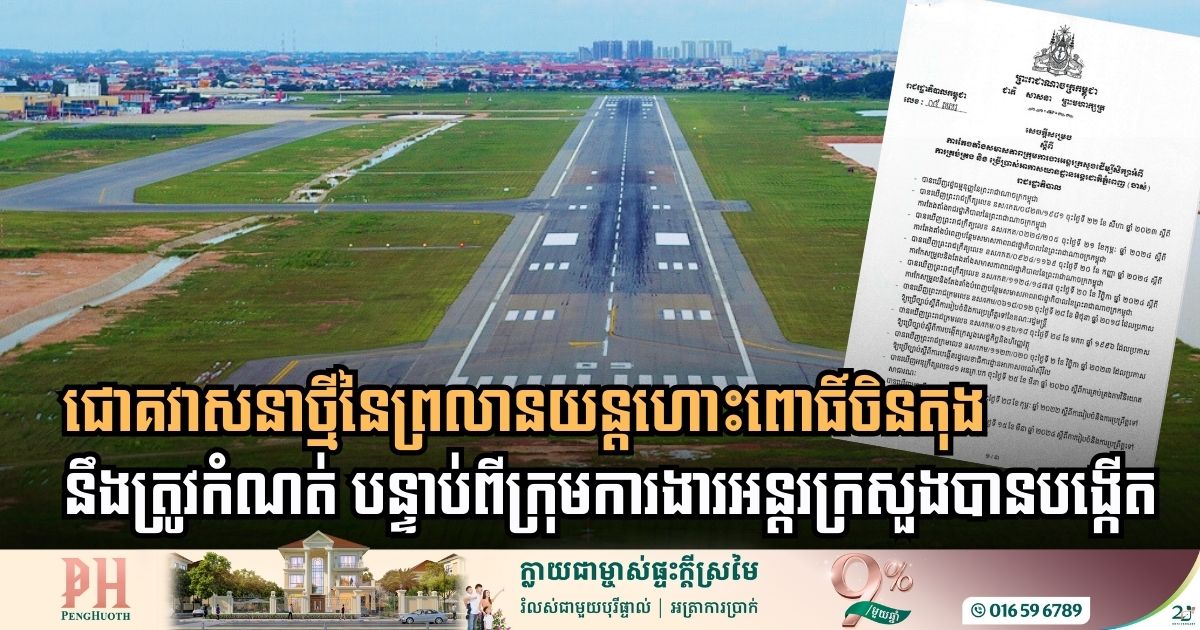
Inter-ministerial group led by Secretary of State Chheang Vannarith to study long-term management and public utility of the historic Pochentong site as commercial aviation shifts to Techo International Airport
The Royal Government of Cambodia has officially established a high-level inter-ministerial task force to conduct a comprehensive study on the management and future utilization of the old Phnom Penh International Airport. Following a decision signed by Prime Minister Hun Manet on January 10, 2026, the committee is charged with ensuring that the 386-hectare site remains a productive state asset that serves the public interest while preserving its historical legacy. Chheang Vannarith, Secretary of State of the Council of Ministers, has been appointed as the chairman of the working group, supported by various vice chairmen and members from across the civil aviation and economic sectors.
The formation of this group comes just months after all commercial and international flights were transitioned to the newly inaugurated $2.3 billion Techo International Airport in September 2025. While the old airport, originally known as Pochentong, has ceased its primary role as the nation’s main gateway, the Prime Minister has repeatedly emphasized that the land is not for sale to private developers. Instead, the government envisions a multifaceted future for the site, which could include a massive public park, an aviation museum dedicated to the legacy of the late King Father Norodom Sihanouk, and a secondary runway for emergency or military landings.
The task force will explore public-private partnership models to maintain the existing infrastructure without placing an undue burden on the national budget. Current estimates suggest that maintaining the site costs approximately 3 million dollars annually, a figure the government hopes to offset through strategic economic activities within the airport’s grounds. These activities must be designed to enhance the quality of life for residents in the Por Senchey district and the wider capital, potentially including green spaces, cultural venues, and commercial zones that do not interfere with the reserve runway.
As Cambodia continues its rapid modernization, the work of this inter-ministerial group represents a critical step in urban planning for Phnom Penh. By carefully studying the transition of such a significant piece of infrastructure, the government aims to balance economic growth with the preservation of a site that has seen nearly 70 years of Cambodian history. The findings of the study will eventually form the blueprint for a new landmark in the heart of the city, transforming a symbol of travel into a center for community and national pride. (read more)