
How Do Concrete Admixtures Save the Planet ?

Concrete is a mixture of cement, water, sand, coarse aggregates – and sometimes we add some chemicals called “admixtures”. The structural engineers define the right proportions of each elements which is the concrete mix design; usually they calculate it according to national guidelines or and standards. The appropriate mix proportions must be done carefully, the quality of raw materials is essential to obtain good results.

The potential qualities of a concrete will only be realised if it is correctly batched, mixed, placed and cured. The SIKA team is often contacted to improve the performance of concrete production. It is difficult to control each parameter, so the addition of admixtures helps the concrete producer to control the performance.

ADMIXTURE PROPERTIES

SIKA has been operating for 15 years in Cambodia. We are proud to have been producing our SIKA Admixtures in Phnom Penh since December 2015. We cooperate with and supply all the major concrete producers in Cambodia. When you look out of the window, a large part of the concrete used for buildings contains a little bit of concrete admixtures.

Admixtures make a great difference in fresh and hard concrete; the compression strength is higher thanks to the reduction of water in the mix, the concrete is easier to cast as the workability is improved, the duration before the concrete starts that hardened can be retarded (setting time extended) or shortened, and the capillaries in the concrete can be reduced to develop waterproofing properties. Admixtures are very technical and involve chemical reactions with the cement to control the formation of the crystals.

DID YOU KNOW ?

Cement in the concrete reacts with water and creates a crystal.This reaction is exothermic and releases a lot of heat. In some countries where the temperature is very high, they mix water with ice to reduce the temperature when the concrete is produced.

CONCRETE FACTS

The original use of concrete has been traced back to ancient Egypt, where it was used as an infill material for the pyramids.

Concrete is used twice as much in construction than all other building materials like reinforcement, timber, etc.

It is the most used material in the world in terms of volume.

The Roman-constructed Pantheon is still the world’s largest unreinforced concrete dome.

Thomas Edison held 49 concrete patents and experimented with precast concrete houses filled with concrete furniture, pianos and refrigerators.

Nowadays, construction companies are using scented form release agents to impart a pleasant smell in concrete, the most famous being bubble gum.

4 ADMIXTURES TYPES

Nowadays in Cambodia, concrete producers require long slump retention for flexible delivery and 100% strength development within 7days. The mostcommon 4 types of Ad-mixtures are:

1 Type D for ready mixed concrete or site plant that need retarder with low and mid strength requirement (<40Mpa)

PlastIment® R/96, Plastocrete® 907, Plastomix®250

2 Type G for ready mixed concrete or site plant that need retarder with high strength requirement (>40Mpa)

Sikament® 2000AT, SikaPlast®204 / 208 / D30, SikaViscocrete®151

3 Type F for precast concrete element

Sikament®NN , Sika Viscrete®3000-10 / 800 series

4 Waterproofing

Plastocrete N , SikaWT 200-P

SIKA BENEFITS

The Sika team is always involved in the selection and dosage of our admixtures in the concrete mix to ensure high quality concrete.

Also major cost-savings are possible thanks to admixtures because it helps increase the strength, so the concrete producers use less cement. This helps the environment: less cement = reduction of carbon dioxyde emissions. •

For more information please contact : sales@kh.sika.com or call 017 666 762 (Mr. Nila)

- Video Advertisement -

Related Post

Bentley announces the Bentley Technology Summit to be held in Toronto, Canada

As urbanization accelerates and the demands on global infrastructure reach unprecedented heights, the industry stands at a major turning point. From managing complex subterranean geology for major metropolitan transit lines—like Vienna’s ambitious metro expansion using advanced 3D subsurface models—to navigating new paradigms in artificial intelligence and connected data, modern civil engineering is undergoing a massive […]
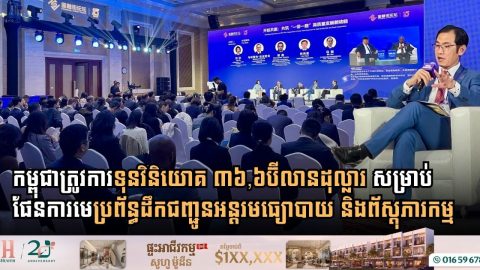
Cambodia’s Intermodal Logistics Master Plan Requires $36.6 Billion Investment to Drive Economic Transformation

Representing Cambodia at a high-level Belt and Road parallel forum in China, officials spotlight the visionary 174-project roadmap and the transformative impact of the Funan Techo Canal. Cambodia’s comprehensive master plan on the intermodal transport and logistics system for 2023–2033 requires an estimated investment capital of $36.6 billion to fully execute its wide-ranging infrastructure strategy. […]

How a 3D Underground Model is Shaping Vienna’s Transit Future

As Vienna’s population continues to surge and tourism hits record-breaking highs, the Austrian capital is looking downward to secure its future. The city is currently boring a brand-new metro line through some of the trickiest, most varied geological terrain in Europe—guided by an innovative 3D subsurface model that began, fittingly, on a rooftop. A Legacy […]

Cambodia Registers Over 2,600 Domestic Products in First Nine Months of 2026

Prime Minister Hun Manet highlights a significant surge in local product registrations, urging broader public and commercial support to bolster national manufacturing and economic resilience. Domestic manufacturing in Cambodia has achieved a major milestone, with approximately 2,600 local products officially registered with the Ministry of Industry during the first nine months of 2026. This figure […]
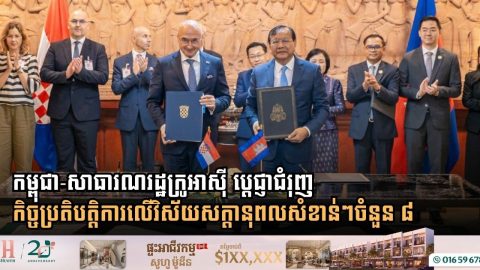
Cambodia and Croatia Pledge Stronger Bilateral Ties Across Eight Priority Sectors

A historic official visit by Croatia’s Minister of Foreign and European Affairs yields mutual commitments to deepen economic cooperation and exchange expertise in global demining endeavors. Cambodia and the Republic of Croatia have agreed to strengthen bilateral relations across eight core priority areas following a landmark official visit to the Kingdom by the Croatian diplomatic […]

Cambodia SME Bank Disburses Nearly $500 Million in Policy Loans to Empower MSMEs as Core Economic Drivers

Prime Minister Hun Manet officially launches the National Strategy for MSME Development 2026–2030, reinforcing state financial backing and multi-agency coordination to boost local enterprise competitiveness. Cambodia’s government-backed financial support mechanisms have mobilized nearly $500 million in targeted policy loans through the Small and Medium Enterprise Bank of Cambodia (SME Bank) through 2025. The capital infusion […]