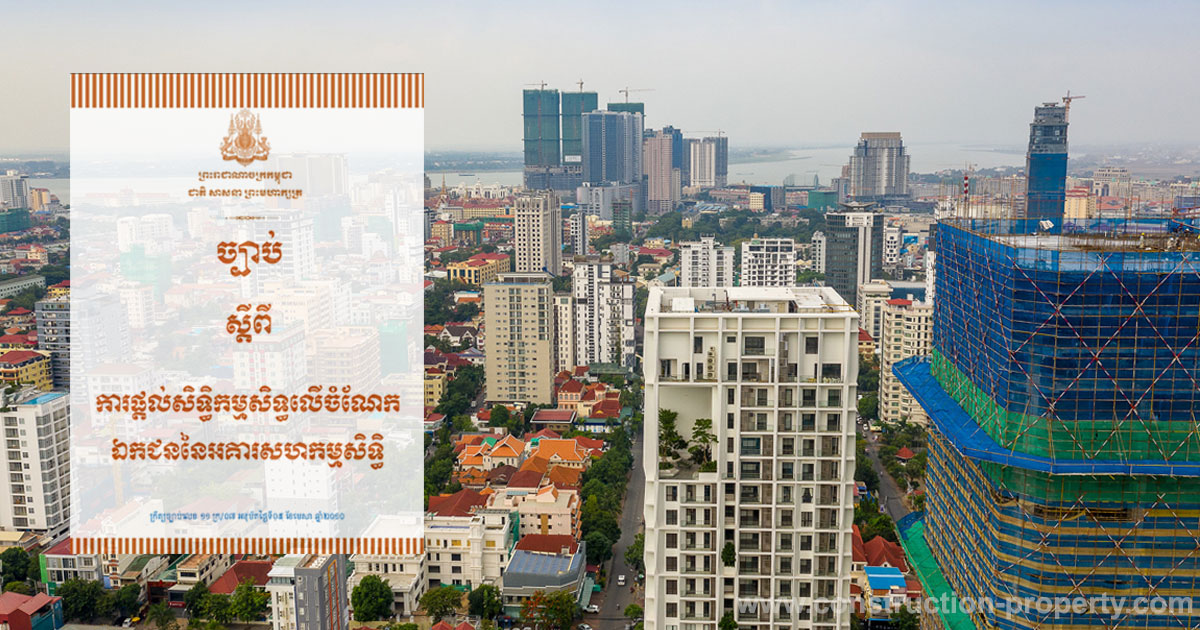
What are the Procedures to Register Private Units in Co-owned Buildings?

The term ‘co-owned building’ refers to a building or construction in which many co-owners live together, such as condominiums, attached houses, detached buildings, semi-detached buildings, and other kinds of buildings with a shared structure. Given the multiple owners, the procedure for registering ownership is also different from normal property registration.

What are the procedures to register private units in co-owned buildings?

Co-owned buildings must be 100% completed before being able to register units within them. The co-owners who are occupying or permanently leasing on the private part of the co-ownership building must apply for registration with the competent authorities with the following procedure:

A. Relevant documents

Applicant/owner shall apply for the cadastral registration at the Municipal/District/Khan Cadastral Administration Office with the following documents:
– Construction permit
– Certificate proving the building is legally/properly constructed or the certificate of construction work completion
– Detailed architectural plan showing the number of floors, private units, and common areas of the building
– Internal regulations
– Owner’s identity documents
– Other relevant documents, if any.

The application form shall be submitted to the local Municipal/District/Khan Cadastral Administration Office of the Ministry of Land Management, Urban Planning, and Construction (MLMUPC) where the co-owned building is located.

B. Inspection

1. At the Municipal/District/Khan Cadastral Administration Office

After receipt, the concerned Municipal/District/Khan Office of MLMUPC shall dully check the form and attached documents and submit them to the Capital/Provincial Cadastral Department of MMLUPC within three working days at the latest for review and approval.

After approval by the Cadastral Department, the Municipal/District/Khan Office shall give notice of one week to the owner before the data collection.

Then, the technical officer(s) will cooperate with Commune/Sangkat officers, property developers, and the applicant/owner to collect and check data on-site within one week at the latest. All the data then will be sent to the cadastral department for further procedure.

2. Capital/ Provincial Cadastral Department
Officers at the cadastral department must clarify the data. If something isn’t clear, the officer will check or assign technical officer(s) to handle field investigation to collect further data within one week at the latest.

C. Public Announcement
After document checking, the Municipal/District/Khan Office of MLMUPC shall publicly display the collected data for one week to allow concerned owners or beneficiaries to check and claim against the data or request adjustment. This public display shall be organised on the site of the co-owned immovable property itself as well as in the Commune/Sangkat hall where the co-owned building is located.

D. End of registration
In case there is a dispute, the Municipal/District/Khan Office of MLMUPC shall solve it if possible; otherwise, they can bring the case to the court. In case there is no dispute, or the dispute has been resolved, the cadastral department shall, within one week, register the private unit of the co-owned building according to the application of the owner.

The service fee for the registration of 1,600,000 riels shall be paid to the cadastral department which is permanently valid.

For those co-owned buildings constructed before 19 December 1997, a private unit registration request does not require presentation of a certificate that the building is correctly constructed nor a certificate of completed construction work nor a detailed architectural plan of the co-owned building.

However, if the building is constructed after 19 December 1997 until the enforcement date of Sub-Decree No.126 RNKR, BK dated on 12 August 2009, regularisation of the architectural plan is required, in particular, those building without a property construction permit.

- Video Advertisement -

Related Post

Cambodia’s Land Ministry Expands Legal Framework with Over 230 Regulatory Instruments to Upgrade Construction and Urban Standards

Ministry enacts 65 legal codes and advances 165 draft regulations to ensure safety, structural quality, and sustainable urban development across the Kingdom Phnom Penh: Establishing a comprehensive legal framework and clear technical guidelines remains a foundational priority for the Royal Government of Cambodia in regulating urban development and building practices. In early September, the Ministry […]
Ministry of Public Works and Transport Partners with EU4PFM Project to Establish Standard Operating Procedures for Public Investment Management

Permanent Secretary of State H.E. Koy Sodany convenes key consultative meeting to strengthen transparency, accountability, and fiscal discipline across national infrastructure projects Phnom Penh: Strengthening public financial management and optimizing capital allocation remain cornerstone objectives for Cambodia’s sustainable socio-economic growth. On the morning of Thursday, August 27, 2026, H.E. Koy Sodany, Permanent Secretary of State […]
Cambodia Accelerates Legal Reforms Through National Workshop on Regulatory Impact Assessment and Good Practice Regulation

Permanent Deputy Prime Minister Vongsey Vissoth leads multi-agency session with British experts to refine regulatory drafting and enhance economic competitiveness Phnom Penh: Modernizing Cambodia’s legal ecosystem and improving the efficiency of regulatory frameworks achieved a key institutional benchmark aimed at strengthening public administration and fostering a predictable business environment. On August 25, 2026, the Office […]

Authority to Launch Sewerage Service Fee Collection After Policy Review and Approval

In an important move to streamline the collection of sewerage service fees, the Council of Ministers convened a closed meeting on December 26, 2025, to discuss a draft sub-decree outlining the procedures for this process. Chaired by HE Liv Sovanna, Vice President and Chairman of the 4th Working Group of the Council of Lawmakers, and […]
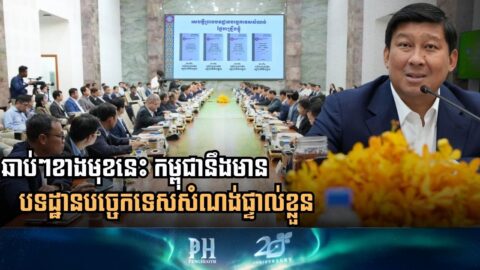
National Council for Building Technical Regulations Takes Significant Steps Towards Enhanced Standards in Cambodia

HE Say Samal leads the meeting to approve the draft technical regulations to ensure safety and sustainability in the construction sector The National Council for Building Technical Regulations convened a significant meeting under the auspices of the Ministry of Land Management, Urban Planning, and Construction, according to the meeting held on 18 December 2025. This […]

The Gov’t Announces New Public Bus Lines to Techo International Airport to Ease Traffic Congestion

In an effort to alleviate traffic congestion and improve travel convenience, the Phnom Penh City Bus Autonomous Administration (CBA) has announced plans to launch two new public bus lines to Techo International Airport starting September 9, 2025. This initiative aims to provide residents and visitors with an efficient transportation option to one of Southeast Asia’s […]