






Five EU Countries Invests €5Billion in “Rail Baltica”, An Unprecedented Model for Global Infrastructure

In a groundbreaking initiative to transform Baltic connectivity, “Rail Baltica” emerges as a trailblazing greenfield rail transport infrastructure project. This ambitious endeavor seeks to seamlessly integrate the Baltic States into the European rail network, involving five European Union countries: Poland, Lithuania, Latvia, Estonia, and indirectly, Finland. A monumental leap in regional development, it stands as the largest infrastructure project in the Baltic region in the last century. This is according to the Update of Bentley Systems on November 5, 2023.

This visionary project spans an impressive 870km high-speed railway, connecting key cities such as Helsinki, Tallinn, Pärnu, Riga, Panevežys, Kaunas, Vilnius, and Warsaw. The estimated cost of the Rail Baltica project was around €5.8 billion with financing from the European Union (CEF), as well as Estonia, Latvia, and Lithuania, “Rail Baltica” epitomizes collaborative cross-border efforts to foster enhanced connectivity and sustainable development.

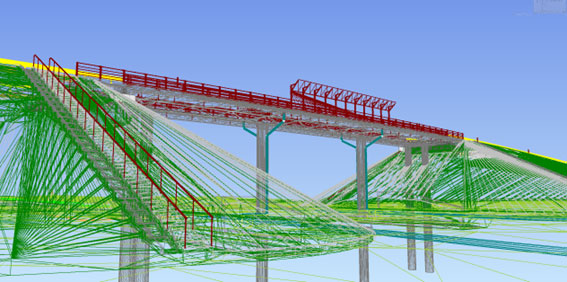
The electric train system boasts an impressive transport capacity, with passenger trains achieving a remarkable speed of 249 km per hour, while the freight lines operate efficiently at 120 km per hour. The ambitious project comprises six different sections, including 44 railway viaducts, 50 road viaducts, 15 bridges, 17 wildlife crossings, as well as power systems for the entire railway line.

Upon completion, “Rail Baltica” not only promises enhanced regional connectivity but also champions sustainability. The fully electrified infrastructure is projected to significantly reduce CO2 emissions, leading to an 18.3% decrease in air pollution and a 4.5% reduction in noise, marking a substantial step towards a greener future.

In the process of designing and constructing greenfield infrastructure meant to serve society for the next 100 years, adaptation to climate change emerges as a crucial aspect. This not only ensures resilience but also safeguards investments, enhances public safety, aligns with regulations, and contributes to overall environmental sustainability. Rail Baltica has incorporated climate-related considerations into the projects life cycle since its initial stages of planning and design,” remarked Emilien Dang​ Chief Technical Officer and Member of the Management Board of the joint venture RB Rail AS.

Dang emphasized the significant role of Rail Baltica in achieving EU energy independence and enhancing regional energy security. The global project aims to rely on 100% renewable energy, foreseeing a substantial reduction in CO2 emissions—exceeding 150,000 tCO2e per year of operation in 2030 and over 400,000 tCO2e per year of operation by 2050. By encouraging a modal shift towards rail, the net cost of greenhouse gas emissions is expected to decrease from 2.3 to 3.1 billion euros. Fossil fuel consumption could also see a notable decrease, ranging from 1.5% to 3.3%, compared to the average consumption during the period between 2010 and 2021.


Photo: Bentley System

- Video Advertisement -

Related Post

Cambodia and Laos to Fast-Track Cross-Border Connectivity with New Ratanakiri-Attapeu Road Link

Joint inspection team to finalize construction zones this February to unlock new trade and economic opportunities Cambodia and Laos have reached a pivotal agreement to conduct a joint technical inspection aimed at defining the specific zones for a new road project connecting Ratanakiri province in Cambodia to Attapeu province in Laos. This initiative is a […]

Pursat Provincial Authorities Inaugurate New Bridge and Kick Off Construction of Nine Rural Roads

In a significant boost to local infrastructure, the Royal Government of Cambodia officially inaugurated a new 75-meter concrete bridge and announced the construction of nine additional rural roads in Pursat Province. The ceremony presided over by His Excellency Chhay Rithsen, Minister of Rural Development, marked a milestone for the community. The newly inaugurated bridge, connecting […]

Bassac River Bridge in Chak Angre Krom–Prek Pra Reaches 51% Completion

As of October 28, 2025, construction of the Bassac River Crossing Bridge connecting Chak Angre Krom to Prek Pra has reached 51% completion, according to the Ministry of Public Works and Transport (MPWT). A recent on-site inspection led by His Excellency Suong Heng, Secretary of State and Project Director, revealed steady progress across key construction […]

National Road 23 Fully Completed, Boosting Connectivity and Regional Growth

The Ministry of Public Works and Transport has officially announced the full completion of the National Road 23 (NR23) upgrade, marking a significant achievement in Cambodia’s ongoing infrastructure development. The announcement was made on October 24, 2025, following the completion of a 19.8-kilometer section designed to improve transportation efficiency and accessibility for local residents. The […]

Kampong Chhnang Province Celebrates Groundbreaking of Six Major Roads Enhancing Rural Development

In a significant step towards improving rural infrastructure, the Ministry of Rural Development held a groundbreaking ceremony today for the construction of six roads spanning over 40.5 kilometers. The event took place in the Teuk Phos and Kampong Tralach districts, with His Excellency Chhay Rithsen, the Minister of the Ministry of Rural Development, presiding over […]

Svay Rieng Province Celebrates New Infrastructure Development

Svay Rieng Province is making significant strides in rural infrastructure development, having successfully constructed 771 rural roads that span nearly 3,000 kilometers. Local authorities are dedicated to further enhancing infrastructure to stimulate economic growth in the region. This commitment was underscored during the recent groundbreaking ceremony for a new 60-meter-long concrete bridge over the Prek […]