
Southeast Asia’s Largest Solar Projects Lead Global Renewable Energy Growth

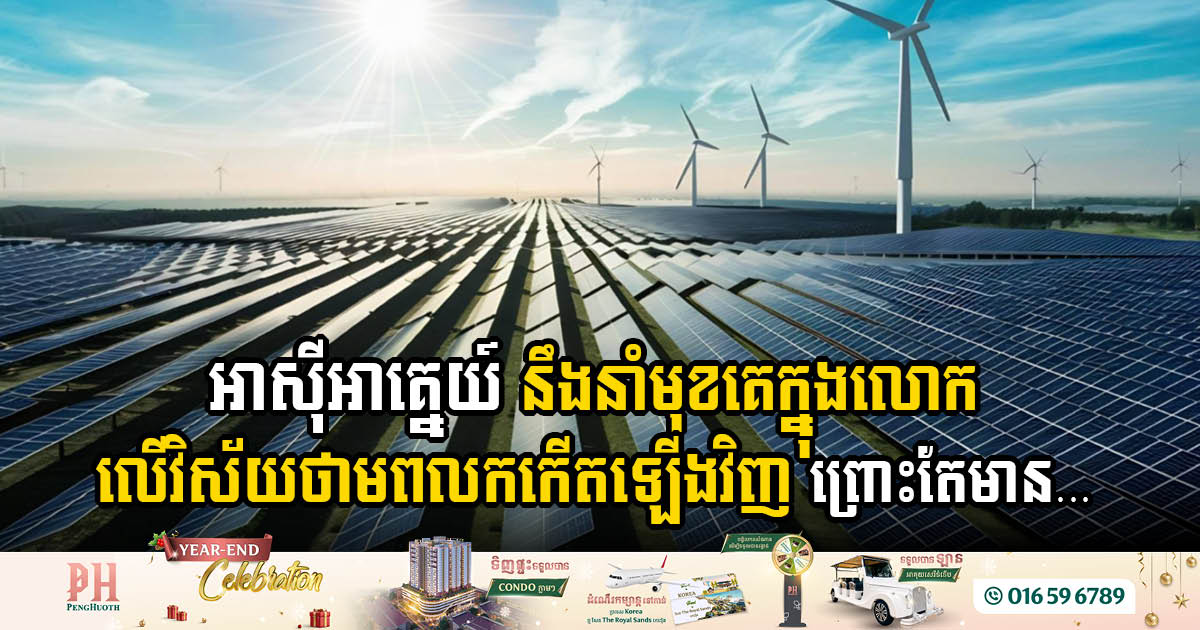
Southeast Asia continues to lead the renewable energy charge with landmark solar projects across Vietnam, Indonesia, and Thailand, showcasing the region’s commitment to sustainable development. With ASEAN member states targeting 35% renewable energy capacity by 2025, the region currently boasts 28 GW of utility-scale solar and wind power, contributing 9% to its total electricity capacity, as updated by Saurenergy on 21 November 2024.

According to the International Energy Agency, clean energy sources like solar, wind, and bioenergy are expected to meet over one-third of ASEAN’s energy demand by 2035.

The Dau Tieng Solar Power Plant in Tay Ninh, Vietnam, is the largest solar project in Southeast Asia, with a capacity of 500 MW. Developed in multiple phases, it became operational in 2019 and supplies power to Vietnam Electricity under a 20-year purchase agreement at USD 0.093/kWh. Following closely is the 450 MW Trung Nam Solar PV Park, also in Vietnam, which supports the nation’s goal of achieving 20% renewable energy by 2030.

Indonesia hosts Southeast Asia’s largest floating solar project, the Cirata Floating Solar Power Plant, with a capacity of 192 MWp. Spread across 250 hectares of the Cirata Reservoir in West Java, this ground-breaking project marks Masdar’s entry into the ASEAN market. Meanwhile, the Philippines contributes to the Solar Philippines Concepcion Solar PV Park, a 150 MW facility supplying electricity to Manila Electric under a 20-year agreement at USD 0.058/kWh.

In Thailand, the Phitsanulok-EA Solar PV Park generates 133.9 MW, producing 129,053 MWh annually. This project, owned by Energy Absolute Public, underscores Thailand’s efforts to expand renewable capacity. By 2026, upgrades following the expiry of the initial purchase agreement are expected to further reduce power rates, enhancing efficiency and output.

In Cambodia, significant strides are being made in renewable energy development as part of the government’s commitment to achieving a target of sourcing 70% of its energy from renewable sources by 2030. As of now, over 62% of Cambodia’s electricity generation comes from renewables, predominantly hydropower (approximately 52.93%) and solar (about 6%). The government has approved 23 new energy projects totaling an investment of USD 5.79 billion, including 12 solar power projects and 6 wind power projects, which will collectively add around 3,950 MW of clean energy capacity. Notably, Cambodia plans to integrate wind power into its national grid by 2026, with six wind projects in Mondulkiri province expected to generate 900 MW. The ongoing efforts aim to enhance energy security and lower electricity costs for consumers while supporting economic growth through clean energy initiatives.

ASEAN nations are on track to surpass renewable energy targets, driven by supportive policies and ongoing investments. With 6.3 GW of solar and wind projects under construction and an additional 10.7 GW anticipated by 2025, the region is poised for transformative growth, reinforcing its position as a global renewable energy leader.

- Video Advertisement -

Related Post

Cambodia and Japan Forge Strategic Partnership to Tackle Climate Change and Environmental Challenges

Bilateral agreement sets ambitious targets for greenhouse gas reduction and outlines a comprehensive framework for sustainable growth The Ministries of Environment from Cambodia and Japan have entered into a landmark Memorandum of Cooperation designed to significantly lower greenhouse gas emissions and promote environmental sustainability. Signed on February 16, 2026, by Cambodian Environment Minister Eang Sophalleth […]

Industrial Giants Propose Innovative Waste-to-Energy Park to Cambodian Government

Vinci Construction and SUEZ present feasibility study for urban solid waste treatment and sustainable energy production A delegation from Vinci Construction and SUEZ Company recently met with Cambodian government officials to present a feasibility study for a proposed waste recycling park. The project focuses on selecting advanced technologies for the treatment of urban solid waste […]
Cambodia Greenlights $10 Million Recycling Hub in Sihanoukville

Strategic facility in Kampong Seila to pioneer industrial-scale recycling of electronic, automotive, and metal waste as part of a nationwide environmental cleanup initiative Sihanoukville’s industrial landscape is set for a major environmental upgrade following the government’s approval of a $10 million specialized waste processing plant. On January 21, 2026, the Ministry of Environment and provincial […]

Vietnam, Cambodia, and Laos Strengthen Cooperation on Power Supply and Transportation Links

In a significant move towards enhancing regional connectivity, Cambodian Prime Minister Hun Sen, Vietnamese Prime Minister Pham Minh Chinh, and Lao Prime Minister Sonexay Siphandone pledged to further develop power supply and transportation links among their countries. This commitment was made during the 47th ASEAN Summit and Related Summits held in Kuala Lumpur, Malaysia, from […]
ADB Approves USD 82.5 Million to Advance Renewable Energy in Cambodia

The Asian Development Bank (ADB) has approved a substantial funding package of USD 82.5 million aimed at bolstering Cambodia’s Energy Transition Sector Development Program (ETSDP). The announcement was made in a press release on October 7, 2025, highlighting the program’s dual focus on policy reforms and technological investments. The primary objective of the ETSDP is […]
Major Companies Set to Convert Household Waste into Electricity in Phnom Penh

In a significant step towards sustainable energy solutions, two major companies, SAGE ENGINEERING and VINCI CONSTRUCTION, have unveiled plans to convert household waste into electricity in Phnom Penh. This initiative aims to enhance energy efficiency while addressing the growing waste management challenges in the capital city. The announcement followed a working meeting on September 18, […]