




Bentley Systems’ AI and Digital Twins Lead the Charge to Save U.S. Bridges

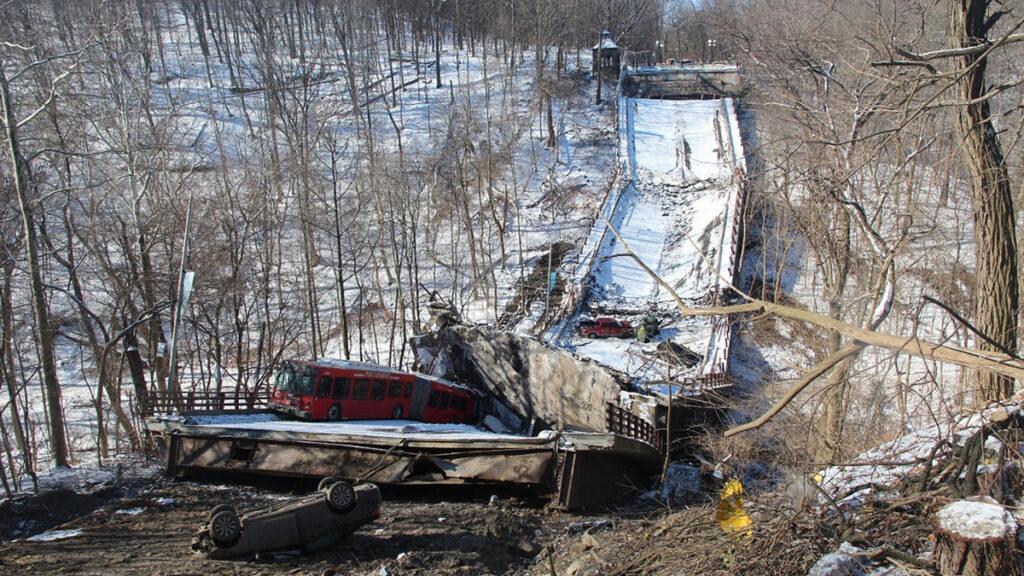
In the wake of the 2022 Fern Hollow Bridge collapse, which highlighted the critical vulnerability of America’s aging infrastructure, technology is emerging as the only viable path forward.  The crisis, driven by a funding shortfall and a lack of engineers for manual inspections, is forcing transportation agencies to embrace innovative solutions.

Here are two examples of how Bentley Systems’ digital twin and AI-powered software are setting new standards for efficiency, safety, and infrastructure resilience.

Image source: ntsb.gov

1. Bridging Kentucky: 90% Faster Surveys

The Kentucky Transportation Cabinet faced a monumental task: assessing over 1,000 bridges following devastating floods in July 2022, a process initially projected to take a decade and cost over $7 million.

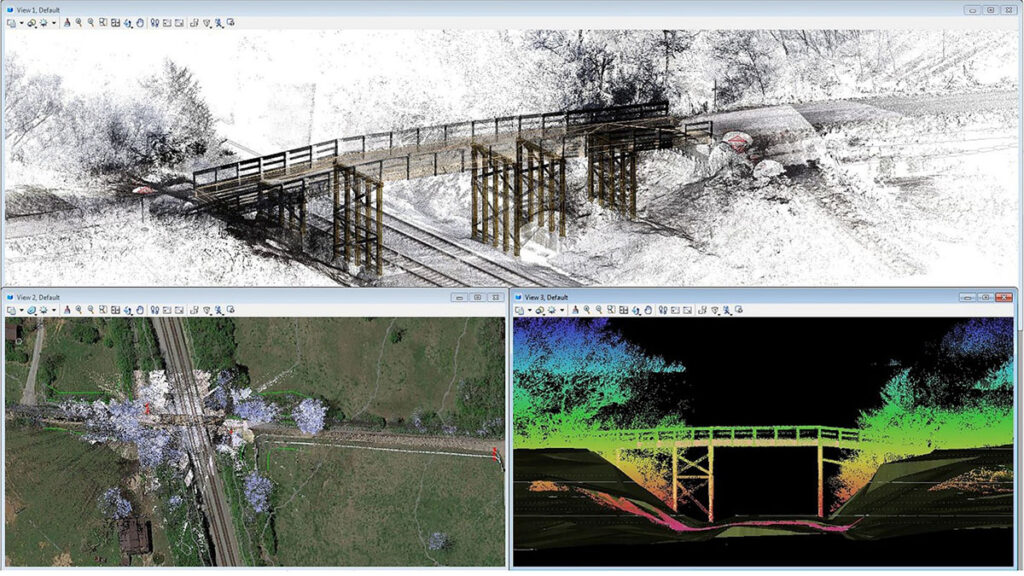
Combining field survey codes laser scan and drone context created a 3D existing conditions model. Image courtesy of QK4.

QK4, Inc., the engineering firm leading the effort, utilized Bentley’s software suite, including OpenRoads, ProjectWise, and Bentley LumenRT, to accelerate their digital approach.

By integrating drone context, laser scans, and field data into a detailed 3D existing conditions model (Digital Twin), QK4 cut survey processing time by a remarkable 90% and reduced overall costs by 50%, saving the state over $3 million.

This digital workflow enabled the rapid replacement of flood-damaged bridges, setting a new benchmark for disaster recovery and infrastructure project delivery.

2. AI-Powered Inspections at Robert Street Bridge

In Minnesota, Collins Engineers, Inc. faced the challenge of inspecting the historic Robert Street Bridge ahead of a major rehabilitation.

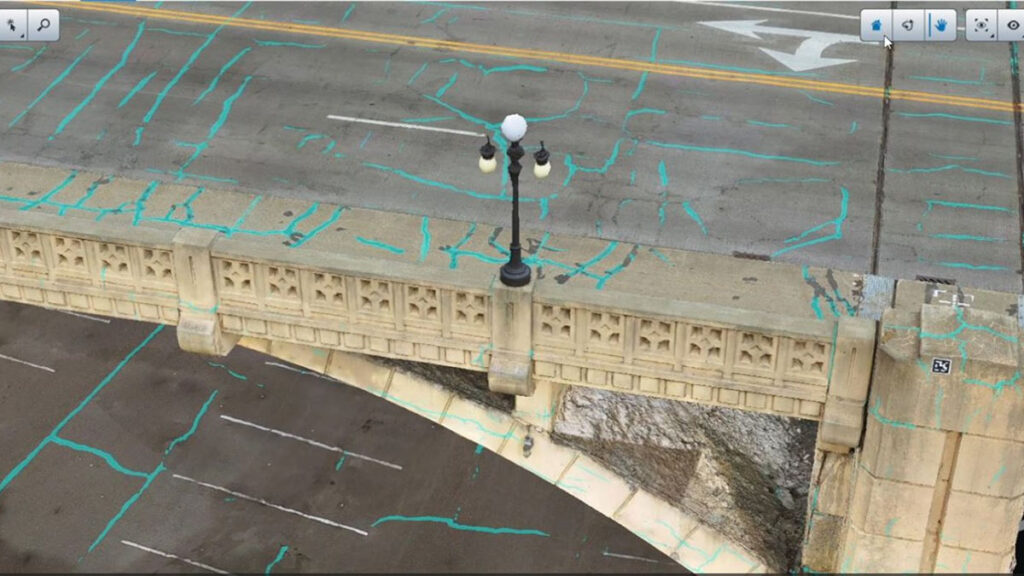
The firm worked closely with Bentley, leveraging the iTwin Platform and related AI tools like iTwin Capture and iTwin Experience. They created a high-fidelity digital twin of the structure, using Bentley’s AI defect detection capabilities to automatically find and document concrete cracks.

Image courtesy of Collins Engineers

This workflow saved over 30% in inspection hours and significantly improved the quality and precision of data collection. The project demonstrates how Bentley’s AI capabilities provide precise, timely interventions, enhancing both the engineer’s safety and the public’s reliance on the structure.

The shift toward AI-enabled workflows and digital twins is no longer a matter of preference but a necessity for infrastructure builders. As the backlog of structurally deficient bridges continues to grow, and the resources for traditional methods remain constrained, Bentley Systems’ portfolio—including its focus on the iTwin Platform for creating and leveraging digital twins—is proving vital to the industry.

These tools allow engineers to move beyond manual effort, transforming raw data into actionable insights for the design, construction, and long-term maintenance of the nation’s critical links.

- Video Advertisement -

Related Post

How Data-Driven Workflows Are Changing Engineering Delivery

For decades, the engineering and construction industry has relied on the exchange of digital files—the familiar DWGs and PDFs—as the bedrock of project delivery. However, as global infrastructure grows in complexity, a new paradigm is emerging. Experts are calling for an evolutionary crossroads where the industry moves beyond static file handovers toward dynamic, data-driven workflows. […]

Bentley Digital Twin Drives AU$105 Million in Savings for Melbourne’s M80 Ring Road

ACCIONA is setting a new global benchmark for “going digital” in infrastructure, leveraging Bentley Systems’ comprehensive software suite to manage the AU$ 3.8 billion M80 Ring Road Completion project. By deploying a sophisticated digital twin strategy, the project team has successfully slashed planning times and is on track to mitigate over AU$ 105 million in […]

Indonesia Leverages Bentley Software to Build World’s Largest Refuse-Derived Fuel Plant

PT Wijaya Karya (WIKA) has recently completed construction for the Rorotan Jakarta Refuse-Derived Fuel (RDF) Plant, a monumental project set to become the world’s largest facility of its kind. The IDR 1.28 trillion facility is designed to process 2,500 tons of municipal waste daily, converting it into 875 tons of sustainable fuel. To manage a […]
Digital Twin Tech Breaks Decades-Old Deadlock on Major I-95 Bridge Project

Engineering firm Johnson, Mirmiran & Thompson (JMT) has successfully utilized high-tech 3D modeling and connected data known as digital twin to solve congestion on I-95 crossing over the Rappahannock River in eastern Virginia, in the United States. For decades, the I-95 crossing over the Rappahannock River was defined by chronic congestion and a “not-in-my-backyard” stalemate. […]

AI-Powered Digital Twin Revolutionizes Tunnel Maintenance in Italy

Italferr S.p.A. has set a new benchmark in railway safety by implementing an AI-powered digital twin for the Serravalle Tunnel, part of the strategic Tezo Valico dei Giovi line connecting Genoa and Milan. By moving away from manual, time-consuming inspections, the project has successfully automated defect detection, dramatically reducing operational risks. The primary challenge for […]

Saudi Arabia Sets Global Smart City Benchmark with “Manarah” Urban Data Platform

The Al Madinah Region Development Authority (MDA) has successfully launched the Manarah Urban Data Platform (MUDP), a state-of-the-art digital twin initiative that balances the rapid expansion goals of Saudi Vision 2030 with the preservation of ancient Islamic heritage. By utilizing a specialized suite of Bentley Systems software, the MDA has mapped 55 square kilometers of […]