How Data-Driven Workflows Are Changing Engineering Delivery

For decades, the engineering and construction industry has relied on the exchange of digital files—the familiar DWGs and PDFs—as the bedrock of project delivery. However, as global infrastructure grows in complexity, a new paradigm is emerging. Experts are calling for an evolutionary crossroads where the industry moves beyond static file handovers toward dynamic, data-driven workflows.

This shift, aligned with the ISO 19650 international standard, reimagines project delivery not as a series of disconnected document exchanges but as a structured ascent of information. The transition ensures that the ultimate goal of a project is no longer just a physical structure, but a verified, as-built digital asset delivered to the owner for long-term use.

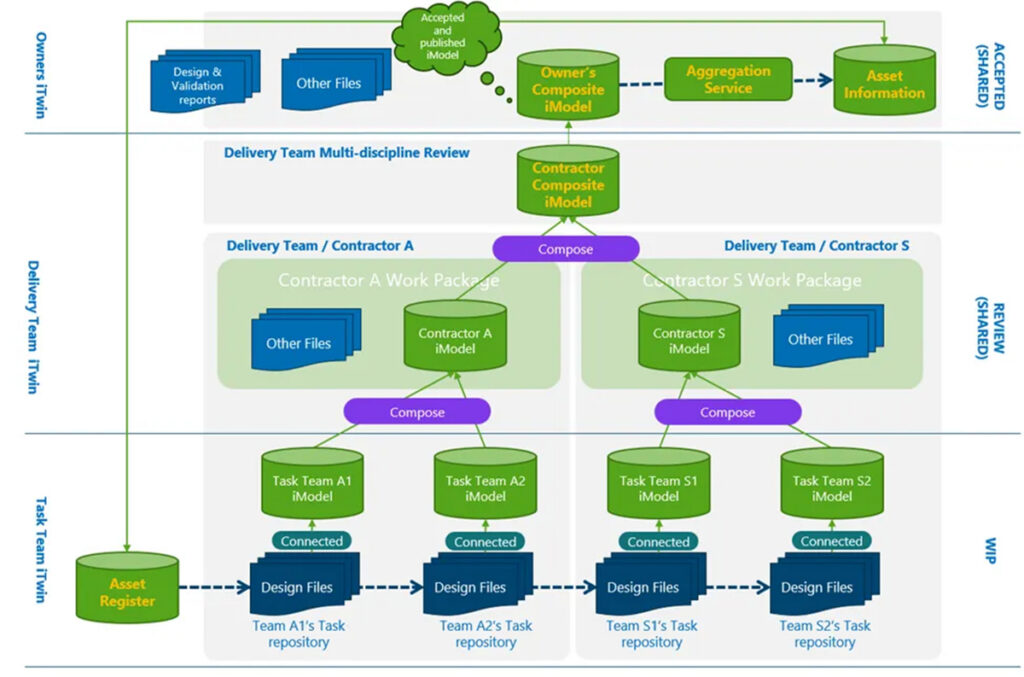
To describe this lifecycle, industry leaders use the analogy of an expedition to the summit of Mount Everest. In this model, the final digital twin is the peak, while various “iModels” act as sophisticated staging camps established along the route. Data only progresses to the next camp once it has been verified and deemed fit for its next purpose, ensuring that information remains organized and mature throughout the construction process.

To understand the shift to data-driven workflows, imagine the project delivery process as an expedition to the summit of Mount Everest. The ultimate goal — the peak — is the final, verified, as-built model delivered to the owner.

The journey begins at the Task Team Base Camp, where designers work in native CAD environments. Rather than emailing files, they publish their content into a designated iModel that serves as a private arena for work-in-progress reviews. This allows teams to identify conflicts early before sharing their data with the wider project.

As the data gains maturity, it moves to the Delivery Team Camp. Here, individual task models are merged into a consolidated contractor model. This step ensures that all of a contractor’s specific systems are fully coordinated before they are integrated with the work of other teams.

Composing Data-driven deliverables

The most critical phase occurs at the Project Federation Camp, known as the “SHARED” state under ISO 19650. This model represents the entire project, integrating every discipline into a single multidisciplinary whole. At this stage, reviewers perform clash detection and constructability analyses against the complete dataset, seeing every piece of the puzzle in its rightful place within the grand design.

The final ascent concludes at the Owner’s iModel. When all reviews are complete and issues resolved, the federated model is handed over for acceptance. Unlike traditional methods, where a change in a drawing might take weeks to propagate, this data-centric approach is iterative. When a designer makes an update at the source, the improved data seamlessly begins its ascent through the stages again.

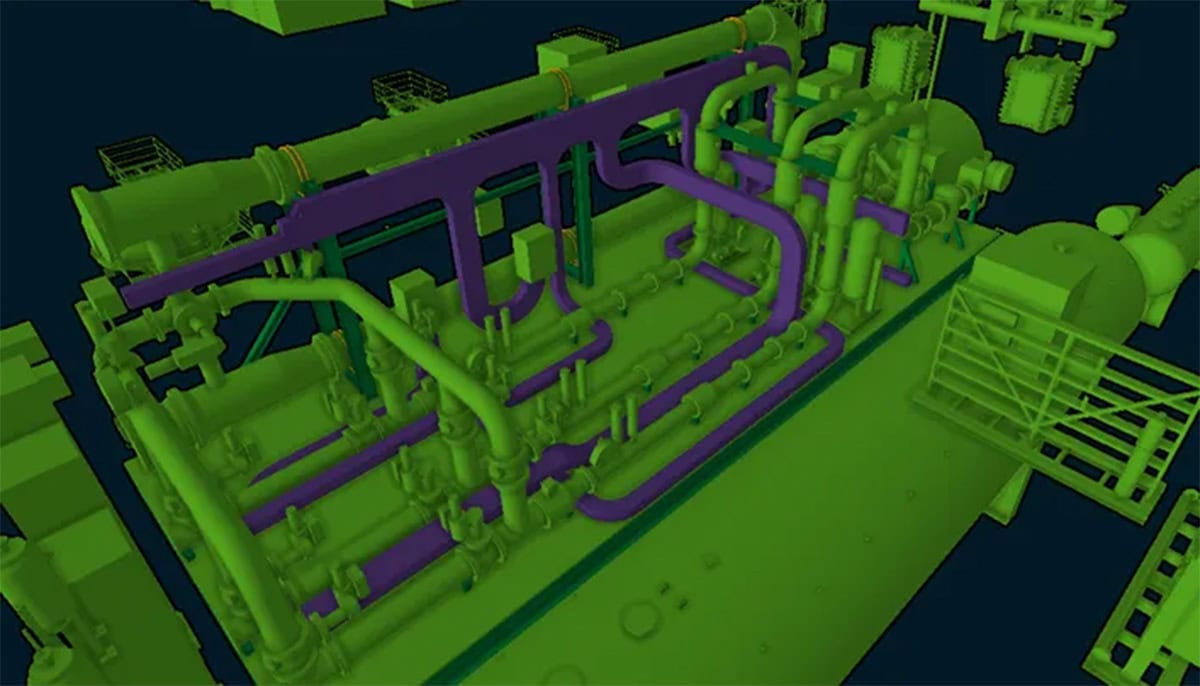
3D model of an industrial piping system with green and purple pipes, valves, and equipment shown from an elevated angle.

By building on file-based foundations with this data-driven methodology, the industry is creating a definitive single source of truth. This fosters a more collaborative environment and delivers a valuable, intelligent digital twin that serves the owner for the entire lifecycle of the asset. The future of engineering has arrived, and it is built on a foundation of living data.

- Video Advertisement -

Related Post

Bentley Systems Unveils Ai-Powered Software To Accelerate Substation Design

Bentley Systems has launched OpenUtilities Substation+, a new model-based design platform featuring built-in “agentic” AI to safely automate complex engineering workflows​ in the utilities infrastructure sector. The + version was launched following the surge in global electricity demand from widespread electrification and new data centers. The utilities sector faces immense pressure to design power substations […]

Bentley Systems Launches First Applied AI Tech Hub in Québec City

Infrastructure software giant Bentley Systems has officially opened a multimillion-dollar applied AI tech hub in Québec City, marking its first major facility dedicated to bringing artificial intelligence to global infrastructure engineering. The new technology hub serves as a critical laboratory where software and AI teams collaborate directly with regional engineering partners. Bentley Systems develops advanced […]

New Orleans Faces Rising Seas; Engineers Turn To Bentley Digital Tech To Fortify Defenses

US engineers are leveraging Bentley Systems’ advanced technology to secure that the city will not sink into the water, transforming Louisiana into a potential global model for climate adaptation. A new Tulane University study has recently warned that rising sea levels could eventually push the Gulf of Mexico shoreline 62 miles inland, placing New Orleans […]

How Bentley Software is Saving Millions on Brazil’s New Bridge

Sener Mobility has successfully leveraged advanced digital engineering software to optimize the foundation design for the BRL 10.42 billion Salvador-Itaparica Bridge project in Brazil. Tasked with managing complex soil and rock conditions for the 12.5-kilometer bridge, the engineering team transitioned from traditional 2D workflows to an integrated 3D approach using Bentley Systems’ subsurface software, Leapfrog […]

How Bentley Digital Twins is Reshaping Maritime Inspections

Major engineering firm Haskoning has revolutionized maritime infrastructure inspection by successfully completing a digital-first assessment of the Holyhead Deepwater Jetty in North Wales using Bentley Systems software. A critical asset supporting cruise vessels and contributing over GBP 4.75 million annually to the regional economy, the aging jetty required a comprehensive inspection of its 400 piles […]

Bentley, NXT BLD Launch $3M ‘NXT Activate’ Accelerator to Fund Next-Gen AEC Software Innovators

Bentley Systems and NXT BLD have partnered to launch NXT Activate, a new $3 million developer-focused accelerator aimed at backing early-stage startups that are building next-generation architecture, engineering, and construction (AEC) software. The three-year program is designed to support early-stage startups building software that breaks down data silos and improves workflows across the construction and […]