




Bentley Systems Unveils New AI, Geospatial, and Cloud Tools to Transform Infrastructure Engineering

What’s new in Bentley Systems’ Year in Infrastructure 2025?

Bentley Systems, a leading infrastructure engineering software company, announced a major expansion of its digital portfolio at its Year in Infrastructure 2025 conference, held on October 15 and 16 in Amsterdam.

The company unveiled new Artificial Intelligence (AI) applications, deepened the integration of geospatial modeling through its Cesium platform, and introduced a unified cloud environment to enhance project delivery and asset performance across the infrastructure lifecycle.

Bentley Systems Chief Technology Officer Julien Moutte speaks during the main keynote on Wednesday, Oct. 15, during Year in Infrastructure 2025 and Going Digital Awards. (Photo courtesy of Bentley Systems)

Geospatial Modeling and Reality Capture Power Digital Twins

Building on its acquisition of Cesium, Bentley is now offering reality modeling services directly within the Cesium ion platform. This creates an automated pipeline from data capture to geospatial visualization, allowing users to create detailed, engineering-grade 3D visualizations—including reality meshes and point clouds—directly from imagery, with annotations powered by AI.

Key geospatial developments include:

  • Reality Modeling in Cesium ion: A complete, automated pipeline using iTwin Capture to create detailed 3D reality models from imagery, ready to be streamed within applications.
  • Enhanced Design Software: MicroStation 2025 and Bentley Open Applications now support 3D Tiles via Cesium, allowing engineers to integrate rich geospatial context like Google Photorealistic 3D Tiles directly into their designs, accelerating project setup.
  • iTwin Engage: A new immersive application that uses Cesium and game engine technology to generate interactive, photorealistic, and always-current digital twins for design reviews, construction rehearsals, and remote inspections.

AI Set to Boost Engineering Productivity

Bentley emphasized its vision for “trustworthy AI” to empower—not replace—infrastructure engineers. A global survey released at the conference confirmed widespread adoption, with nearly half of infrastructure professionals piloting or implementing AI to boost design productivity and automate documentation.

To address a global shortage of engineering capacity, Bentley introduced several new and enhanced AI-powered applications:

  • OpenSite+ (Site Design): Now in limited availability, this application leverages generative AI for civil site design and has been shown to deliver projects up to 10 times faster.
  • OpenUtilities Substation+ (Substation Design): A new application that enables multiple designers to work simultaneously on the same model, reducing errors and rework.
  • SYNCHRO+ (Construction Management): An AI-powered, data-centric construction application that uses Cesium for geospatial context to explore construction sequences with greater depth.
  • Bentley Copilot: A context-aware AI assistant being integrated across the portfolio, starting with applications like OpenRoads Designer and OpenRail Designer.
  • ProjectWise AI: New search capabilities in ProjectWise will use AI to provide instant, concise summaries of documents, significantly reducing search time.

CEO Nicholas Cumins stressed Bentley’s commitment to data stewardship, reaffirming that users maintain full control over their data and decide if it is used for AI model training. The company also announced an Infrastructure AI Co-Innovation Initiative to collaborate with engineering firms and asset owners on the next generation of AI-enhanced workflows.

Bentley Systems CEO Nicholas Cumins and CTO Julien Moutte participate in a press briefing at Year in Infrastructure 2025 at Okura Hotel. (Photo courtesy of Bentley Systems)

Bentley Infrastructure Cloud Connect Unifies Data

The company also introduced Bentley Infrastructure Cloud Connect, the new foundational layer of its cloud environment. Connect provides a single, connected environment for professionals to access and manage all project and asset data—from models and PDFs to photos and IoT sensor data.

Key features of Connect include:

  • Unified Data Environment: Users can manage data from over 50 file formats and integrate with enterprise systems to form digital twins of assets.
  • Geospatial Visualization: Connect uses Cesium to provide a big-picture view of an entire portfolio in full geospatial context.
  • Seamless Collaboration: The platform streamlines collaboration, allowing teams to share files, capture feedback, and manage deliverables across their value chain.

Connect will become generally available in December 2025, serving as the new entry point to Bentley Infrastructure Cloud and connecting users to advanced design (ProjectWise) and asset operations (AssetWise) workflows.

Bentley’s announcements signal a concerted effort to integrate AI, advanced geospatial modeling, and cloud connectivity to deliver more efficient, accurate, and collaborative outcomes across the entire infrastructure lifecycle.

- Video Advertisement -

Related Post

Digital Transformation Fast-Tracks Success for Arcadis Rail

Arcadis, a global leader in infrastructure, is proving that the secret to massive railway projects isn’t just heavy machinery—it’s the digital tools and the people who master them. Andrew Germain, Associate Technical Director at Arcadis, recently shared how the division is using advanced 3D software to overhaul the UK’s rail network. By moving away from […]

Tech Pivot Saves Germany’s First All-Digital Highway Project

A landmark infrastructure project in Germany is back on track and shattering efficiency records after a critical mid-course correction in its digital strategy. Viscan GmbH, the company tasked with creating a “digital twin” for the B29 highway expansion in Baden-Württemberg, successfully rescued the project from technical failure by overhauling its data processing systems. The ambitious […]

How Data-Driven Workflows Are Changing Engineering Delivery

For decades, the engineering and construction industry has relied on the exchange of digital files—the familiar DWGs and PDFs—as the bedrock of project delivery. However, as global infrastructure grows in complexity, a new paradigm is emerging. Experts are calling for an evolutionary crossroads where the industry moves beyond static file handovers toward dynamic, data-driven workflows. […]

Bentley Systems Breaks Bottlenecks with New iTwin Capture Workflow

Bentley Systems is redefining the digital twin landscape by launching a more flexible, scalable approach to reality modeling. The new iTwin Capture workflow aims to eliminate the traditional “hardware wall” and high upfront costs that have long hindered engineers and urban planners. For years, infrastructure professionals have struggled with massive datasets—from LiDAR point clouds to […]

Digital Twins and IoT Spark a New Era in Mining Intelligence

According to a new industry report from Bentley Systems, 88% of mining organizations now recognize digital twins as high-impact technology, with nearly 90% already implementing or planning projects. For decades, mining data has been trapped in silos—split between geological reports, manual inspections, and disconnected sensors. The industry is now pivoting toward “Evergreen Digital Twins,” virtual […]
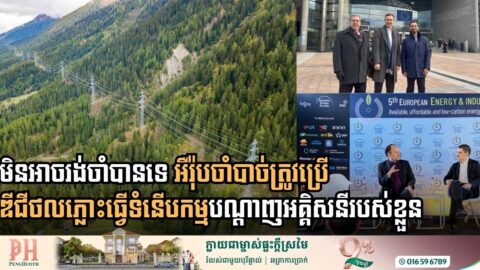
Europe’s Aging Power Grid Faces Digital “Makeover” to Meet 2030 Climate Goals

With many distribution grids expected to exceed their 40-year lifespan by 2030, EU policymakers and industry leaders are pivoting toward a “digital-first” strategy to prevent the system from buckling under the pressure of the green transition. The EU electricity infrastructure currently spans over a million kilometers, serving 600 million customers. To meet climate targets, the […]