




Engineer Builds AI Agent to Master Software, Saving Hundreds of Hours and Hinting at the Future of Infrastructure Design

An innovative application of generative AI, unveiled at the 2025 Bentley Illuminate conference, is poised to reshape how engineering firms train and deploy their talent.

Kyle Rosenmeyer, a model-based design leader at VHB, has built a custom AI agent using Microsoft’s Copilot Studio that rapidly teaches engineers how to use complex Bentley software, effectively eliminating the need for engineers to spend time “learning CAD.”

Rosenmeyer’s AI agent acts as an instant software tutor and troubleshooter, allowing engineers to ask natural language questions about Bentley products like OpenRoads or ProjectWise and receive precise, step-by-step answers.

He claims the tool has saved him over 100 hours in the past year and, based on a company survey, saves other users an estimated one to two hours per week.

“Engineers aren’t paid to learn software. They’re paid to design roads and bridges,” Rosenmeyer said. His central philosophy is that software should “get out of the way” so engineers can focus on core design tasks.

The custom agent was built on Microsoft’s low-code Copilot Studio, a platform designed for creating internal AI assistants.

Rosenmeyer attributes the agent’s high performance to a meticulously crafted “system prompt” that defines the AI’s personality and expertise, combined with access to five distinct knowledge sources: Bentley’s main site, blog, official documentation, YouTube channel, and, most critically, the user-generated content from the Communities forums.

“User-generated content… is where real engineers are asking real questions and sharing real insights. It’s messy but gold,” Rosenmeyer noted, emphasizing that the AI’s ability to “reason” its way to solutions for vague questions is a testament to the quality and accessibility of Bentley’s deep, well-structured public documentation.

The VHB agent is currently deployed within Microsoft Teams, making it instantly accessible and secure for all employees. Rosenmeyer stressed that building such a tool is “stupid easy,” requiring only basic skills to input the system prompt and relevant URLs.

He is now leading workshops to share the blueprint with others, advocating for a widespread adoption of similar Copilots across the industry.

Looking ahead five years, Rosenmeyer envisions the entire learning curve for professional software disappearing. “You won’t ‘learn CAD.’ You’ll just talk to your assistant,” he predicted.

Furthermore, he argues this shift in the design office is critical preparation for a larger transformation: the rise of “Physical AI” and robotics on construction sites. As autonomous equipment becomes a reality, the engineering and design workflows must be fully digitized and integrated with AI tools to manage the infrastructure data layer, ensuring the industry is not “caught unprepared” for the coming automation wave.

- Video Advertisement -

Related Post

How Data-Driven Workflows Are Changing Engineering Delivery

For decades, the engineering and construction industry has relied on the exchange of digital files—the familiar DWGs and PDFs—as the bedrock of project delivery. However, as global infrastructure grows in complexity, a new paradigm is emerging. Experts are calling for an evolutionary crossroads where the industry moves beyond static file handovers toward dynamic, data-driven workflows. […]

Bentley Digital Twin Drives AU$105 Million in Savings for Melbourne’s M80 Ring Road

ACCIONA is setting a new global benchmark for “going digital” in infrastructure, leveraging Bentley Systems’ comprehensive software suite to manage the AU$ 3.8 billion M80 Ring Road Completion project. By deploying a sophisticated digital twin strategy, the project team has successfully slashed planning times and is on track to mitigate over AU$ 105 million in […]

Indonesia Leverages Bentley Software to Build World’s Largest Refuse-Derived Fuel Plant

PT Wijaya Karya (WIKA) has recently completed construction for the Rorotan Jakarta Refuse-Derived Fuel (RDF) Plant, a monumental project set to become the world’s largest facility of its kind. The IDR 1.28 trillion facility is designed to process 2,500 tons of municipal waste daily, converting it into 875 tons of sustainable fuel. To manage a […]
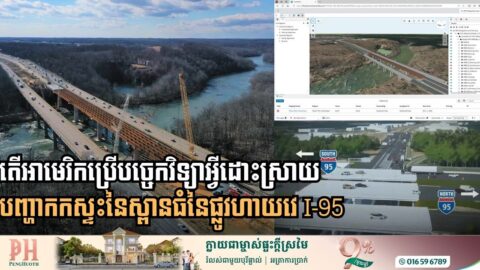
Digital Twin Tech Breaks Decades-Old Deadlock on Major I-95 Bridge Project

Engineering firm Johnson, Mirmiran & Thompson (JMT) has successfully utilized high-tech 3D modeling and connected data known as digital twin to solve congestion on I-95 crossing over the Rappahannock River in eastern Virginia, in the United States. For decades, the I-95 crossing over the Rappahannock River was defined by chronic congestion and a “not-in-my-backyard” stalemate. […]

AI-Powered Digital Twin Revolutionizes Tunnel Maintenance in Italy

Italferr S.p.A. has set a new benchmark in railway safety by implementing an AI-powered digital twin for the Serravalle Tunnel, part of the strategic Tezo Valico dei Giovi line connecting Genoa and Milan. By moving away from manual, time-consuming inspections, the project has successfully automated defect detection, dramatically reducing operational risks. The primary challenge for […]

Saudi Arabia Sets Global Smart City Benchmark with “Manarah” Urban Data Platform

The Al Madinah Region Development Authority (MDA) has successfully launched the Manarah Urban Data Platform (MUDP), a state-of-the-art digital twin initiative that balances the rapid expansion goals of Saudi Vision 2030 with the preservation of ancient Islamic heritage. By utilizing a specialized suite of Bentley Systems software, the MDA has mapped 55 square kilometers of […]