





How Advanced Mapping is Revolutionizing the Energy Future

The energy sector is undergoing a massive transformation, driven by the adoption of advanced geospatial technologies that are making a “digital-by-default” approach essential for large-scale energy infrastructure programs.

These precision mapping solutions are fundamentally changing how energy assets—from oil and gas to renewables like solar and wind—are planned, constructed, and maintained, promising greater efficiency, accuracy, and sustainability.

Traditional surveying methods, often prone to manual error and inadequate for complex terrains, are being rapidly replaced by sophisticated geospatial systems. These solutions provide highly accurate data from the earliest planning stages, allowing engineers to create detailed 3D models.

This capability is proving vital for challenging projects, such as siting solar plants on remote hillsides or developing hydropower in complex valleys, enabling infrastructure designs that seamlessly fit into the existing landscape.

Key Impacts of Geospatial Solutions:

  • Enhanced Construction Accuracy: Geospatial data is used to guide heavy construction machinery with minimal deviation, crucial for laying foundations and constructing access roads. This precision reduces the need for expensive rework, saving both time and money.
  • Improved Collaboration: By providing a single, accurate data source, geospatial solutions ensure all stakeholders—engineers, architects, and construction crews—are coordinated, leading to smoother and more efficient project execution.
  • Resilience and Risk Mitigation: Integrating geospatial data with environmental models allows engineers to simulate real-world conditions. This predictive analysis can forecast how flooding might affect a geothermal plant or provide seismic data to design more earthquake-resistant wind turbines, significantly reducing the risk of failures and power outages.
  • Environmental Sustainability: The technology identifies sensitive areas like wetlands or wildlife habitats during planning, helping engineers design projects that minimize ecological disruption and ensure regulatory compliance.
  • Long-Term Asset Management: Beyond construction, geospatial tools are critical for ongoing maintenance. They are used to monitor the condition of power lines (e.g., vegetation encroachment), assess operational risks based on weather, and optimize maintenance routes, extending the lifespan of existing assets.

Recent advancements, such as Cesium’s 3D Tiles for rapid visualization of massive datasets and the integration of geospatial data into digital twins using platforms like Bentley’s iTwin, are making the technology more powerful and accessible.

A prime example of its success is in China, where PowerChina Hubei used a geospatial-data-rich digital twin to strategically site nearly 15,000 solar panels in undulating terrain. This detailed understanding of the natural environment at each panel’s location maximized the solar plant’s production.

Looking ahead, the integration of Artificial Intelligence (AI) and Machine Learning (ML) with geospatial data is set to enhance predictive analytics, allowing planners to anticipate challenges before they arise. Furthermore, drones equipped with these solutions are automating surveying in hard-to-reach areas, improving safety and data collection efficiency.

In essence, these advanced mapping technologies are not just tools for construction; they are foundational to building energy infrastructure that is resilient, environmentally responsible, and adaptable to future challenges.

- Video Advertisement -

Related Post

How Data-Driven Workflows Are Changing Engineering Delivery

For decades, the engineering and construction industry has relied on the exchange of digital files—the familiar DWGs and PDFs—as the bedrock of project delivery. However, as global infrastructure grows in complexity, a new paradigm is emerging. Experts are calling for an evolutionary crossroads where the industry moves beyond static file handovers toward dynamic, data-driven workflows. […]

Bentley Digital Twin Drives AU$105 Million in Savings for Melbourne’s M80 Ring Road

ACCIONA is setting a new global benchmark for “going digital” in infrastructure, leveraging Bentley Systems’ comprehensive software suite to manage the AU$ 3.8 billion M80 Ring Road Completion project. By deploying a sophisticated digital twin strategy, the project team has successfully slashed planning times and is on track to mitigate over AU$ 105 million in […]

Indonesia Leverages Bentley Software to Build World’s Largest Refuse-Derived Fuel Plant

PT Wijaya Karya (WIKA) has recently completed construction for the Rorotan Jakarta Refuse-Derived Fuel (RDF) Plant, a monumental project set to become the world’s largest facility of its kind. The IDR 1.28 trillion facility is designed to process 2,500 tons of municipal waste daily, converting it into 875 tons of sustainable fuel. To manage a […]
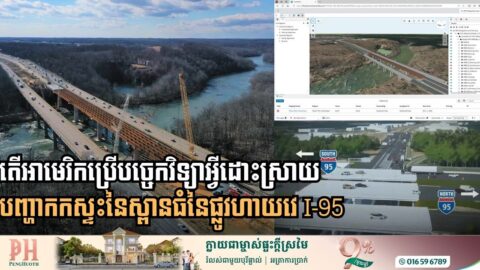
Digital Twin Tech Breaks Decades-Old Deadlock on Major I-95 Bridge Project

Engineering firm Johnson, Mirmiran & Thompson (JMT) has successfully utilized high-tech 3D modeling and connected data known as digital twin to solve congestion on I-95 crossing over the Rappahannock River in eastern Virginia, in the United States. For decades, the I-95 crossing over the Rappahannock River was defined by chronic congestion and a “not-in-my-backyard” stalemate. […]
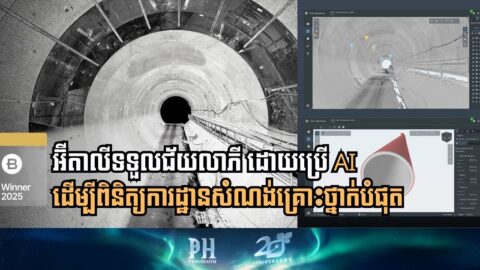
AI-Powered Digital Twin Revolutionizes Tunnel Maintenance in Italy

Italferr S.p.A. has set a new benchmark in railway safety by implementing an AI-powered digital twin for the Serravalle Tunnel, part of the strategic Tezo Valico dei Giovi line connecting Genoa and Milan. By moving away from manual, time-consuming inspections, the project has successfully automated defect detection, dramatically reducing operational risks. The primary challenge for […]
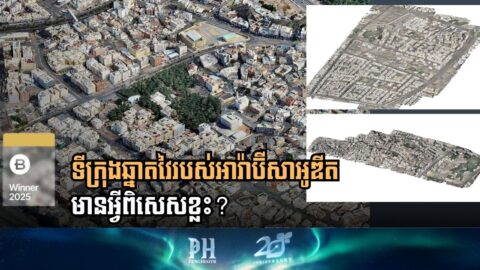
Saudi Arabia Sets Global Smart City Benchmark with “Manarah” Urban Data Platform

The Al Madinah Region Development Authority (MDA) has successfully launched the Manarah Urban Data Platform (MUDP), a state-of-the-art digital twin initiative that balances the rapid expansion goals of Saudi Vision 2030 with the preservation of ancient Islamic heritage. By utilizing a specialized suite of Bentley Systems software, the MDA has mapped 55 square kilometers of […]