Managing Mewps on Your Job Site

The increasing versatility and popularity of mobile elevating work platforms (MEWPs) means that they are used across a growing number of industry sectors including construction, facilities management, retail, media, airports and arbori-culture, to name a few. Whether it is to reach into confined areas, over large obstacles, or under structures either internally or externally, each MEWP application may be different.

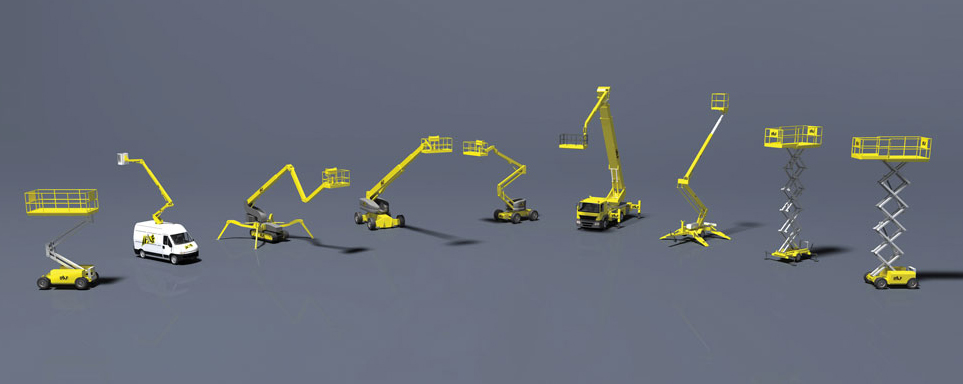
This has led manufacturers to develop a vast range of MEWPs of varying designs, shapes, sizes and capability, including scissor lifts, booms, wheeled, tracked, vehicle and trailer mounted machines, powered by a variety of power sources to reach heights from 2 meters to over 100 meters and making it possible to access difficult spaces and reach through narrow openings, with minimal noise and emissions.

By its very nature, work at height is a high-risk activity and with an estimated 1.5 million MEWPs in circulation worldwide, each and every machine has been designed with one common aim – to provide a safer and more efficient means of temporary access to work at height.

MEWPs are inherently safe by design; it is where and how they are used that increases the potential risk of an accident. Thus it is vital that you consider how MEWPs are being managed and operated on your job site!

Before you start any work at height, it is vital to complete a risk assessment and a method statement, and to have these items documented. Ask yourself if work at height can be avoided. If work at height cannot be avoided, use appropriate work equipment and other measures to prevent accidents. Ask yourself what the hazards are and take measures to eliminate or minimize the potential risks of injury or damage.

Consider what is actually happening on the jobsite. Take the effort to walk the route. Are the ground conditions amenable to the type of equipment to be used? Is it a busy area with heavy vehicle and pedestrian traffic which would need to be cordoned off? Jobsite requirements may be different, depending on whether it is under-bridge work on a highway, indoor work in a shopping mall, or work on high-rise buildings.

To add to that, machine types may be vastly different. There are different categories of MEWPs to meet various needs. The two most typical are scissor lifts and self-propelled booms. They are most often used in construction, but also in manufacturing and cleaning and maintenance. For work requiring higher mobility, there are vehicle-mounted platforms (VMPs) and trailers that can be hitched to most vehicles. VMPs can, for example, give 26 metres of reach on a 3.5 ton truck used for street lighting or 100 meters reach on a specially designed vehicle for heritage restoration work. Push-arounds and vertical platforms provide an efficient form of access inside buildings (stage work, storage) where mini-scissors are also very effective.

PIC: Machine types and selection

It is important to select the right piece of equipment for the job. The following factors should be taken into account:

• The nature of the work to be carried out

• Access to work area

• Terrain

• Work area conditions, especially ground bearing capacity and maximum machine point loadings

• Number of people, tools, materials and equipment to be lifted

• Height and outreach required

• Fuel type

To give an example: Boom-type MEWPs generally have smaller baskets and lower lift capacities than scissor-type MEWPs and their platforms can “bounce” at height due to the boom structure flexing (also known as the “catapult” effect). This usually makes boom-type MEWPs unsuitable to use for installing long or heavy materials, or bulky materials that may obstruct the function controls. In these cases, scissor lifts may be more appropriate. You key consideration should be: What is a safe means of access?

Work at height is a high-risk occupation. The onus is on management to manage that risk through a hierarchy of measures:

• Elimination: Design out the need to work at height

• Substitution: Use specialist equipment

• Engineering controls: Safety systems and guarding

• Administrative controls: Training, supervision and work scheduling

• Personal protective equipment: A last resort

In all this, the emphasis is on management responsibilities as the backbone of ensuring safe MEWP operations and preventing risks. More information and resources at www.ipaf.org.

- Video Advertisement -

Related Post

Kampong Cham Becomes First Cambodian Province to Finalize Precise Local Administrative Boundary Maps

Landmark mapping initiative paves the way for advanced economic corridors, digital integration with Google Maps, and comprehensive rural modernization under the Pentagonal Strategy In a historic milestone for Cambodia’s local governance and territorial management, Kampong Cham has officially become the first province in the nation to establish accurate, clear, and definitive administrative boundary maps for […]

Cambodia Nears Completion of Strategic Border Ring Road in Northeastern Provinces

Funded by the Border Infrastructure Fund, the infrastructure project in Mondulkiri and Ratanakiri achieves over 95% of its construction targets Cambodia’s ambitious infrastructure initiative to establish a continuous border ring road is nearing full completion, with construction teams successfully executing the vast majority of planned developments in Mondulkiri and Ratanakiri provinces. From the commencement of […]

Bentley Systems Unveils OpenUtilities Substation+ to Fix Fragmented Grid Design          

Bentley Systems has launched OpenUtilities Substation+, an AI-supported 3D design software designed to eliminate fragmented utility data. By unifying isolated civil, electrical, and structural information into a single standards-aligned model, the platform fixes the data gaps that stall automation and derail digital twin initiatives. By consolidating these distinct disciplines into a single architecture, the software […]

Chinese Enterprises Expand Industrial Footprint in Svay Rieng Special Economic Zone

Two manufacturing firms pledge capital to the Qilu SEZ following a successful provincial delegation visit to Shandong Province and Zibo City Svay Rieng Province is poised for further industrial expansion as two Chinese companies have officially committed to investing in the region’s prominent Qilu Special Economic Zone. This new capital injection aims to significantly expand […]

Borey Peng Huoth Unveils Phum Nimith Project Bridging Major Economic Hubs in Phnom Penh

On the occasion of its official sales launch on June 5, 2026, Borey Peng Huoth unveiled its brand-new residential masterpiece, the Phum Nimith Project. Serving as the inaugural development of the company’s highly anticipated third phase, known as Vibol Phum, this project is uniquely situated within a sprawling 600-hectare mixed-use development enclave owned by Borey […]

Execution Over Ambition: Bentley Systems Drives the Next Era of Wind Energy Infrastructure

At the WindEurope 2026 conference, the wind energy sector marked a major shift from setting ambitious clean energy targets to executing them at scale. Driven by corporate power purchase agreements and massive demand from data centers, the industry is moving away from government subsidies. However, this rapid growth faces significant hurdles, including complex permitting processes, […]