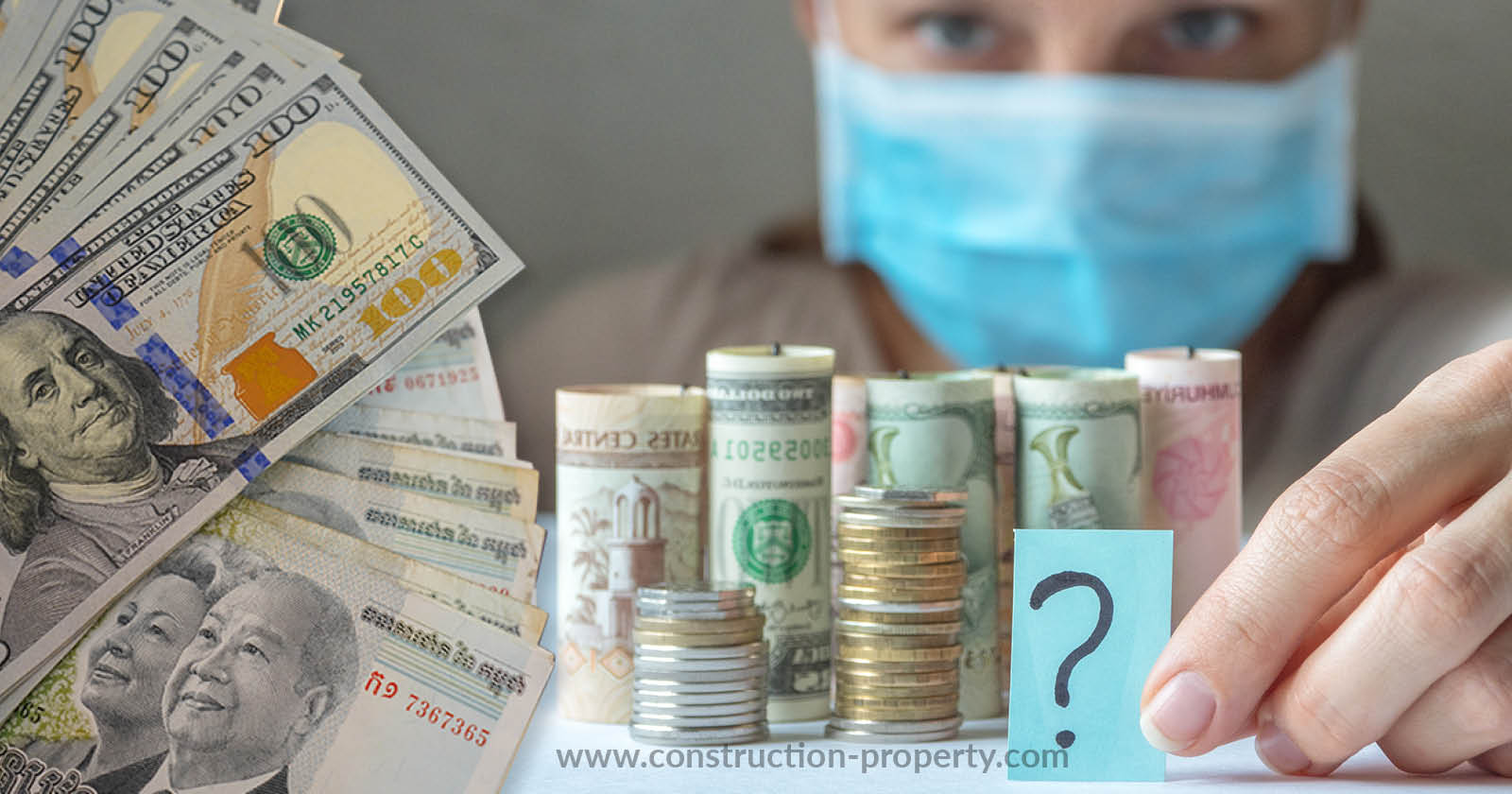
When COVID-19 ends, foreign investors will return, but with thin pockets
We know that the COVID-19 has had a significant impact on safety and the global economy as a whole, but having a clear understanding of how it affects and how much it is has affected industry is difficult to predict. What we’ve all heard for the time being is that after the virus has hit the world hard; each country closed down their borders, imposed strict controls on businesses, and implemented a policy of securing and maintaining physical space, and so forth. But what effect has it had exactly have on the country’s economy?
The impact of COVID-19 on the Cambodian economy
What is clear is that this year will bring a rise in unemployment. The reason for this is both the domestic factor that some institutions, especially educational institutions both private and public, have suspended face to face class. The total number of migrant workers returning to Cambodia is estimated at 50,000, whose future reemployment remain unclear, as the Thai government has just extended its emergency status.
Businesses need to adapt to new market conditions and the impact it has on their revenue streams. We are already seeing a reduction in salaries, enforcement of unpaid leave and a reduction in the workforce in many industries in the country.
Tourism
Tourism is one of the industries that the Cambodian economy depends on and is one of the most affected. Official figures show that in 2019, tourism accounted for about 12% of Cambodia’s GDP. But that figure is estimated at a loss of US$856.6 million in tourism, which accounts for about 3.5% of Cambodia’s GDP by ADB. The decline in tourism has hurt businesses, both small and large, that will affect the economy as a whole.
For example, in the first two months of 2020, the number of foreign tourists visiting Angkor Wat decreased by 37.2%, regardless of other parts of the country, such as the coastal region. The decline in tourism will also affect the retail, entertainment, hotel and hospitality sectors.
Some key element to see in real estate
It’s hard to say how much of an impact COVID-19 will have on the real estate industry in Cambodia without taking into account the evolution of the global economic situation, especially how much time it will take to recover from the virus.
Land value
One of the strengths of the Cambodian real estate industry is the comparative lack of exposure to debt. On a side note, household debt has steadily risen over the last five years due to rising demand for housing and land. But it is still relatively low compared to other countries with high debt exposure rate.
Another indicator is that the tradition of borrowing from their relatives’ families for buying in real estate is still ongoing. This is one of the main reasons why economic crises, such as this infectious disease crisis, have come to keep land prices relatively unaffected. Due to low loan volume and limited foreclosure by banks, all of these help stabilise land prices.
Commercial rent and Retails
CBRE forecasts that commercial offices and retail rentals will have some price correction this year. So far, we have not seen any official announcement from the government forcing property owners to reduce their rent, though we have witnessed some requests to reduce the rent. As a result, we have seen negotiations to reduce fees from both parties. The reason is because renters could have some benefit to keep renters in occupation if they agree to negotiate.
For the commercial office sector, the core thing to look at is characteristics of the demand side of the sector. Most of demand in this sector comes from international companies that make use of Cambodia as their SEA Operation hub. For now, demand for the sector has dwindled, as their offshore companies are still struggling with the virus. Therefore, prices will also need to decline. Due to this decrease in demand, there could be a 10 – 20% reduction in commercial rent by the end of 2020.
For the mall rentals, it has been affected more than any other sub-sector. All over the city and capital in Cambodia, we are beginning to see some restaurants, pubs, bars and eateries slowly reopening. But another new infection has been announced by the Ministry of Health. This highlights the uncertainty of the ongoing virus future, which could cause the market to fall down anywhere from 15-30% this year. This is according to Grant Fitzgerald’s forecast, which is slightly higher than CBRE’s forecast at the same time.
Price of condo
When it comes to condominium demand in Cambodia, we cannot talk about it without mentioning the demand from international markets, especially for the mid- and high-end condos. In other words, the sub-market is largely for Chinese companies and investors in their country, which now seems to be at some stage of economic recovery.
From this reason, after the crisis, Chinese and other national investors are likely to return to Cambodia in the near future, but condo prices are likely to drop down. The will surely return, but comes with a reduction in costs as their company and their domestic capital is also reduced by the impact of COVID-19.
If things can get back to normal in the next couple of months for Cambodia, which is known for its best “Responsive Performance” in fighting against COVID-19, as it has the lowest infection rate and no death cases yet reported. Yet, Cambodia’s domestic economic system is not separate from the economic well-being of other country markets. Therefore, if the nightmare of this COVID-19 persists for other markets longer, perhaps 12 months or longer, we will surely see a decline in property prices due to a blockage of investment sources and a loss of foreign tourists, which are the Cambodia’s key economic anchor.
Another notable cause of this epidemic is it shows the limited capabilities and deficiencies of each nation’s economic system. From this COVID-19 lesson, international relations will be redirected. However, many economists around the world are finding new answers to the same question: After the crisis, do we remain dependent on this materialist, capitalist economic system, or need a neo-economic route?
- Video Advertisement -
 English
  ខ្មែរ
ខ្មែរ