The Era of Sustainable Design Arriving in Cambodia?
This scenario is a nightmare for many building owners and operators, and is all too common in Cambodia. But through modern architectural design concepts there is a way around the pitfalls. Many architects believe that sustainable design – an environmentally friendly architectural standard – can help building owners avoid bad news and headaches after construction.
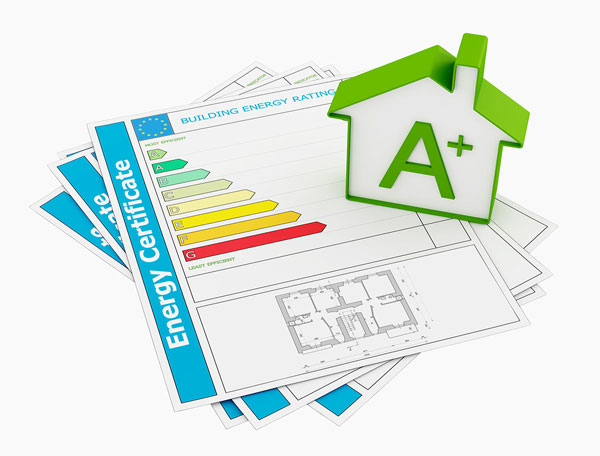
Sustainable design refers to a set of construction principles which lead to reduced environmental impacts and sustainable buildings are also known as green buildings. The most respected category of structure is a LEED-certified building, which stands for Leadership in Energy and Environmental Design.
Currently, there is only one LEED-certified building in Phnom Penh; the dragon-like Vattanac Capital Tower, scheduled to open this year. Thanks to its certification, Vattanac Capital was awarded the Best Commercial Development prize at the South East Asia Property Awards in 2012.
Various construction forms in Cambodia are classified as having sustainable designs; mostly commercial buildings, hotels, and office buildings in Phnom Penh and Siem Reap. Architect Seng Sona of Advancing Engineering Consultants says that structures that are designed to consume less electricity by utilizing solar power and turbines to generate electricity, natural air to reduce air-conditioning requirements, and mirror walls to absorb sunlight are considered sustainable buildings. Other features include the use of sustainable building materials such as wood to reduce energy drain and minimize environmental impact.
Fit for Cambodia
Architect David Cole, Principal of Atelier Cole and Director of Building Trust International, a British NGO founded in 2011, offers design assistance to communities and individuals in developing countries, including Cambodia. He points out that sustainable design appeared in Cambodia centuries ago, referring to the millions of traditional homes built using wood.
Since Cambodia is undergoing a process of urbanization and has a hot, sunny, windy climate, the British architect recommends designs for high-density urban social housing that respond to those environmental as well as social needs. “Rather than rows of Chinese shop houses on narrow, deep plots, could we look at small affordable housing units that are low rise and have access to green space for walking and play areas for children, that are passively ventilated, have access to natural light and are free from the threat of flooding?”
Cole stresses that the responsibility of designers in a modern sustainable era is essentially to do “more with less. More social impact, more flexibility in design, more thought paid to the future and less negative environmental impact, less materials, and, what may be the most important factor if sustainable design is ever going to become common practice, less overall cost,” he said.
Building Trust organized a low-cost housing design challenge in March last year called, “The Future of Sustainable Housing in Cambodia Competition.” It aimed to encourage innovative housing design and delivery for low-income families in both suburban and rural areas of the country.
Building Trust is now supporting NGOs that want to design and build homes for low-income families where total building costs are lower than $2,500. Their plan is to create homes that allow better ventilation, more natural lighting, better resilience to seasonal flooding, and provide the opportunity for people to extend and modify the properties themselves in a safe and structured way when compared with more conventional house designs.
“The fact that we use bamboo, timber, earth bags, etc. to create carbon-neutral homes is an additional benefit for everyone,” Cole pointed out. “We live in a world with a growing urban poor and providing ways to build in more ‘green’ ways has positive benefits for us all.”
In February this year Building Trust International and The Room Design Studio, a Swedish design consultancy, hosted the “Our City Festival” to introduce sustainable housing tailored to Cambodia’s needs using materials like bamboo and insulation crafted from coconut fibers. The concept creators hope it will transform low-cost living in the capital.
Nina Appelin, The Room Design Studio’s branch manager, said the project employed a “Lego block” principle, which meant they were easy for landowners to assemble on vacant blocks of land, and then disassemble and move when the land was developed or sold.
“Our project tries to deal specifically with creating a way to use some of the many vacant sites where the owners are waiting for prices of land to rise,” she said. “We hope to provide a system that can be easily adapted to the specific site and be reused in a different context later on.”
The design is also intended to use solar cells on roofs facing south for affordable electricity. The materials will all be sourced locally, according to Appelin, adding that architects were investigating other sustainable projects in and around Phnom Penh to determine the most environmentally friendly and cost-effective options available.
“If everyone who has the possibility to build and live eco-friendly takes responsibility for our planet that we borrow from our children, we will all benefit from that. We all have to do what we can to minimize pollution and consumption,” said Frida Hultén, The Room Design Studio director.
Howric Ghotbi, chairman of British Khmer Engineering and Construction, said there is a need for more sustainable and resourceful construction in Phnom Penh, adding that the low-cost housing model should be a good choice for the Cambodian people. “At the moment they are using old technology in Phnom Penh, and it does damage the environment, they use a lot of concrete and steel,” he said. “It’s not cheap.”
Construction costs
The cost of constructing a sustainable building varies depending on the design and project features. Architect Cole believes the construction of sustainable homes for rural people is still cheap now.
If you take materials used in construction as one example; leaf thatch, bamboo, sustainably- forested timber are all quick-growing, locally-sourced products which sequester carbon and are fit for small-scale construction purposes, he said. “The question is can an ever-increasing, dense urban population find ways to employ sustainable materials? We would argue yes! There are ways of doing this but it also needs to be done in line with firmer planning regulations, increased density, building regulations, and a host of other interrelated factors.”
But for higher-end, large-scale buildings, the construction costs of a sustainable building like a LEED one may be 20-30% higher than a traditional one since most of the sustainable materials must be imported. For lower-end green buildings where materials can be locally sourced, construction costs are similar or even cheaper than conventional buildings, according to Darn Davis, former manager of Vattanac Properties.
Despite the potential for a sustainable building boom in Cambodia, many hurdles remain. Cole believes building codes are perhaps the most important factor. “Poor construction practices and a lack of clear guidelines and incentives for developers mean that we are a long way off seeing more widespread sustainable design,” he said.
Frida Hultén is in favor of strong, future-oriented city planning, pointing to big urban areas which were developed without eco-unfriendly character in Cambodia. “If we all help out to change our daily behavior there might be a small chance that our children can have a good and healthy life,” she said. “If we don’t do anything, our own children will be suffering from our mistakes.”
Normally the government for each country decides how much a new construction can pollute the environment, she says. “In Sweden, it’s very strict and you won’t get permission to build if you surpass the limits. In Cambodia, I don’t know if there are any limits.”
The main challenges faced in developing green technologies in Cambodia are centered on education and initial capital costs. Darn Davis recommends teaching green building design in architectural schools, and introducing a carbon emission tax to encourage more green building development.
Michel Cassagnes, design director of Archetype Cambodia, a leading integrated international design and project management consultancy now in Cambodia for 10 years, advises project owners in Cambodia to have standardized architecture and design for every project, which he says brings remarkable benefits. “As designers, we are on the forefront of projects, advising developers towards sustainable building to secure a long and safe investment with good quality construction.”
The government does agree on the need to promote the sustainable building design which led to the launch of a 134-day green building training course in September last year and which is expected to be completed sometime in mid-2014.
- Video Advertisement -
 English
  ខ្មែរ
ខ្មែរ