The Improvement of Electricity Supply in Cambodia

With the rapid economic growth and development of Cambodia between 1999 and 2013, electricity demand has been forecasted to grow at 17.9 percent annually from 2012 to 2020.

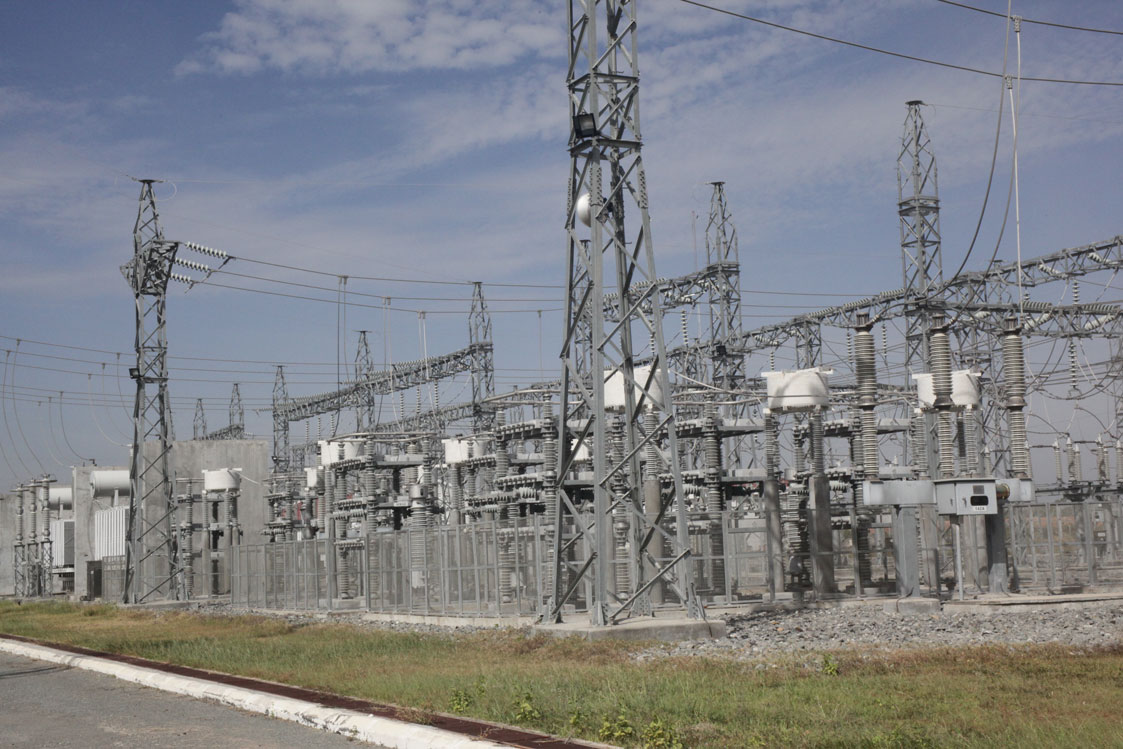
Most of Cambodia’s electrical supply comes from heavy fuel oil and diesel oil generators and imported electricity from Vietnam, Thailand, and Laos. Cambodia’s hydropower generation is quickly growing and in 2014 the country’s first coal-fired power plant began operation.

Phnom Penh is alone responsible for 90 percent of Cambodia’s total electricity consumption. Expansion of distribution lines to rural areas where approximately 80 percent of the population reside remains limited. Most people in rural areas rely mainly on car batteries and expensive diesel generators to meet their daily needs.

Ty Thany, Executive Director of Electricity Authority of Cambodia (EAC) said during the closing ceremony of the Rural Electrification Convention on 21 January that electricity suppliers and agencies are strongly motivated to expand their coverage to rural areas in order to meet the government goal which ensures that 100 percent of population will has access to electricity by 2020. EAC plans to extend its electricity supplies by 15 percent in 2015.

According to a report from Electricite Du Cambodge (EDC), presently 339 authorized electricity suppliers are covering more than 11,000, or 80 percent, of the villages around the country. It said 8,489 villages (about 60 percent) already have access to electricity; more than 3,000 villages (about 25 percent) are under the process of being connected to the grid and 2,168 villages (about 15 percent) have yet to be connected.

Hydropwer dams, with strong Chinese investment in particular, are generally considered a renewable energy source and are an important feature of the government’s energy plan. However, plans for megadams may place both the environment and people at risk. Experts warned that the Tonle Sap, the fourth-largest fishery in the world, could face “a 50 percent reduction in fish production over the next 30 years” if the 11 planned upstream dams on the Mekong River are constructed.

But Prime Minister Hun Sen said during the inauguration ceremony of Russei Jrum Kraom Hydropower Station at Koh Kong Province that no development occurs without environmental impacts. “In Vietnam, they are commencing projects with nuclear power. If we talk about pressure on the environment, how about countries that extract crude oil from underground or under the sea? The issue here is to measure between economic loss and profit,” he said.

He also referred to the cancelling and delaying of some development projects due to large-scale environmental impact and leaving the matter to the younger generation.

According to estimations from the Ministry of Mines and Energy, electricity generated from hydropower dams is expected to contribute to more than 50 percent of the total electricity supply and over 2,100 kilometers of transmission lines will be built to assist distribution of this new generation capacity. The rest of the supply is expected to be supplemented by imports from neighboring countries such as Thailand, Vietnam, and Laos.

Due to the high cost of imported fuels and fragmented power supply systems, energy prices in Cambodia are among the highest in the region, ranging from 600 Riel (US$0.15) per KWH) in Phnom Penh to over 4,000 Riel (US$1.00) p/KWH in some rural areas.

According to the electricity price plan of EAC for 2015, industries and commercial entities subscribing to electricity directly from sub-stations will pay 530 Riel/KWH; from lines in Phnom Penh it costs 725 Riel/KWH and from provincial lines it costs 707 Riel. By 2020 all lines will cost only 660 Riel. The price trend is therefore going down.

For households, consumption costs are between 920 and 820 Riel/KWH in 2015 and 730 Riel by 2020 for the areas under the national line and 1,000 Riel – 1,100 Riel in 2015 and 730 Riel by 2020 for areas under private lines. The favorable rate for poor residents and farmers in areas covered by the state transmission lines for less than 50 KWH/month costs 610 Riel/KWH from 2015 through to 2020.

- Video Advertisement -

Related Post

Kampong Cham Becomes First Cambodian Province to Finalize Precise Local Administrative Boundary Maps

Landmark mapping initiative paves the way for advanced economic corridors, digital integration with Google Maps, and comprehensive rural modernization under the Pentagonal Strategy In a historic milestone for Cambodia’s local governance and territorial management, Kampong Cham has officially become the first province in the nation to establish accurate, clear, and definitive administrative boundary maps for […]

Cambodia Nears Completion of Strategic Border Ring Road in Northeastern Provinces

Funded by the Border Infrastructure Fund, the infrastructure project in Mondulkiri and Ratanakiri achieves over 95% of its construction targets Cambodia’s ambitious infrastructure initiative to establish a continuous border ring road is nearing full completion, with construction teams successfully executing the vast majority of planned developments in Mondulkiri and Ratanakiri provinces. From the commencement of […]

Bentley Systems Unveils OpenUtilities Substation+ to Fix Fragmented Grid Design          

Bentley Systems has launched OpenUtilities Substation+, an AI-supported 3D design software designed to eliminate fragmented utility data. By unifying isolated civil, electrical, and structural information into a single standards-aligned model, the platform fixes the data gaps that stall automation and derail digital twin initiatives. By consolidating these distinct disciplines into a single architecture, the software […]

Chinese Enterprises Expand Industrial Footprint in Svay Rieng Special Economic Zone

Two manufacturing firms pledge capital to the Qilu SEZ following a successful provincial delegation visit to Shandong Province and Zibo City Svay Rieng Province is poised for further industrial expansion as two Chinese companies have officially committed to investing in the region’s prominent Qilu Special Economic Zone. This new capital injection aims to significantly expand […]

Borey Peng Huoth Unveils Phum Nimith Project Bridging Major Economic Hubs in Phnom Penh

On the occasion of its official sales launch on June 5, 2026, Borey Peng Huoth unveiled its brand-new residential masterpiece, the Phum Nimith Project. Serving as the inaugural development of the company’s highly anticipated third phase, known as Vibol Phum, this project is uniquely situated within a sprawling 600-hectare mixed-use development enclave owned by Borey […]

Execution Over Ambition: Bentley Systems Drives the Next Era of Wind Energy Infrastructure

At the WindEurope 2026 conference, the wind energy sector marked a major shift from setting ambitious clean energy targets to executing them at scale. Driven by corporate power purchase agreements and massive demand from data centers, the industry is moving away from government subsidies. However, this rapid growth faces significant hurdles, including complex permitting processes, […]