 English
  ខ្មែរ
ខ្មែរ 
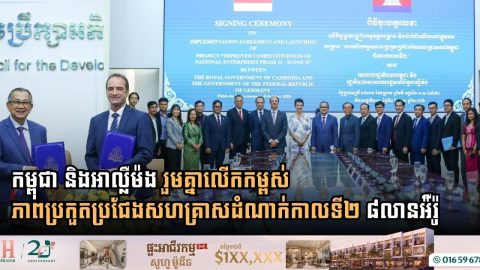
Cambodia and Germany Partner to Boost Enterprise Competitiveness with €8 Million Phase II Agreement
- 20 October 2026
Cambodia and Germany are stepping up their economic collaboration to foster private-sector growth and elevate national competitiveness. The Council for the Development of Cambodia and the Deutsche Gesellschaft für Internationale Zusammenarbeit (GIZ), acting on behalf of the German Federal Government, have officially signed an implementation agreement for the second phase of the Improved Competitiveness of […]
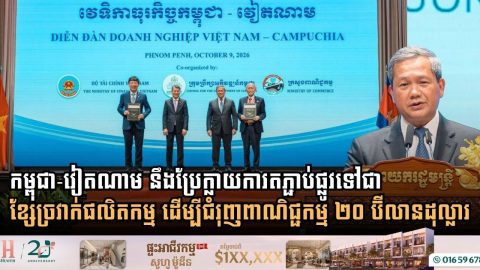
Cambodia and Vietnam Forge Ahead to Hit the $20 Billion Trade Target
- 20 October 2026
Turning physical infrastructure into synchronized industrial corridors to deepen bilateral economic integration. Cambodia and Vietnam are setting their sights on a more integrated economic future, pivoting from simple cross-border transit toward tightly linked production networks and industrial value chains. The strategic push aims to drive bilateral trade turnover toward an ambitious $20 billion milestone. The […]
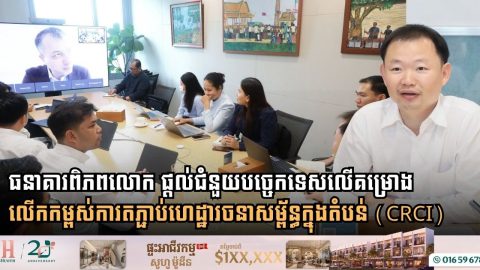
Ministry of Public Works and World Bank Hold Technical Session on Cambodia Regional Connectivity Improvement Project
- 19 October 2026
Phnom Penh: Enhancing implementation efficiency and fiduciary oversight for major international development-funded infrastructure projects remains a critical priority for expanding Cambodia’s transport networks and boosting regional trade integration. On the afternoon of Monday, October 5, 2026, at the World Bank Cambodia Office, Secretary of State at the Ministry of Public Works and Transport and Project […]
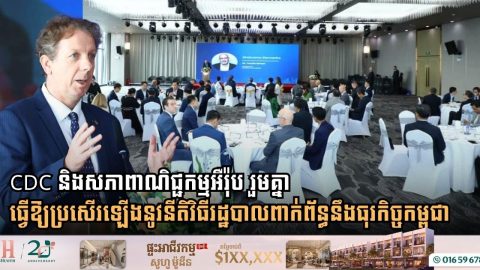
CDC and EuroCham Partner at 4th Business Breakfast to Streamline Regulatory Procedures
- 19 October 2026
The Council for the Development of Cambodia and the European Chamber of Commerce in Cambodia convened the 4th Public-Private Business Breakfast Briefing on October 8, 2026, aimed at optimizing administrative procedures and improving the operational environment for private enterprises across the Kingdom. Chaired by H.E. Sun Chanthol, Deputy Prime Minister and First Vice-Chairman of the […]
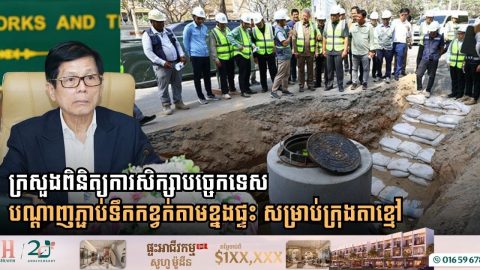
Ministry of Public Works Reviews Detailed Engineering for Takhmao City Household Sewage Connections
- 18 October 2026
Secretary of State Ros Vanna chairs technical meeting with Dohwa-Seoyoung consultants to manage South Korean EDCF loan financing and optimize urban sanitation standards Phnom Penh: Designing robust household sewerage connections from individual residential origin points has emerged as an essential technical prerequisite for ensuring that urban sanitation systems function at full operational capacity and adhere […]
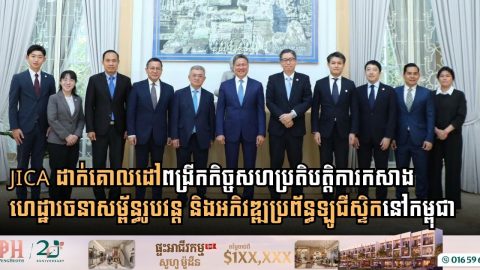
JICA Targets Expansion in Physical Infrastructure, Logistics, and Japanese Direct Investment in Cambodia
- 18 October 2026
The Japan International Cooperation Agency has expressed a strong intention to expand its development cooperation with Cambodia, focusing on building physical infrastructure, advancing logistics system development, and channeling additional foreign direct investment from Japan to the Kingdom. The strategic dialogue took place on Friday, October 2, 2026, during a high-level meeting between H.E. Sun Chanthol, […]