





What are the key takeaways from  2025 Bentley Civil User Conference?

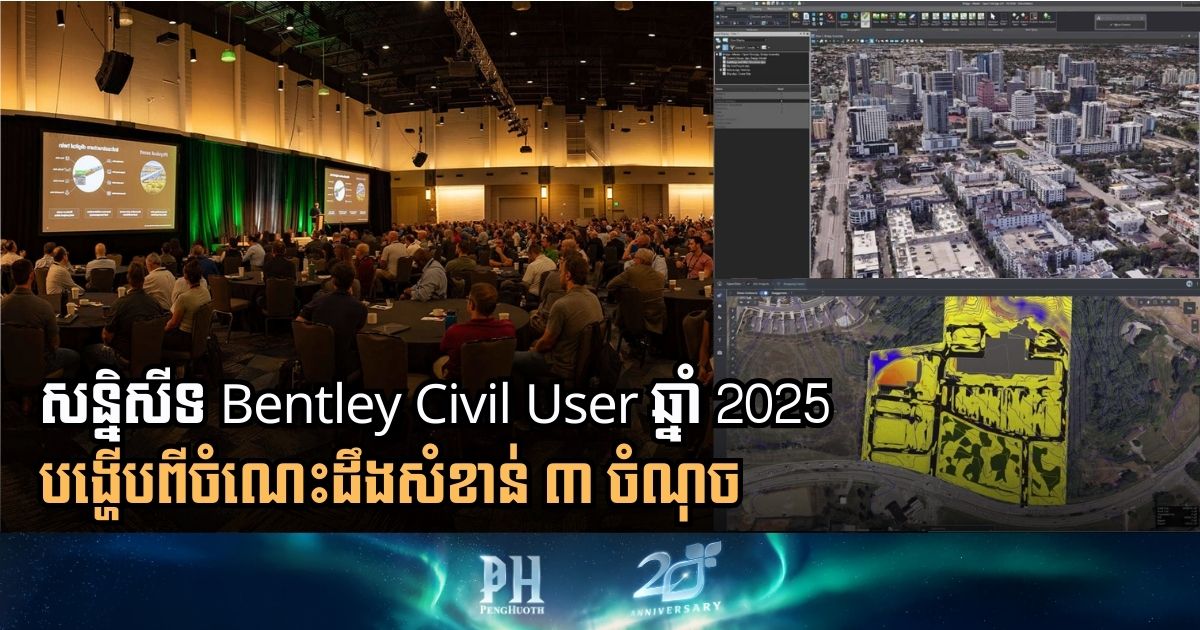
After a seven-year hiatus, the Bentley Civil User Conference returned as an in-person event, bringing together over 500 Bentley users, experts, and industry leaders to tackle persistent sector challenges like workforce shortages and aging infrastructure. The central theme of the 2025 conference was how digital project delivery, open applications, and Artificial Intelligence (AI) are poised to revolutionize civil engineering.

The conference cemented three major technological trends as essential for the future of infrastructure.

Kyle Rosenmeyer, Design Leader, VHB; Scott McMaster, BIM Manager for Digital Delivery, PennDOT; and Kevin O’Connor, VP Digital Delivery, Parsons; Ian Rosam, Director of Product Management, Bentley; Bibhuti Aryal, Director of Industry Solutions, Bentley

First of all, the conference discusses how digital twins revolutionize project delivery. Bentley solutions, including iTwin and Bentley Infrastructure Cloud, are empowering engineers to transform complex data into actionable insights across the entire project lifecycle.

Industry leaders highlighted the massive downstream cost savings and reduction in rework achieved through implementing digital project delivery and creating a single digital model.

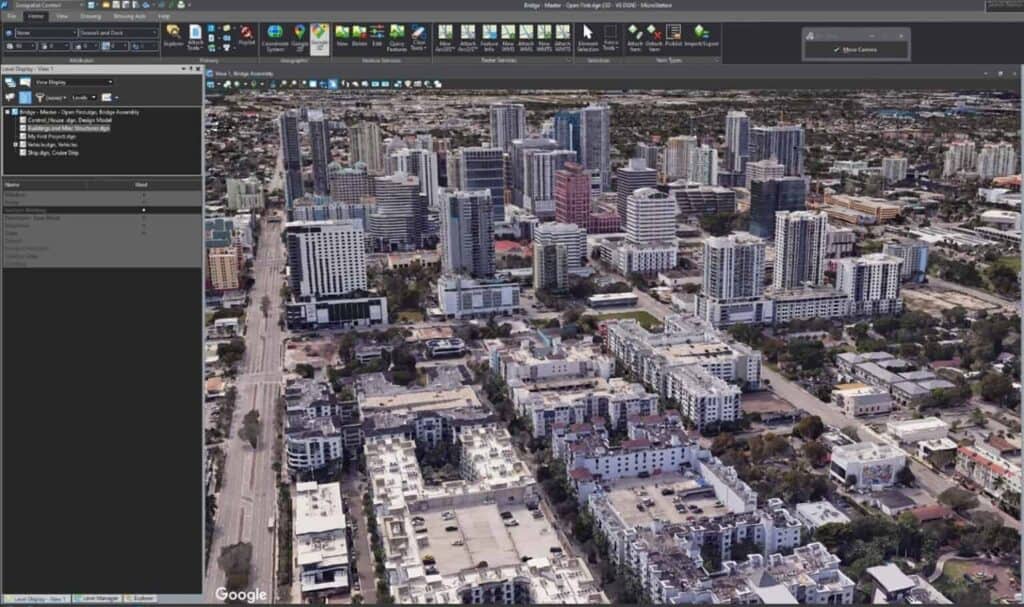
Another key focus of the conference is the leverage of open standards & geospatial interoperability. Bentley reinforced its commitment to open standards through the integration of Google Photorealistic 3D Tiles and Google Maps into MicroStation 2025. This integration provides engineers with rich 2D and 3D geospatial context for environmental and risk assessments, significantly improving real-world design accuracy.

Last but not least, another key trend is the AI-supported workflow. Amid sector-wide workforce shortages, Bentley is positioning AI as a critical tool to accelerate engineering work, not replace it.

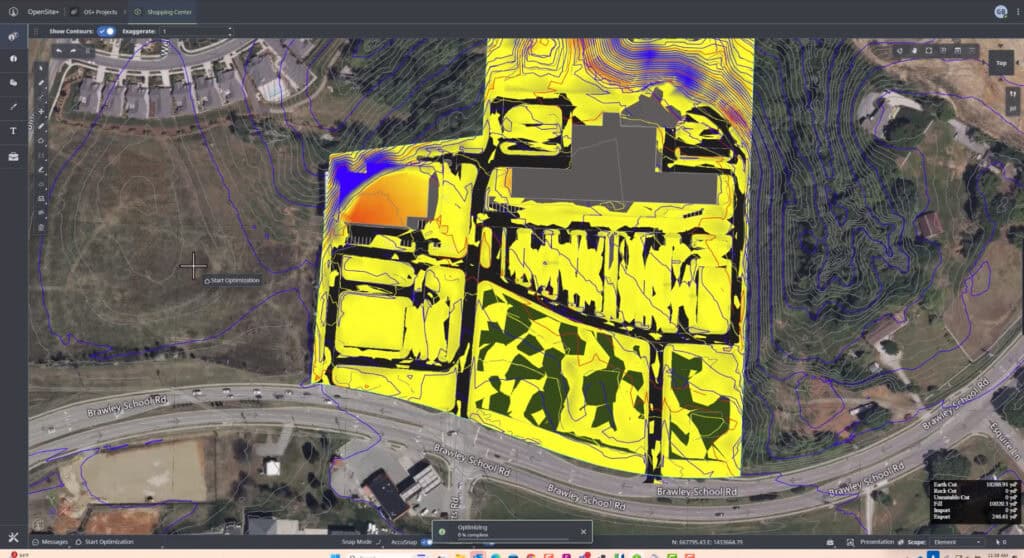
Solutions like OpenSite+ and generative AI for infrastructure promise to significantly boost efficiency, allowing professionals to address the massive backlog of work and close the gap caused by staff shortages.

The overwhelming message from the 2025 conference is clear: the future of infrastructure hinges on the purposeful adoption of digital transformation. The tools—from digital twins to open data ecosystems and AI-powered design—are now available.

The challenge, according to conference organizers, is no longer about keeping pace but setting the pace. Senior leaders are now tasked with championing these innovations and empowering their teams to adopt these technologies to drive meaningful change and deliver resilient infrastructure.

An example of Google Photorealistic 3D Tiles within MicroStation
A land development project using OpenSite+
- Video Advertisement -

Related Post

How Data-Driven Workflows Are Changing Engineering Delivery

For decades, the engineering and construction industry has relied on the exchange of digital files—the familiar DWGs and PDFs—as the bedrock of project delivery. However, as global infrastructure grows in complexity, a new paradigm is emerging. Experts are calling for an evolutionary crossroads where the industry moves beyond static file handovers toward dynamic, data-driven workflows. […]

Bentley Digital Twin Drives AU$105 Million in Savings for Melbourne’s M80 Ring Road

ACCIONA is setting a new global benchmark for “going digital” in infrastructure, leveraging Bentley Systems’ comprehensive software suite to manage the AU$ 3.8 billion M80 Ring Road Completion project. By deploying a sophisticated digital twin strategy, the project team has successfully slashed planning times and is on track to mitigate over AU$ 105 million in […]

Indonesia Leverages Bentley Software to Build World’s Largest Refuse-Derived Fuel Plant

PT Wijaya Karya (WIKA) has recently completed construction for the Rorotan Jakarta Refuse-Derived Fuel (RDF) Plant, a monumental project set to become the world’s largest facility of its kind. The IDR 1.28 trillion facility is designed to process 2,500 tons of municipal waste daily, converting it into 875 tons of sustainable fuel. To manage a […]
Digital Twin Tech Breaks Decades-Old Deadlock on Major I-95 Bridge Project

Engineering firm Johnson, Mirmiran & Thompson (JMT) has successfully utilized high-tech 3D modeling and connected data known as digital twin to solve congestion on I-95 crossing over the Rappahannock River in eastern Virginia, in the United States. For decades, the I-95 crossing over the Rappahannock River was defined by chronic congestion and a “not-in-my-backyard” stalemate. […]
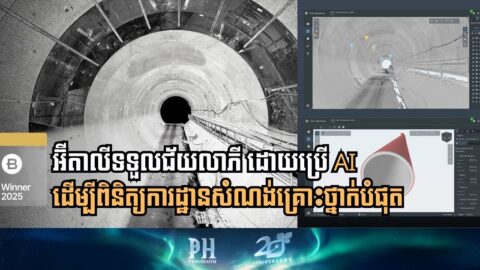
AI-Powered Digital Twin Revolutionizes Tunnel Maintenance in Italy

Italferr S.p.A. has set a new benchmark in railway safety by implementing an AI-powered digital twin for the Serravalle Tunnel, part of the strategic Tezo Valico dei Giovi line connecting Genoa and Milan. By moving away from manual, time-consuming inspections, the project has successfully automated defect detection, dramatically reducing operational risks. The primary challenge for […]

Saudi Arabia Sets Global Smart City Benchmark with “Manarah” Urban Data Platform

The Al Madinah Region Development Authority (MDA) has successfully launched the Manarah Urban Data Platform (MUDP), a state-of-the-art digital twin initiative that balances the rapid expansion goals of Saudi Vision 2030 with the preservation of ancient Islamic heritage. By utilizing a specialized suite of Bentley Systems software, the MDA has mapped 55 square kilometers of […]