 English
  ខ្មែរ
ខ្មែរ 

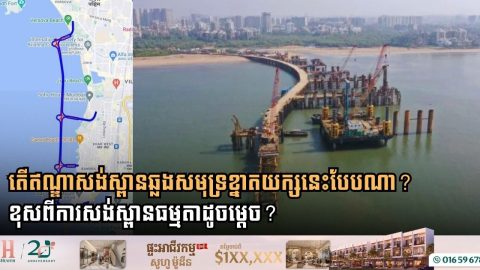
How Bentley Software Is Helping Keep Mumbai’s Massive Sea Bridge on Track
- 17 October 2026
Mumbai’s Versova-Bandra Sea Link (VBSL), a 17.17-kilometer, eight-lane bridge set to become India’s second-longest, is being built with the help of digital project management software designed to keep a hugely complex construction effort organized and on schedule. Once finished, the bridge will connect Versova to Bandra and is expected to cut commute times sharply for […]

National Committee Approves Provincial Spatial Plans and Master Land-Use Frameworks Across Cambodia
- 17 October 2026
Deputy Prime Minister Say Samal and Transport Minister Peng Ponea chair high-level meeting to finalize master plans for 5 provinces and 7 municipalities and districts for Cabinet submission Phnom Penh: Establishing structured spatial frameworks and strategic master land-use plans has become an essential prerequisite for guiding economic development, environmental protection, and sustainable urbanization across Cambodia. […]

Automated Calibration Streamlines Travel Demand Modeling
- 16 October 2026
Automated calibration is helping transportation planners make travel demand modeling faster, more efficient and responsive to changing travel patterns. Traditionally, calibrating travel demand models required months of manual adjustments to ensure model results matched real-world data such as traffic counts, transit ridership and household travel surveys. Automated calibration simplifies the process by using optimization algorithms […]
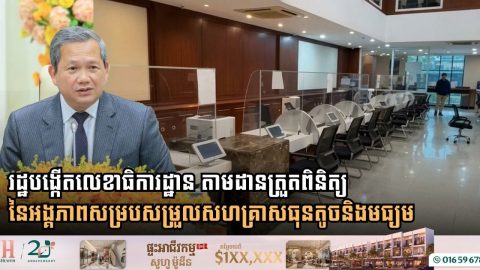
Cambodia Establishes SME Coordination Secretariat to Streamline Licensing and Monitoring Services
- 16 October 2026
The Royal Government of Cambodia has officially established a dedicated Secretariat responsible for Registration, Licensing, and Permits alongside a Monitoring and Inspection division under the Small and Medium Enterprise Coordination Unit. Signed into effect by Prime Minister Samdech Thipadei Hun Manet via an official sub-decree announced on October 5, 2026, the strategic institutional measure aims […]
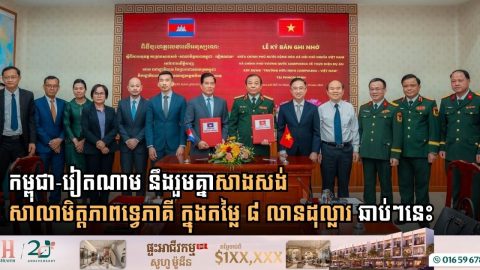
Cambodia and Vietnam Sign $8 Million Accord to Build Bilateral Friendship School
- 15 October 2026
Cambodia and Vietnam have officially entered into a bilateral agreement to construct and upgrade the “Cambodia-Vietnam Friendship School” in Phnom Penh under an $8 million financial contribution from the Vietnamese government. The Memorandum of Understanding was signed on October 5, 2026, in Ho Chi Minh City during an executive ceremony co-presided over by Major General […]
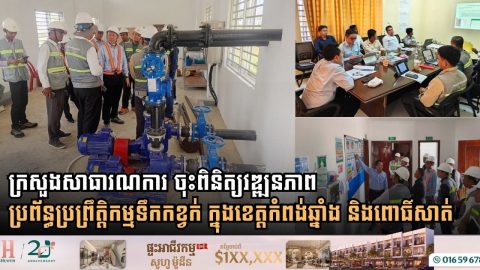
Ministry of Public Works Reviews Progress on Wastewater Systems in Kampong Chhnang and Pursat
- 15 October 2026
Pursat: Strengthening the operational management and maintenance of urban wastewater treatment systems remains a pivotal infrastructure initiative for improving public sanitation, protecting water resources, and driving sustainable urban development. On September 30, 2026, Director General of the General Department of Wastewater Treatment Systems and Project Director Chao Sopheakphibal led a technical delegation on a field […]