Buying Co-owned Properties
 Proeksa Meas
- 31 December 2015
- Local News
- 1672 Views
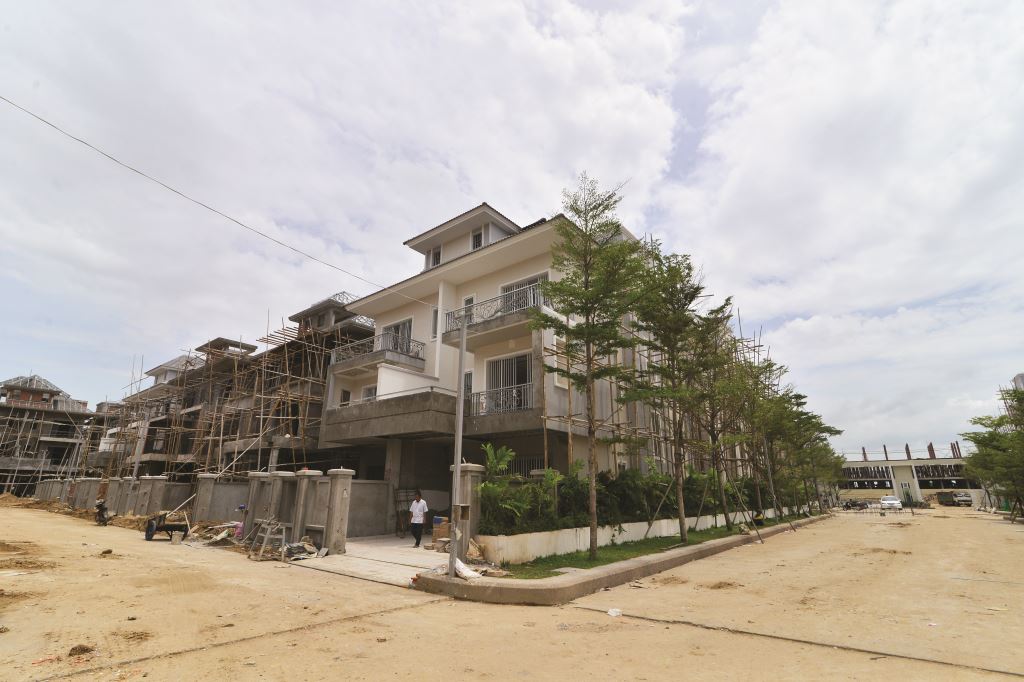
Living in a co-owned building or housing bloc (borey) is becoming more popular as Cambodians seek a modern lifestyle, but if property buyers don’t purchase smartly, they may face significant risk.
Unlike buying a detached house, where the buyer can immediately own both the land and house with a single title deed, buying a co-owned property, like a condo or a villa/flat, can present complications and risks when it comes to ownership procedure.
One reason is that the hard title of a co-owned development project can only be split and issued to individual buyers once the project is completed or almost completed, say realtors specializing in the sector.
Condominium developers need to register the land and all units in their projects at the Ministry of Land Management Urban Planning and Construction in a single hard title under their name. They will then split the overall hard title into separate hard titles for each unit though still in their name. Unit ownership is transferred to the customer later.
“Because developers separate a single title into hundreds of unit titles, they need to pay 4% of the total unit value to the government as ownership transfer tax,” said David Kim, Chief Executive Officer of Informax Real Estate Service.
Unlike conventional properties, where the owner pays the 4% tax for hard title ownership transfer, a co-owned property buyer pays the 4% because the developer has already paid the tax when the single hard title was split. If the original buyer then sells the condo, the next buyer will have to bear the 4% tax charge.
Separating a building into single unit hard titles requires a procedure that takes both time and money, which is why some developers only issue soft titles.
Mr. David Kim, CEO, Informax Real Estate Service
Benefits of hard titles
Over 70% of co-owned projects issue hard titles to customers but smaller developers often remain hesitant to grant hard titles.
Some buyers with only soft titles believe they are secure enough since some banks accept soft titles as collateral. Worse, some buyers only have the Sale-and Purchasing Agreement (SPA) with the developer.
Neither is fully recognized by law, according to David Kim and Nguon Chhayleang, General Manager of Angkor21 Property, another agency specializing in condo transactions. They warn of the risks for buyers because soft titles are only registered with Sangkat/Khan authorities, while an SPA is just a personal agreement between the buyer and developer without any government registration or legal recognition.
Unit owners with soft titles can only transfer the property to a new owner via the developer which poses considerable risk for the new buyers. “If the government confirms the ownership via hard title, nothing will change, but the relationship with the developer is only personal, and sometimes developers can say they made mistakes on the contract, and simply reject it later,” David said.
Hard titles are officially recognized by the Ministry of Land Management Urban Planning and Construction. Owners with hard titles legally hold part of the land even if the building is condemned or demolished. If a new building is developed on that land, only owners with hard titles can claim their ownership on part of that new building.
In cases like Gold Tower 42, where the developer went bankrupt, the hard titles weren’t yet split. Clients who only acquired the soft title or SPA, even if they had already paid all the money to the developer, have no right to claim their part ownership of that building for now. “Even if clients go to court and win, where is their unit? The building is not yet completed,” David explained.
While hard titles can be problematic for condo buyers, acquiring ownership for a villa or flat in a borey is less risky because all the properties have separate plots of land. Even if the developer goes bankrupt, buyers still have the right to take their plot of land and finish the construction themselves. Some borey developers will only offer a hard title on buyers’ request because both have to bear ownership transfer tax.
Mr. Nguon Chhayleang, General Manager of Angkor21 Property
Getting a hard title
Getting hard titles for co-owned properties may sound complicated. “After a buyer has made all the necessary payments for a unit in a condominium or borey, the developer will usually transfer ownership to the buyer’s name with endorsement from district level authorities,” Chhayleang explained.
The buyer will then get a Letter of Land/Building Holding Transfer (soft title). To get the hard title, the buyer then needs to bring that soft title to the Cadastral office and file an application for a Certificate of Real Estate Ownership (hard title).
Buyers can request a hard title directly from the developer, though there can be an additional service charge. The process is not difficult, but it usually takes at least 30 working days to complete with the cost varying depending on the size and location of the property.
“Management service is the main challenge facing co-owned property buyers,” said Chhayleang. “All owners in a condominium are normally required to share common expenses such as electricity for elevators and corridors, security service, garden maintenance, etc., in order to keep the building well-maintained. If any owners fail to pay the fees, the whole building can be affected.”
Buying a condo can be a good investment opportunity and usually generates a higher Return on Investment (ROI) than any other property type. However buyers should only choose developers with a proven track record who are registered with the Ministry of Economy and Finance, and always discuss the hard title transfer with the developer before deciding to purchase.
David Kim of Informax agrees buyers should focus on the title deed issue saying, “Even if the design is nice, if you fail to check the ownership then it doesn’t belong to you.” He also pointed out that there needs to be reform in the law to protect co-owned property developments, given the absence of a redevelopment law which could affect the industry in the future.
Condominiums only appeared in Cambodia in around 2008 whereas the Korean market has been established since 1970. David recommends establishing insurance companies to compensate buyers if projects are halted or fail. “In Korea, the construction company is generally bigger than the developer, so when the developer goes bankrupt, the construction company will guarantee it will complete the project on its own. Cambodia should have this kind of back-up system.”
- Video Advertisement -
 English
  ខ្មែរ
ខ្មែរ