Cambodia Modernizes National Road Infrastructure Framework with 42 Updated Technical Guidelines to Drive Quality and Climate Resilience
Developed with Australian expertise to replace legacy 1999 standards, the new frameworks enforce strict engineering compliance and target overloaded transport to ensure long-term sustainability
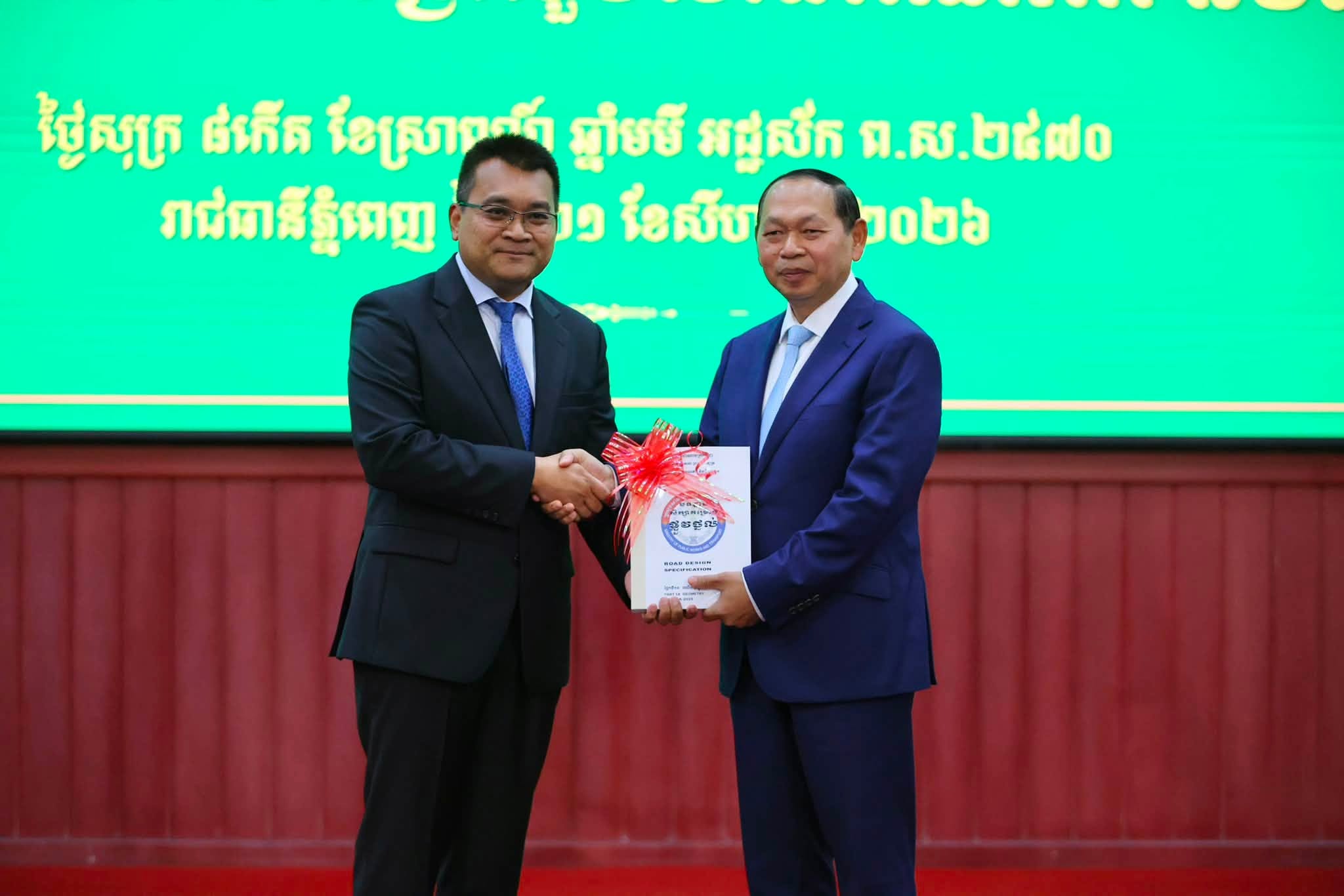
Phnom Penh: Modernizing national transport infrastructure and enhancing resilience against environmental challenges have taken a major step forward in Cambodia through updated technical standards and engineering guidelines. On the afternoon of Friday, August 21, 2026, the Ministry of Public Works and Transport held an official dissemination ceremony titled “Technical Standards and Guidelines of the Ministry of Public Works and Transport,” co-chaired by H.E. Peng Ponea, Minister of Public Works and Transport, and H.E. Chhay Rithisen, Minister of Rural Development. The high-level event convened inter-ministerial leaders, provincial department directors, military engineering corps units, technical consultants, and private sector leaders.
The comprehensive framework overhaul replaces legacy guidelines dating back to 1999, introducing updated standards organized into 10 categories comprising 42 technical documents. Formulated in direct collaboration with Australia’s Partnerships for Infrastructure (P4I) initiative and Austroads, these standards incorporate contemporary civil engineering methodologies, digital technologies, and climate adaptation strategies to ensure that Cambodian road assets remain resilient against flooding and severe weather events.
Addressing the delegates, Minister Peng Ponea issued a directive to all construction contractors and technical consultants, emphasizing that the newly published technical specifications must be strictly enforced without unauthorized modifications or technical deviations. Furthermore, the Minister stressed that technical standards alone cannot preserve road infrastructure if vehicle overloading continues unchecked, urging inter-agency cooperation and public compliance to eliminate illegal overweight transport and safeguard public assets.
In conclusion, the rollout of these 42 updated technical guidelines establishes a robust engineering foundation for Cambodia’s transport sector, aligning national infrastructure development with international benchmarks. By pairing modernized construction standards with rigorous enforcement against vehicle overloading and cross-sectoral collaboration, Cambodia is securing safer, more durable, and climate-resilient road networks that will support long-term economic prosperity. (read more)




- Video Advertisement -
 English
  ខ្មែរ
ខ្មែរ