ASEAN top leaders touch on green infrastructure development and sustainable tourism to bolster regional trade

What have ASEAN leaders learned from COVID – 19?

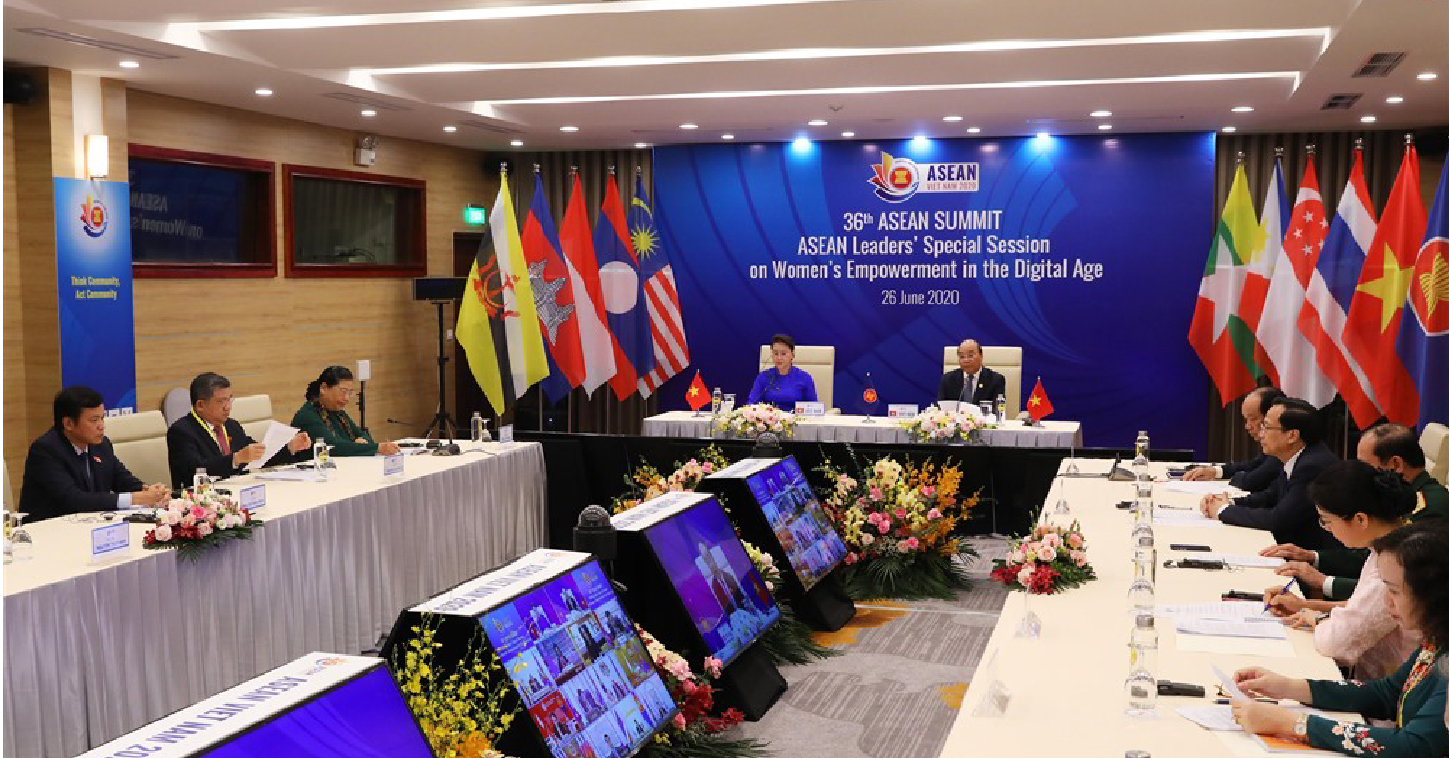
Top ASEAN leaders recently held an online video conference gathering for the 36th ASEAN Summit on 26 June 2020 with representatives of the ASEAN Business Advisory Council (ASEAN-BAC).

The meeting achieved a joint statement based on the theme of “Cohesive and Responsive ASEAN in 2020”. The lessons learned from COVID-19 have led to the redirection of ASEAN development to embrace a more comprehensive and wholistic development agenda.

In a sobering opening address, Vietnam’s Prime Minister Nguyen Xuan Phuc said that COVID-19, “Has swept away the successes of recent years… threatening the lives of millions of people,”.

ASEAN leaders have taken away some important lessons from COVID-19 triggering a commitment from the regional community toward a greener infrastructure development equipped with digitalisation and more grounded in sustainability. Three major areas can be summarised from the online meeting:

Thailand proposed three paths for actions to advance ASEAN in the post-COVID-19 era

Prayut Chan-o-cha, Thailand’s PM, proposed three paths for ASEAN to mitigate and advance beyond the COVID-19 crisis. Firstly, the Prime Minister urged for a more connected ASEAN by accelerating the implementation of the Master Plan on ASEAN Connectivity (MPAC) 2025 through promoting connectivity and green infrastructure development.

Second, to help recover the economy, he proposed a ‘Stronger ASEAN’ by ‘building strength from within’ through advancing economic integration and expediting the signing of RCEP including the promotion of investment in digital infrastructure. He reiterated that the digital economy is a crucial key that will increase the value of ASEAN’s GDP.

Thirdly, the Prime Minister called on ASEAN to prepare for creating long-term immunity, or what he called a ‘Better-immune ASEAN’ covering the issues of health, food, human security and human rights problems.

Intra-ASEAN travel bubble and tourism

Malaysia called for cohesive economic measures among ASEAN member states to build socioeconomic resilience in mitigating the impact of COVID-19, through implementing measures to establish “travel bubbles” ― involving the easing of travel restrictions ― between “green” ASEAN member states to shore up investments and create job opportunities.

Malaysia also initiated the idea of opening up borders for intra-ASEAN tourism to flourish and provide financial boost into the region’s economies.

While also highlighting the important role of strengthening trading and resilience of regional supply chains, International Trade and Industry Ministry (Miti) of Malaysia said, “Further, promoting intra-ASEAN travel and tourism will, in turn, generate the commercial and business spin-offs that are key to restarting the economy.”

Cambodian PM touched on the role of the private sector

Regional supply chains were also mentioned by Cambodian PM. Expressing his views on opportunities arising from the COVID-19 crisis, Prime Minister Hun Sen said that “As aforementioned, ASEAN has a new opportunity to strengthen the regional supply chains. And this is a necessary task as I am of the view that the linkage of supply chains in the region will enable ASEAN to realise its fullest potential since all 10 ASEAN countries possess different comparative advantages.”

“In addition, regional supply chains will enable ASEAN member states to leverage on each other and transform ASEAN into a self-sufficient region…,” he stressed.

“I would like to reiterate once again that the engagement of the private sector is indispensable for the development of the ASEAN Community as well as in the context of COVID-19. …yet governments alone cannot address every challenge we are facing. Therefore, the private sector must join hands and cooperate with the government to address the arising challenges,” PM Hun Sen emphasised.

Notably, with a population of 650 million, ASEAN has been enjoying great progress and growth. The economy is ranked as the third most dynamic economy in the world, claiming a total GDP of US$2.95 trillion in 2018. ASEAN has signed six FTAs with seven top partners in the world, thus reinforcing its centrality in the regional architecture. Through these progresses, ASEAN has been recognised as one of the major powers and potential development partners in the world.

In 2019, intra-regional ASEAN trade reached US$619.6 billion while the total trading value with other non-ASEAN partners cost about US$2.8 trillion. To date, ASEAN’s largest trade partners have been China (18.0%,), the United States (10.4 %), the European Union (8.7 %), and Japan (8.0 %). In terms of investment, the US is the biggest investor (15.2) while China shares only 5.7% of FDI.

- Video Advertisement -

Related Post

Acting Head of State Urges Swift Action on Land Titling to Address Public Concerns

Samdech Techo Hun Sen calls for land registration to become an essential service as ministries gather to streamline the process In an effort to address public dissatisfaction over administrative delays, Samdech Techo Hun Sen, the Acting Head of State of the Kingdom of Cambodia, has called on the Royal Government to significantly accelerate the issuance […]

Cambodia Unveils Visionary $36 Billion Logistics Master Plan to Secure Global Competitiveness

Comprehensive decade-long strategy encompassing 174 projects aims to revolutionize national transport infrastructure and attract high-value foreign investment In a major step toward transforming the kingdom into a regional trade hub, the Royal Government of Cambodia has officially launched an ambitious master plan to overhaul its intermodal transport and logistics systems. This strategic roadmap, involving a […]

Government Set to Transform Kep and Sihanoukville Islands into Vibrant Economic Hubs

High-level inter-ministerial delegation concludes field inspections to finalize development master plans for the Kingdom’s coastal jewels In a strategic push to unlock the economic potential of Cambodia’s coastline, the Royal Government has set a clear course for the revitalization and development of islands across Kep and Sihanoukville provinces. This initiative reached a significant milestone following […]

Cambodia Set to Transform Eastern Provinces into Industrial Powerhouses Over the Next Two Decades

Prime Minister Hun Manet unveils a long-term strategic vision to turn Svay Rieng and neighboring regions into agro-industrial hubs during the inauguration of a 30.6 million dollar water treatment plant The Royal Government of Cambodia has officially set a transformative course for the nation’s eastern borderlands, outlining a 20-year roadmap to develop Svay Rieng and […]

Ministry of Economy and Finance Outlines Five Strategic Pillars to Optimize State Asset Management

High-level meeting emphasizes inventory accuracy and revenue generation through the leasing of vacant assets to strengthen national fiscal stability. The Ministry of Economy and Finance has introduced a set of five comprehensive recommendations designed to overhaul the management and utilization of state assets, ensuring they are handled with maximum efficiency and in strict accordance with […]

Cambodia’s Economic Landscape Anchored by Over 750,000 Units Providing Three Million Jobs

Minister Hem Vanndy leads national strategy workshop to empower MSMEs and modernize the Kingdom’s workforce for 2026 to 2030 Cambodia currently counts 753,670 economic units across the country, which collectively support approximately three million jobs. This data was highlighted during a high-level consultative workshop focused on the draft National Strategy for the Development of Micro, […]