

Behind the Structure

Construction of an awe-inspiring building or even a fairly simple structure requires a series of complicated procedures which few people outside the construction industry know much about. Chief Architect Som Vuthy of Sokha Hotel & Resorts, Cambodia’s largest hotel developer, goes through the process step by step.

An architect is the first specialist called in to transform a client’s needs, or even dreams, into reality. He or she must hold consultations with the client to come up with a primary concept, a schematic design that takes into consideration the size and structure of a building, the space available to build it, regulatory requirements, and the building’s surrounding environment.

After the client accepts the architect’s design, the plans are given to a structural engineer who will perform various technical calculations to ensure the building’s strength and durability. Mechanical, electrical and plumbing (MEP) engineers will design a separate plan for mechanical works, electric systems and water systems after or during the development of the structural engineering plan.

Then, in one of the last preliminary phases, an interior designer will come up with a plan for the building’s interior layout and décor.

Since the above-mentioned specialists often design their plans separately, the ideas they come up with can sometimes come into conflict. So the main architect will also often serve as a referee, finding compromises or making rulings to ensure the plans work well together. The project owner will then get a detailed package of drawing plans and can use these documents to put the project out to bid, finding a contractor right for the job.

During the bidding phase, the architect, structural engineer, MEP engineer, and interior designer often act as project consultants who give feedback on the bids received.

During construction, the builder can hire sub-constructors to deal with different parts of the building process such as foundation work, structural work, MEP work, and interior and exterior design. The engineers and designers will monitor the entire building process to ensure construction is properly done and follows the agreed-upon plans.

The first people on the construction stage are generally from the civil engineering firm which will deal with the foundation, and later build up the structure, including columns and floors based on the structural plan.

Later, the MEP engineers will install mechanical equipment, electrical systems and water systems and the interior designer will take over during the “fixing phase,” which refers to wall painting, window and door installation, and the “furnishing phase,” related to furniture and other decorative elements. An exterior design service will be responsible for the landscaping around the building.

After the technical works are complete, the builder and sub-constructors will perform tests to ensure the systems run smoothly before they hand the project over to the client.

Som Vuthy of Sokha Hotel & Resorts has eight years of professional experience in the construction industry and an architectural degree from Norton University. He has criticized the “design and build practices” of some unethical companies in Cambodia in which a company both designs the project plans and then builds the structure itself. The results are often not in high quality. While it happens around the globe, it is especially prevalent in Cambodia due to social conditions that lead to widespread acceptance of such practices.

“Designers work to maximize benefits for client, but at the building stage, a contractor may face difficulties and losses when following those plans,” he said. “So, in cases where designers are also the contractor, they will put their own interests ahead of the customer’s. This means the client will lose.”

Vuthy has also noticed that some local architects and interior designers haven’t fulfilled their roles based on their professional indemnity, again blaming social norms. “If they are strongly committed to a spirit of professionalism despite what the client and contractor want, they won’t get projects, simply because the client and contractor will choose other experts that accept their demands.”

Vuthy has noticed that many clients try to reduce expenses by foregoing qualified architects, but he warns against this, saying well-drawn, well-considered architectural plans will maximize benefits and minimize construction costs.

He finally encourages architects, engineers, designers and builders to not only follow what the client wants, but follow building codes and regulations that will benefit a building’s inhabitants and minimize any impacts on the surrounding environment.

- Video Advertisement -

Related Post

Exploring Sydney Through a New Digital Lens

Just in time for the Bentley Illuminate 2026 conference in Sydney, a new 3D virtual tour has been launched to show the city like never before. Powered by Cesium, this digital experience moves beyond the postcard-perfect images of Sydney to reveal how the city functions as a complex, interconnected system. By using advanced 3D modeling, […]
United States Embassy Affirms Commitment to Bolstering Cambodia’s Investment Climate

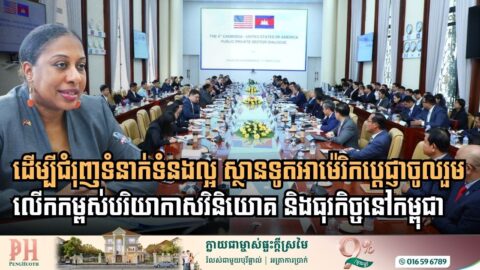
High-level dialogue highlights collaborative efforts to resolve investor challenges and expand the footprint of American enterprises in the Kingdom The United States Embassy in Cambodia has reaffirmed its dedication to improving the local investment climate and business environment, a move aimed at catalyzing further economic, trade, and investment cooperation between the two nations. This commitment […]

Mining Tech Giant Brings AI-Powered Exploration Tools to PDAC 2026

Seequent, a leader in subsurface software solutions, is showcasing a major push into artificial intelligence and cloud-connected workflows at this year’s Prospectors & Developers Association of Canada (PDAC) Convention. The company is highlighting how it uses machine learning and advanced data platforms to help mining companies find minerals faster while reducing overall project risk. The […]

Cambodia Attracts Nearly 1 Billion Dollars in New Investments During First Two Months of 2026

Council for the Development of Cambodia reports over 100 new projects approved, set to generate 39,000 jobs across various sectors In the opening two months of 2026, Cambodia demonstrated robust economic momentum by securing 105 new investment projects with a total value of approximately 966 million dollars. According to a press release from the Council […]

Battambang Launches Strategic Urban Infrastructure Project on Street 154

Extensive road expansion and drainage system upgrades in Wat Kor Sangkat signal the start of a city-wide modernization initiative The Battambang Provincial Administration has officially broken ground on a comprehensive infrastructure project in Battambang City, focusing on road restoration and the construction of advanced drainage systems. The ceremony, held on March 9, 2026, was led […]

Cambodia and South Korea Explore Small-Scale Hydropower Potential at Dauntri and Reaksa Reservoirs

Joint feasibility study focuses on integrating renewable energy and solar power to secure sustainable water and electricity supplies for local communities The Ministry of Water Resources and Meteorology has partnered with the Korea Water Resources Corporation, known as K-water, to conduct a comprehensive feasibility study on the installation of small-scale hydropower facilities at the Dauntri […]