Occupancy Certificates to Make Unauthorized Construction Legally Compliant

Many buildings in Cambodia were erected without proper authorization, either with no construction permit whatsoever or not in compliance with one duly obtained. To remedy this situation, the Construction Law provided a two-year period allowing owners to bring such construction projects into compliance with the Law. In two months’ time, this grace period will end.

Since Sub-Decree No. 86 was issued on 19 December 1997, it has been well known in Cambodia that construction permits are required prior to starting any construction work in Cambodia which are subject to such permits. Sub-Decree No.86 defined the forms of construction subject to construction permits and those which did not require such authorization.

Despite such compulsory regulations, some buildings, houses, and other forms of construction still ended up being built without due authorization or not in compliance with the terms of construction permits duly obtained by their owners.

As most of these forms of construction are currently occupied and pose no dangers to their occupiers and neighbors, the Construction Law promulgated by Royal Kram No. NS/RKM/1119/019 on 2 November 2019, introduced a process through which construction owners could legally rectify this situation and apply for an occupancy certificate.

Article 106 of the Construction Law states that “within a period of two years after this law coming into force, the owner of any construction that has already been built without a permit or built-in breach of a permit prior to this law coming into force shall apply for a certificate of occupancy for his/her construction from the competent authority if the construction requires a building permit”.

This form of occupancy certificate differs from the one required once construction work is completed and prior to being used as governed by the Construction Law and Sub-Decree 226 ANKr.BK was issued on 30 December 2020.

This particular form of occupancy certificate is governed by Prakas No. 177-DNS/Pro.Kor was issued on 6 December 2019. This Prakas outlines the formalities and procedures to secure this occupancy certificate.

Construction owners who want to apply for this occupancy certificate shall submit an application supported by various documents such as a control report on the quality and safety of the construction, an extract of the blueprints (architectural plans, structural sketches and fire safety plan), the construction permit (if any), the construction contract and information concerning (among others) the owner(s) and contractors.

This certificate can only be issued if the construction poses no dangers to its users, the general public and does not impact public order.

Therefore, an essential component of obtaining the occupancy certificate is that an inspection of the construction be conducted by a duly licensed construction controller who will evaluate the quality and safety of the construction and issue a control report based on his or her findings.

Referring to this report and other documents provided by the applicant, the relevant authority/ministry will review the matter and decide whether to approve or decline the issuance of an occupancy certificate. In the case of refusal, the relevant authority/ministry may request amendment work or demolition work to be carried out by the construction owners.

The Construction Law grants a two-year grace period to construction owners in which they may remedy the legal status of their buildings, i.e. until 3 November 2021. This date is fast approaching and there is now less than two months to spare. Time is therefore of the essence and it is highly recommended that affected construction owners, with the necessary assistance of architects, engineers or other construction sector specialists, submit their occupancy certificate applications before this window closes.

It is also worth bearing in mind that prior to any building or construction acquisition, most investors will carry out due diligence in order to ascertain the due existence and validity of the title deed along with all other authorizations and permits issued in relation to the construction. Failing to obtain an occupancy certificate to remedy the legal status of an illegally constructed building could detrimentally impact the construction’s overall value and lead to onerous complications in terms of the owner’s ability to resell the affected property.

In conclusion, construction owners have until 3 November 2021 to apply for this occupancy certificate and bring their illegal buildings, houses, or projects into compliance with the Construction Law. Not doing so would foolishly and unnecessarily complicate efforts to resell or lease affected property given that potential buyers or tenants will insist on being provided with a copy of this certificate prior to renting or purchasing such property.

ABOUT THE AUTHOR
Charles Amar has extensive experience in all aspects of real estate law with a particular focus on issues related to real estate investment, project development, construction, and asset management.
He regularly advises domestic and foreign clients seeking expert advice and innovative solutions on significant and complex transactions involving property, whether already developed or at the planning stage.
His competence and expertise run the full gamut of real-estate projects whether they be residential (boreys, condominiums), office space, shopping centers, hotels, warehouses, industrial facilities or car parking lots.
Charles is a qualified lawyer admitted to the Paris Bar for over 15 years and he is a professor in Construction Law at the Royal University of Law and Economics, Phnom Penh.


This publication is for your information only. It is not intended to be comprehensive and it does not constitute and must be not relied on as legal advice. You must seek specific advice tailored to your circumstances.

The information contained in this article is provided for information purposes only and is not intended to constitute any legal advice. Legal advice should be obtained from qualified legal counsel for all specific situations. Unless otherwise indicated, Charles

- Video Advertisement -

Related Post

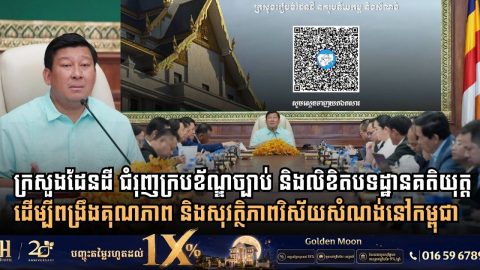
Cambodia’s Land Ministry Expands Legal Framework with Over 230 Regulatory Instruments to Upgrade Construction and Urban Standards

Ministry enacts 65 legal codes and advances 165 draft regulations to ensure safety, structural quality, and sustainable urban development across the Kingdom Phnom Penh: Establishing a comprehensive legal framework and clear technical guidelines remains a foundational priority for the Royal Government of Cambodia in regulating urban development and building practices. In early September, the Ministry […]
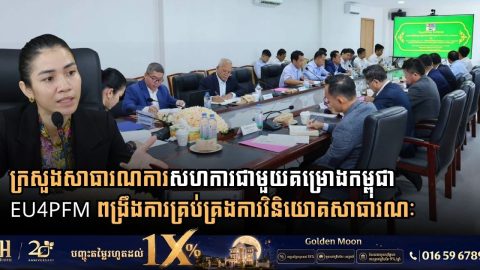
Ministry of Public Works and Transport Partners with EU4PFM Project to Establish Standard Operating Procedures for Public Investment Management

Permanent Secretary of State H.E. Koy Sodany convenes key consultative meeting to strengthen transparency, accountability, and fiscal discipline across national infrastructure projects Phnom Penh: Strengthening public financial management and optimizing capital allocation remain cornerstone objectives for Cambodia’s sustainable socio-economic growth. On the morning of Thursday, August 27, 2026, H.E. Koy Sodany, Permanent Secretary of State […]

Cambodia Accelerates Legal Reforms Through National Workshop on Regulatory Impact Assessment and Good Practice Regulation

Permanent Deputy Prime Minister Vongsey Vissoth leads multi-agency session with British experts to refine regulatory drafting and enhance economic competitiveness Phnom Penh: Modernizing Cambodia’s legal ecosystem and improving the efficiency of regulatory frameworks achieved a key institutional benchmark aimed at strengthening public administration and fostering a predictable business environment. On August 25, 2026, the Office […]

Authority to Launch Sewerage Service Fee Collection After Policy Review and Approval

In an important move to streamline the collection of sewerage service fees, the Council of Ministers convened a closed meeting on December 26, 2025, to discuss a draft sub-decree outlining the procedures for this process. Chaired by HE Liv Sovanna, Vice President and Chairman of the 4th Working Group of the Council of Lawmakers, and […]

National Council for Building Technical Regulations Takes Significant Steps Towards Enhanced Standards in Cambodia

HE Say Samal leads the meeting to approve the draft technical regulations to ensure safety and sustainability in the construction sector The National Council for Building Technical Regulations convened a significant meeting under the auspices of the Ministry of Land Management, Urban Planning, and Construction, according to the meeting held on 18 December 2025. This […]

The Gov’t Announces New Public Bus Lines to Techo International Airport to Ease Traffic Congestion

In an effort to alleviate traffic congestion and improve travel convenience, the Phnom Penh City Bus Autonomous Administration (CBA) has announced plans to launch two new public bus lines to Techo International Airport starting September 9, 2025. This initiative aims to provide residents and visitors with an efficient transportation option to one of Southeast Asia’s […]