






The Digital Blueprint: How Software is Turning Power Line Design Into an Art Form

How Engineers Design Overhead Power Lines

Engineers have revealed that overhead power lines are not as simple as they appear; rather, they are a complex “masterpiece” of geometry and landscape integration. For years, engineers have achieved this by blending advanced math with 3D modeling through specialized digital tools.

One of the tools most frequently used by engineers is PLS-CADD, a flagship software from Bentley Systems. This tool has served as the industry’s “digital paintbrush” for over 40 years and is currently revolutionizing how the world’s most critical infrastructure is built and maintained.

Designing a power line is a balancing act of cost, safety, and environmental impact. Traditionally, “spotting”—the process of deciding exactly where to place a pole—was a grueling manual task.

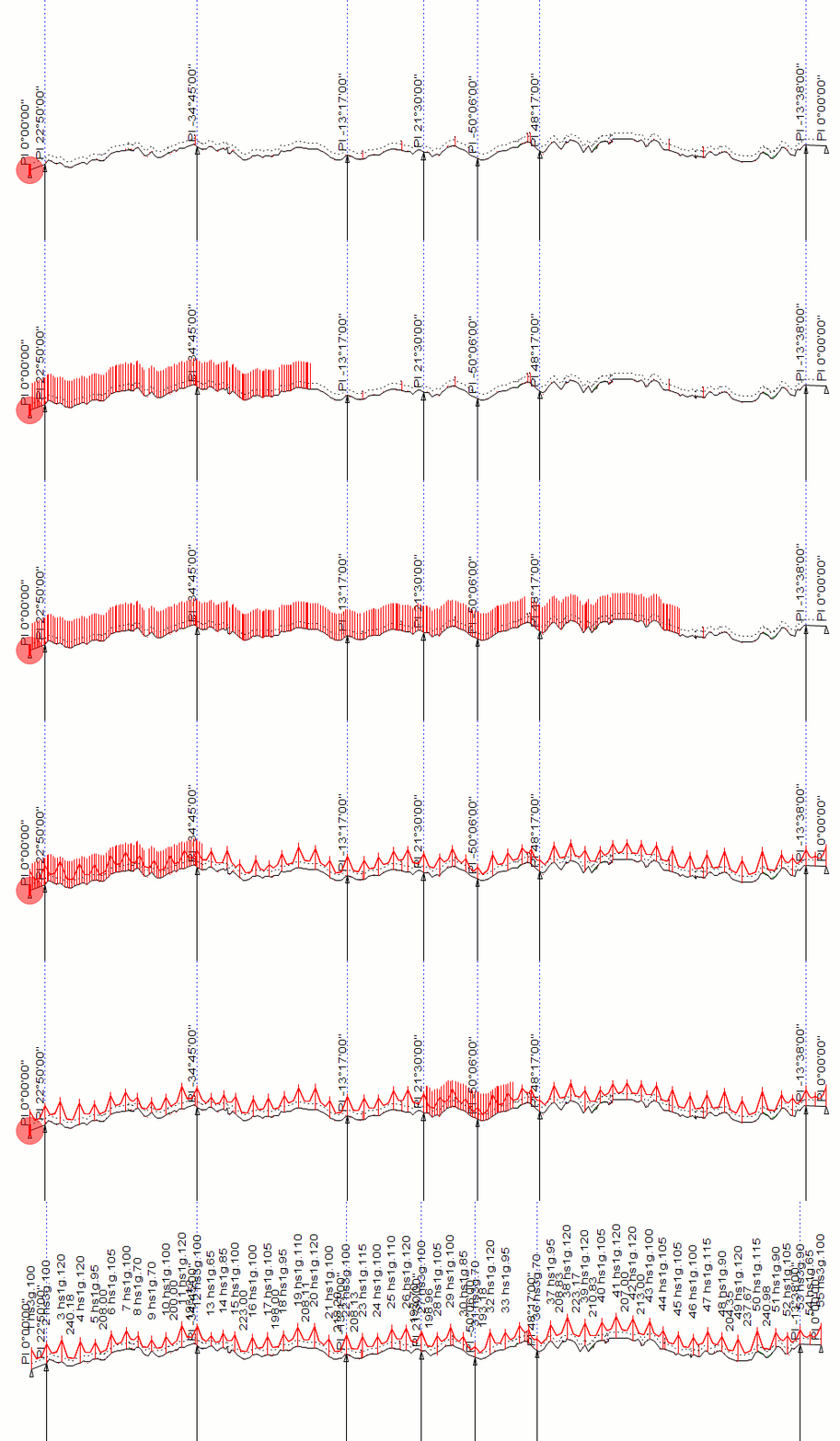
An optimum line design generated in PLS-CADD.

Today, PLS-CADD utilizes an Optimum Spotting module that automates this process through a five-step workflow:

  1. Defining the Vision: Setting safety clearances and wind/ice load parameters.
  2. Mapping the Landscape: Creating a 3D digital twin of hills, rivers, and urban obstacles.
  3. Modeling Structures: Selecting the right towers from a digital palette.
  4. Composing the Design: Running thousands of simulations to find the most efficient layout.
  5. Refining the Masterpiece: Finalizing a bill of materials that considers both labor and parts.

The transition from manual design to intelligent modeling isn’t just about aesthetics; it’s about speed. Projects that once took weeks can now be completed in hours.

Beyond efficiency, the software offers a level of resilience that manual methods can’t match. It accounts for real-world physics—such as “blowout” (how far a wire sways in high winds) and “sag-tension”—to ensure the grid doesn’t fail during extreme weather.

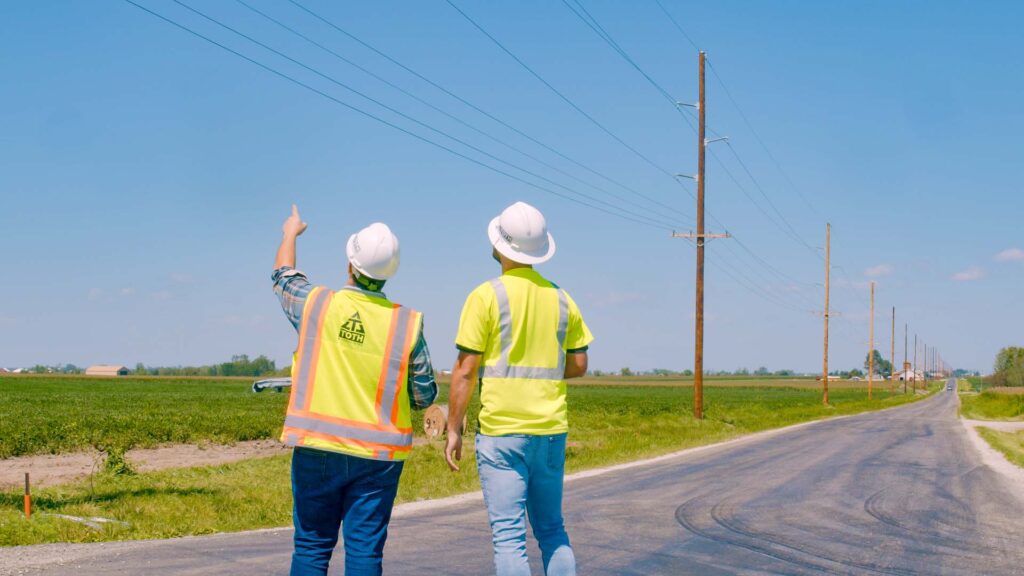
Image courtesy of Toth & Associates.

The true power of this technology was recently put to the test in west-central Illinois. In June 2023, a massive storm with 120-mph winds leveled 120 transmission poles, leaving 1,500 residents in the dark.

Engineering firm Toth & Associates used PLS-CADD to redesign the 6.5-mile stretch of outdated, 60-year-old infrastructure in real-time. By using the software as a digital backbone, the team was able to perform rapid safety checks, adjust designs on the fly based on available materials, and restore power 18 days ahead of schedule.

As the global energy grid faces increasing pressure from climate change and the integration of renewable energy, tools like PLS-CADD are shifting from “helpful” to “essential.” By transforming a “canvas of constraints” into optimized infrastructure, engineers are ensuring that the lights stay on through a mix of high-level math and digital artistry.

- Video Advertisement -

Related Post

Tech Pivot Saves Germany’s First All-Digital Highway Project

A landmark infrastructure project in Germany is back on track and shattering efficiency records after a critical mid-course correction in its digital strategy. Viscan GmbH, the company tasked with creating a “digital twin” for the B29 highway expansion in Baden-Württemberg, successfully rescued the project from technical failure by overhauling its data processing systems. The ambitious […]

How Data-Driven Workflows Are Changing Engineering Delivery

For decades, the engineering and construction industry has relied on the exchange of digital files—the familiar DWGs and PDFs—as the bedrock of project delivery. However, as global infrastructure grows in complexity, a new paradigm is emerging. Experts are calling for an evolutionary crossroads where the industry moves beyond static file handovers toward dynamic, data-driven workflows. […]

Tech Giant Bentley Systems Partners with CET to Revolutionize Engineering Education in India

Bentley Systems has officially signed a Memorandum of Understanding (MoU) with the College of Engineering Trivandrum (CET), aiming to transform one of Kerala’s premier institutions into a hub for digital infrastructure excellence, ensuring that the next generation of Indian engineers is equipped for a rapidly evolving global market. Under this MoU, there will be the […]

How AI-Driven Digital Twin Saves Critical Saudi Food Hub from Ground Collapse?

Saudi firm GeoStruxer has won the YII Envision Award for a high-tech rescue of a failing 12,000-square-meter grain warehouse. The facility, which secures food for 1.5 million people, was sinking due to unstable “salt dome” ground. By replacing traditional construction with a Bentley-powered digital twin, the team saved USD 2.1 million and cut carbon emissions […]

Seequent Set to Showcase AI-Driven Geoscience Breakthroughs at PDAC 2026

Seequent, the Bentley Subsurface Company, has announced its return to the Prospectors & Developers Association of Canada (PDAC) Convention from March 1 to 4, 2026. As a global leader in mining software, the company plans to demonstrate how its latest innovations in artificial intelligence and cloud computing are fundamentally altering the landscape of mineral exploration. […]

The Quiet Revolution: How AI is Reshaping America’s Highways

The US Department of Transportation (DOTs) is now utilizing AI to maintain roads and highways, as Alabama has become the latest state to bet its infrastructure budget on AI. For years, the Alabama Department of Transportation (ALDOT) relied on “performance-based budgeting,” a system designed to fund projects based on actual road needs rather than historical precedent. […]