 English
  ខ្មែរ
ខ្មែរ 

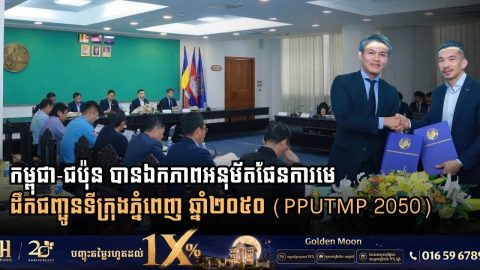
Cambodia and Japan formally adopt the Phnom Penh Urban Transport Master Plan 2050
- 1 October 2026
The Phnom Penh Capital Administration and the Japan International Cooperation Agency officially signed off on the completion, adoption, and handover of the Phnom Penh Urban Transport Master Plan 2050 on September 17, 2026. The formal endorsement took place during the fifth Joint Coordinating Committee meeting under the Project for Development of Integrated Urban Transport Management […]
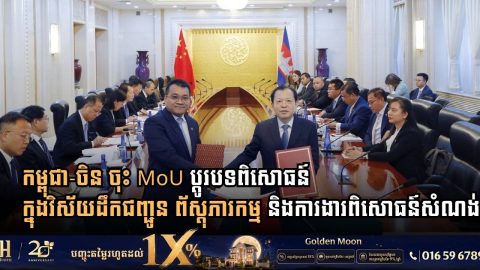
Cambodia and China Sign MoU to Elevate Capacity Building, Logistics, and Infrastructure Technology
- 1 October 2026
The Ministry of Public Works and Transport of Cambodia and the Ministry of Transport of the People’s Republic of China signed a Memorandum of Understanding on transport capacity building cooperation on September 21, 2026. The strategic agreement was formalized during a high-level bilateral meeting held in China between H.E. Peng Ponea, Cambodia’s Minister of Public […]
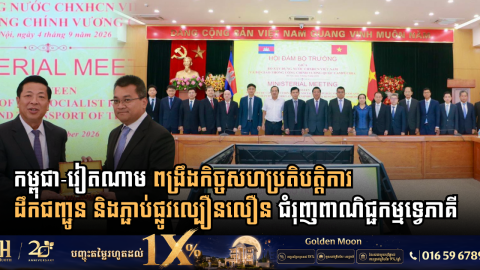
Cambodia and Vietnam Strengthen Transport Links and Expressway Connectivity to Target $20 Billion Trade Horizon
- 18 September 2026
Public Works Minister Peng Ponea leads Cambodian delegation in Hanoi talks with Vietnamese Construction Minister Tran Hong Minh to advance cross-border logistics Hanoi: Deepening cross-border transport networks and synchronizing regional trade infrastructure remain cornerstone priorities for Cambodia and Vietnam as both nations move to accelerate regional economic integration. On the morning of September 4, 2026, […]
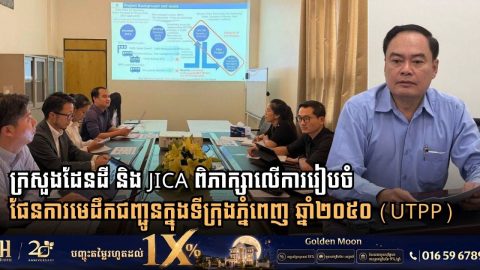
Ministry of Land Management and JICA Align Phnom Penh Urban Transport Master Plan 2050 with Capital Land Use Vision
- 14 September 2026
Strategic meeting reviews study findings and integrates urban mobility framework into future spatial planning to ensure sustainable metropolitan growth Phnom Penh: Aligning infrastructure growth with comprehensive spatial planning remains a cornerstone strategy for the Royal Government of Cambodia in managing rapid urban expansion and enhancing the quality of life in the capital. Following the meeting […]

Transport Ministry and Asian Development Bank Wrap Up Mission on Cambodian Railway Infrastructure and Safety Development
- 13 September 2026
Strategic technical session addresses site inspection findings on Northern and Southern railway lines to shape national infrastructure priorities Phnom Penh: Modernizing Cambodia’s railway network and elevating track safety have taken a decisive step forward as the government aligns its infrastructure targets with international expertise. According to a meeting on August 28, 2026, H.E. Vasim Sorya, […]

Cambodia’s Transport Ministry Partners with Guangdong Hongsheng to Deploy Smart Technology and Modernize Overloaded Vehicle Control
- 12 September 2026
The strategic agreement establishes a comprehensive framework for technical exchange, weigh station digital transformation, and capacity building to protect national road infrastructure Phnom Penh: National efforts to safeguard road infrastructure and modernize transport governance in Cambodia achieved a significant technological milestone through a new bilateral partnership. On the afternoon of Monday, August 31, 2026, the […]