 English
  ខ្មែរ
ខ្មែរ 
Japanese Family Donates Three Hectares to Create Phnom Penh’s Newest Public Park
- 26 July 2026

In an inspiring gesture of international goodwill and community spirit, a Japanese family has gifted more than three hectares of valuable urban land to the Phnom Penh Capital Administration to establish a vibrant new public park. Situated in Prey Lvea village within the Choam Chao II commune of Por Sen Chey district, the prime parcel […]
New $1.22 Million Road Inaugurated in Kirirom Paradise
- 9 July 2026
Presided over by Minister of Tourism Hout Hak, the 7-kilometer infrastructure project by Vireak Buntham Express bolsters Cambodia’s national ‘Green Season’ campaign In a major boost to Cambodia’s eco-tourism infrastructure, a pristine concrete and asphalt road stretching over 7 kilometers has been officially opened to the public in the scenic highlands of Kirirom. The infrastructure […]
Bentley, NXT BLD Launch $3M ‘NXT Activate’ Accelerator to Fund Next-Gen AEC Software Innovators
- 26 May 2026

Bentley Systems and NXT BLD have partnered to launch NXT Activate, a new $3 million developer-focused accelerator aimed at backing early-stage startups that are building next-generation architecture, engineering, and construction (AEC) software. The three-year program is designed to support early-stage startups building software that breaks down data silos and improves workflows across the construction and […]
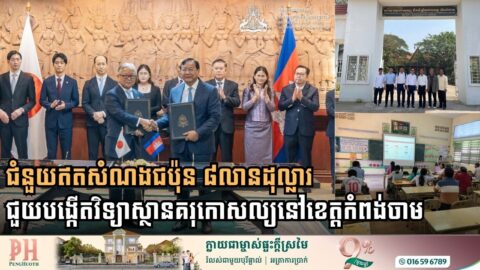
Japan Grants $8 Million to Cambodia for Teacher Training Institute in Kampong Cham
- 25 May 2026
Japan has extended an official grant of approximately $8 million to Cambodia to support the establishment of a teacher training institute in Kampong Cham province, an initiative designed to bolster the educational framework and strengthen teacher capacity across the Kingdom. This financial commitment closely follows a separate announcement of an $11 million grant to the […]
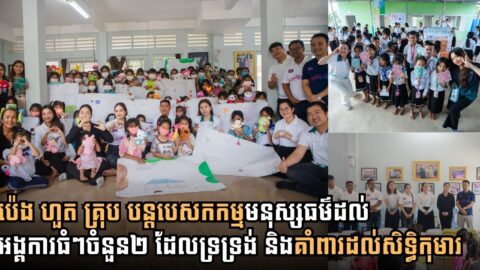
Peng Huoth Group Continues Humanitarian Mission Supporting Children at AFESIP and CCAFO
- 14 May 2026
PHNOM PENH, May 11, 2026 – Guided by its three core Corporate Social Responsibility (CSR) pillars— “Education, Environment, and Society”- Peng Huoth Group, in collaboration with its partners and the collective spirit of residents from its Borey communities, has extended its humanitarian mission to support vulnerable children. This initiative aims to provide encouragement, promote well-being, […]
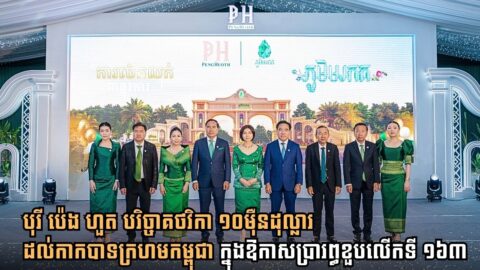
Peng Huoth Group Marks Two Decades of Support for Cambodian Red Cross with $100,000 Donation
- 29 April 2026
Phnom Penh — In a continued demonstration of solidarity and corporate social responsibility, Peng Huoth Group, widely recognized for its Borey Peng Huoth residential developments, has announced a donation of $100,000 to the Cambodian Red Cross for the year 2026. This contribution marks nearly twenty years of active and consistent partnership between the group and […]