

Building and Fire Safety Seminar Q+a

Following the collapse of the supermarket construction in Phnom Penh in July, the promulgation of the Construction Code remains a priority. Britcham-IBC provided Construction & Property Magazine some further insights into why they organised the Building and Fire Safety Seminar with RICS earlier in the year.

1. What was the purpose of the seminar?

To-date Cambodia still does not have a set of Building or Fire Safety standards in the area of construction. Several initiatives within the Government are currently being developed, as well as by the private sector and relevant institutions. This led to the UK Government’s Foreign and Commonwealth Office and UK Trade and Investment to commission the Royal Institution of Chartered Surveyors (RICs) to produce a report on the topic with a view to providing the Cambodian Government with assistance in developing building standards and ensuring better regulation. The Report’s findings and recommendations werepresented to and welcomed by the Government last year. The Report further provided the foundation for the country’s first Building Construction Law, drafted by H.E. Dr. SOK Siphana.

Following on from this, the purpose of the joint IBC and BritCham seminar was to bring together relevant stakeholders – both from the private and public sector – to examine the findings and recommendations of the RICs report and discuss a common approach to the developing building and fire safety standards for Cambodia.

2. In the report, Cambodia lacks of its own building standards codes. What can Cambodia do to improve building standards?

The RICs Report outlines a number of key recommendations on what the Cambodian Government can do to improve building standards. The recommendations are very concrete and RICs have further provided proposals to assist the Government in achieving these goals. Some of these are already underway – for example, the drafting of a legislative framework for the construction sector. Ultimately however, the key to improving Cambodia’s building standards is through active participation and engagement of relevant stakeholders, both from the private and public sector, towards improving the current situation. The business community has a critical role and a shared responsibility in this area. Setting up a Task Force where the private sector can dialogue unanimously with Government and take action is one way of doing this.

3. In the report, it stated that Cambodia will not be able to develop its own building standards codes without foreign assistance. How can foreign assistance help making the codes?

What the RICs report has demonstrated is that foreign assistance in the area of building and fire safety standards can be valuable to Cambodia as it develops its own national standards. Organisations like RICs are able to bring their recognised expertise and extensive experience to assist the Government. It further allows the Government to assess the level of standard that needs to be met in the sector to meet the requirements of foreign property developers operating in Cambodia. This latter point in especially important as having a internationally recognised set of building standards is key to investor confidence. With the property boom we are witnessing and considering that construction is currently a key driver to economic growth in the country, this becomes increasingly critical for Cambodia.

4. How long does it take to develop the codes?

According to RICs, it is hard to put a precise timeline to the time it takes to develop the codes. However, it is not something that can happen from one day to the next. It requires time and investment.

- Video Advertisement -

Related Post

Germany Commits €30 Million Concessional Loan to Power Cambodia’s Rural Electrification Drive

The framework agreement signed between Deputy Prime Minister Aun Pornmoniroth and German Ambassador Christian Berger will finance the Energy Efficiency in Rural Power Supply II Project, supporting sustainable energy transition across the Kingdom. The German government has pledged a new €30 million concessional loan to support the implementation of Cambodia’s Energy Efficiency in Rural Power […]

Improving Livelihoods and Resettlement through the Coastal Community Settlement Improvement Project

Strategic Frameworks for Affordable Housing and Resilient Local Economic Development to Empower Vulnerable Communities Phnom Penh: The Royal Government’s unwavering commitment to citizen welfare and secure housing took a major leap forward as the Ministry of Land Management, Urban Planning and Construction convened the National Consultative Workshop on the Integrated and Resilient Community Resettlement Improvement […]
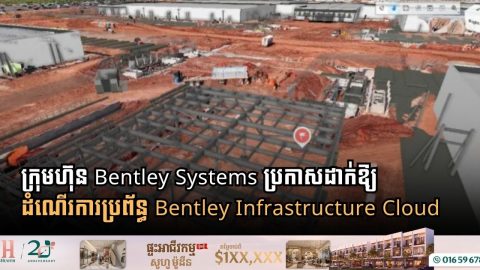
Connecting the Subsurface and Beyond: How Bentley Systems is Revolutionizing Infrastructure Collaboration

Infrastructure data has traditionally lived in silos—scattered across 3D models, PDF blueprints, inspection reports, field photos, and IoT sensors. For project teams, bringing these disparate pieces together has long been a complex and fragmented challenge. Addressing this industry-wide hurdle, Bentley Systems has announced the launch of Bentley Infrastructure Cloud Connect, a foundational new layer designed […]
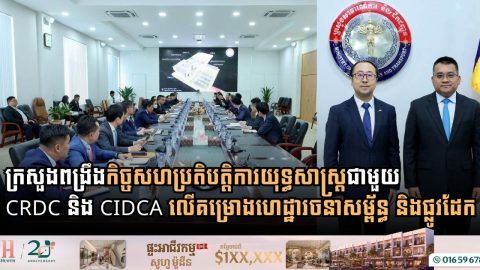
Ministry Strengthens Strategic Cooperation with CRDC and CIDCA on Infrastructure and Railway Projects

Deepening Bilateral Partnerships with China to Advance Bridges, Roads, and Human Capital Development Toward the 2050 Vision Phnom Penh: Efforts to expand Cambodia’s physical infrastructure and transport connectivity achieved a significant milestone as His Excellency Peng Pione, Minister of Public Works and Transport, led a high-level working meeting with delegations from the China Railway Design […]

National Assembly and Ministry of Land Management Review Progress Across Seven Strategic Battlefronts

Firm Commitment to Advancing Urban Aesthetics, Infrastructure Quality, and Sustainable Living Standards Toward the 2050 Vision National Assembly Palace: During the inter-committee meeting between the National Assembly and the Ministry of Land Management, Urban Planning and Construction held on October 27, 2026, the Ministry outlined its rigorous implementation of work tasks across its seven strategic […]
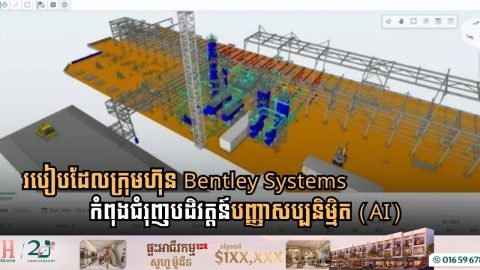
Transforming Infrastructure: How Bentley Systems is Spearheading the AI Revolution

As global urbanization accelerates and the demand for resilient infrastructure surges, the engineering capacity gap remains one of the industry’s greatest hurdles. To address this challenge, Bentley Systems has unveiled a groundbreaking suite of next-generation, AI-powered capabilities designed to empower professionals rather than replace them. Grounded in real-world infrastructure context, these innovations aim to dramatically […]