 English
 ខ្មែរ


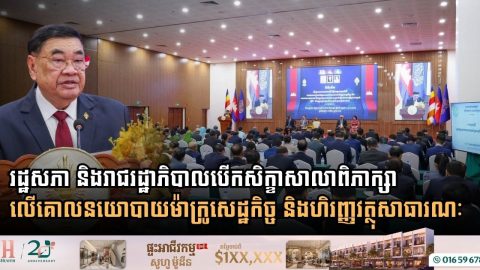
National Assembly and Royal Government Convene Seminar on Macroeconomic and Public Financial Policies
- 13 November 2026

Crafting the National Budget Under a Proactive Stance to Safeguard Territorial Sovereignty, Protect Citizens’ Livelihoods, and Target Growth Amid High Uncertainty The legislative and executive branches engaged in a vital collaborative dialogue during the parliamentary seminar on building macroeconomic and public financial policy frameworks to draft the 2027 Financial Management Law, held at the National […]
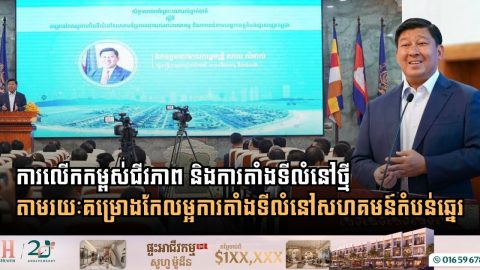
Improving Livelihoods and Resettlement through the Coastal Community Settlement Improvement Project
- 9 November 2026
Strategic Frameworks for Affordable Housing and Resilient Local Economic Development to Empower Vulnerable Communities Phnom Penh: The Royal Government’s unwavering commitment to citizen welfare and secure housing took a major leap forward as the Ministry of Land Management, Urban Planning and Construction convened the National Consultative Workshop on the Integrated and Resilient Community Resettlement Improvement […]
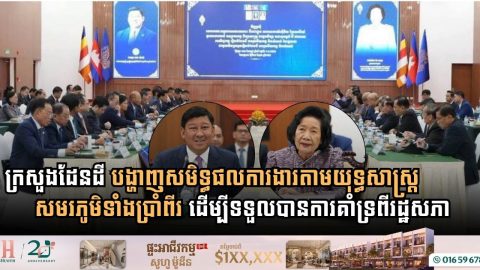
National Assembly and Ministry of Land Management Review Progress Across Seven Strategic Battlefronts
- 7 November 2026
Firm Commitment to Advancing Urban Aesthetics, Infrastructure Quality, and Sustainable Living Standards Toward the 2050 Vision National Assembly Palace: During the inter-committee meeting between the National Assembly and the Ministry of Land Management, Urban Planning and Construction held on October 27, 2026, the Ministry outlined its rigorous implementation of work tasks across its seven strategic […]
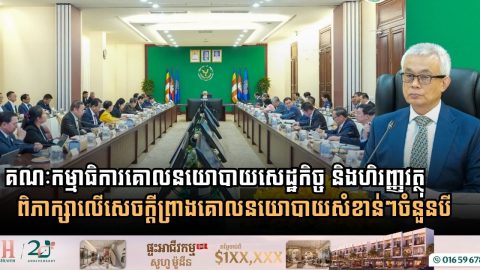
The Economic and Financial Policy Committee Deliberates on Three Major Draft Policies
- 5 November 2026
Government Leadership Drives Industrial Modernization, Workforce Upskilling, and Labor Market Development for the Next Ten Years Efforts to accelerate national economic growth and diversify the production base advanced significantly as His Excellency Aun Pornmoniroth, Deputy Prime Minister, Minister of Economy and Finance, and Chairman of the Economic and Financial Policy Committee (EFPC), led a high-level […]
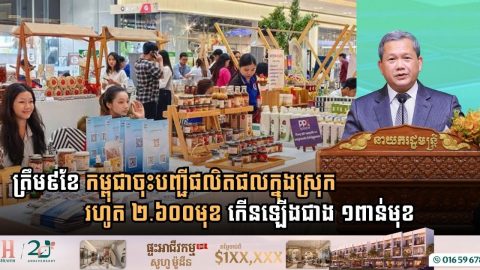
Cambodia Registers Over 2,600 Domestic Products in First Nine Months of 2026
- 31 October 2026
Prime Minister Hun Manet highlights a significant surge in local product registrations, urging broader public and commercial support to bolster national manufacturing and economic resilience. Domestic manufacturing in Cambodia has achieved a major milestone, with approximately 2,600 local products officially registered with the Ministry of Industry during the first nine months of 2026. This figure […]
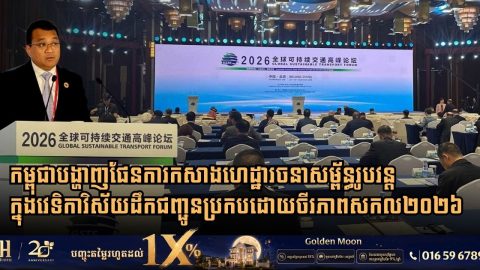
Advancing Sustainable Transport: Cambodia’s Vision for Economic Resilience and Regional Integration
- 2 October 2026
Cambodia highlights infrastructure progress under Pentagonal Strategy–Phase I, emphasizing multi-modal transport development, reduced logistics costs, and smart digital systems Beijing: Advancing sustainable transport systems and embracing digital innovation have become essential drivers for reinforcing economic resilience, facilitating international trade, and deepening regional integration. On the morning of September 22, 2026, during the Global Sustainable Transport […]