 English
  ខ្មែរ
ខ្មែរ 




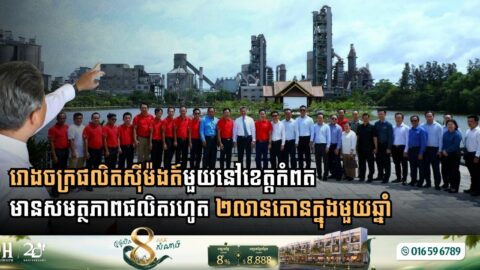
Kampot Cement Operations Reach 2 Million Ton Capacity to Fuel Cambodia’s Infrastructure Growth
- 6 August 2026
Cambodia’s domestic industrial base continues to play a vital role in powering the Kingdom’s rapid physical infrastructure development, led by Kampot Cement, the country’s first and largest cement manufacturing facility. Situated in Kampot province, the state-of-the-art industrial plant maintains a robust production capacity of approximately 2 million metric tons per year. On July 28, 2026, […]

Cambodia Steps Up Support for Domestic Cement Industry to Drive Sustainable Construction
- 15 June 2026
Government ministries collaborate on strategic frameworks to enhance local manufacturing capabilities and economic self-reliance The inter-ministerial meeting of the Private Sector Development Working Group was convened on June 2, 2026, to deliberate on comprehensive support measures for Cambodia’s domestic cement manufacturing industry. The high-level session gathered key representatives from the Ministry of Environment, the Ministry […]

Kampong Speu Province Welcomes New Cement Giant: Factory Inaugurated with Investment Over USD250 Million
- 20 May 2025

Kampong Speu province is set to bolster its industrial landscape with the recent inauguration of a large-scale cement factory, officially opened on 20 May 2025, under the leadership of Prime Minister Hun Manet. The factory, located in Oral district, represents a significant investment of over USD 250 million by Conch KT Cement, marking it as […]