Construction Contracts in Cambodia

In recent years number, there is been a steep increase in the number of constructions projects in Cambodia — more than 22 percent with an estimated value of USD 6.4 billion in 2017. Accordingly, The Ministry of Land Management, Urban Planning and Construction approved a total of 3,052 projects. This investment is driven by the number of China investors in apartments, condominiums, hotels, casinos, and supermarkets. Cambodia, as of today does not have specific regulations on Construction law but has adopted a sub-decree on 19 December 1997 on construction permit followed by Civil Code, 2007 and the Land law 2001.

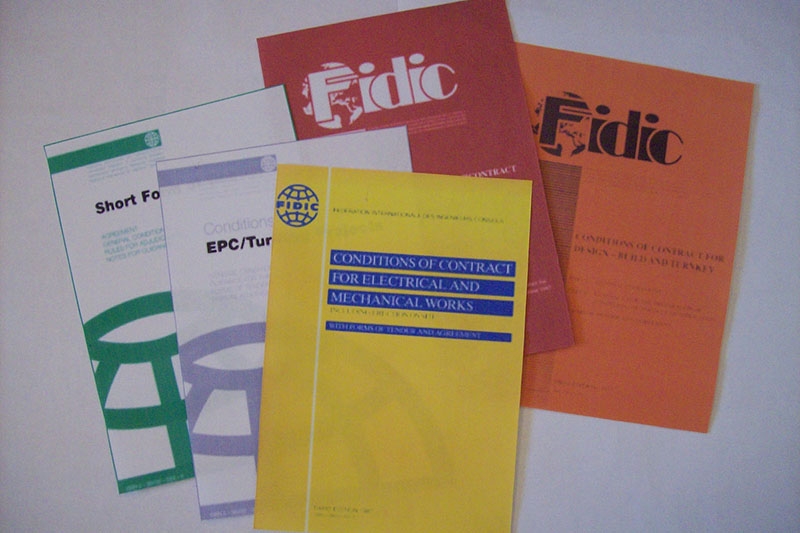
In such absence, Cambodia law does not prescribe any standard form of the construction contract, however, the commonly used forms include the contracts published by FIDIC (International Federation of Consulting Engineers), ICE (Institution of Civil Engineers). This standard form of contract extensively used in the construction industry is the FIDIC form. In order, to have a binding contract, there should be an agreement between two or more parties who are competent to enter into a contract and must satisfy the requirements for legal enforceability. Further, rudimentary requirements of a valid offer, followed by an acceptance of an offer, with the intention of entering into a legally enforceable agreement not void in law, are the other essentials of a valid contract under the law.

Public-private partnership projects may have their own standard form contracts. Usually, this standard contract includes the General Conditions, the Supplementary Conditions, the Specifications, the Drawings, the Bill of Quantities, the Tender, the Letter of Acceptance, the Contract Agreement, and such further documents as may be expressly incorporated in the Letter of Acceptance or Contract Agreement. In addition, there may be a management contract executed in the form of Engineering, Procurement and Construction Management Contracts and are executed between employers and contractors, wherein contractors are hired to manage the completion of a construction project while overseeing developments regarding engineering, procurement, and construction of a project.

For construction there are five kinds of contracts that can be formed and are explained briefly below :

(a) Lump Sum Contract is also called stipulated sum, is the most basic form of agreement between a contractor and a customer. A lump sum contract or a stipulated sum contract will require that the contractor agrees to provide specified services for a stipulated or fixed price. In a lump sum contract, the owner has essentially assigned all the risk to the contractor.

(b) Unit Price Contract In a unit price contract, the work to be performed is broken into various parts, usually by construction trade. This contract type is based on anticipated quantities of items which are counted in the project in addition to their unit prices. The final price of the project depends upon the quantities required to carry out the work.

(c) Cost Plus Contract The cost-plus contract is an agreement which involves the buyer’s consent to pay the complete cost of material and labor in addition to the amount of contractor overhead and profit. This contract type is favored where the scope of work is highly uncertain or indeterminate in addition to the types of labor, material, and equipment being similarly uncertain in nature. Here, the contractor’s profit is set at a fixed amount.

(d) Guaranteed Maximum Price Contract (also known as GMP) contract is a cost-type contract where the contractor is compensated for actual costs incurred plus a fixed fee subject to a ceiling price. The contractor is responsible for cost overruns unless the GMP has been increased via formal change order (only as a result of additional scope from the client, not price overruns, errors, or omissions).

(e) Design-Build Contract is appropriate when the project delivery method is design-build. Traditional contracts are awarded using a design-bid-build system, where the project owner starts by hiring an architect. Once the architect has finished the design phase, the project is put out for bid to general contracting companies.

(f) Integrated Project Delivery Contract (IPD) contracts represent the latest trend towards a more collaborative approach to delivering construction projects. IPD contracts are unique in that they require the involvement of owners, designers, contractors, and key stakeholders on a project as early as possible— sometimes even at the conceptual stage. This contract type results in more transparency among all the parties involved in a construction project. Additionally, both risk and reward are shared by the parties who enter into the IPD contract.

About the Author

Sujeet S. Karkala, Legal Advisor at Sciaroni & Associates. Sujeet is a qualified Indian Lawyer registered with the Bar Council of India. He completed his Masters in Law (LLM) from Duke University School of Law, Durham, North Carolina and obtained a Bachelors Degree in Law from Government Law College, Mumbai, India. Sujeet’s expertise includes corporate law, corporate structuring, international taxation and mergers & acquisitions. He is also experienced in tax restructuring, banking transactions, and joint ventures and has specialized in advising international clients in entering and operating in emerging markets. He is fluent in English and Hindi.

Any construction project must also consider the Royal Government’s Notification dated 26 February 2015 which introduced a standard form for obtaining construction permits.

The requirements are as follows:
(1) to obtain a construction permit and authorization to open a construction site;
(2) to obtain insurance certificate for the constructions site by the construction owner
(3) authorities of all sections and levels must cooperate and monitor all construction sites.

References:
www.fidic.org / www.mlmupc.gov.kh
www.cambodiainvestment.gov.kh/sub-decree-86-on-construction-permit_971219.html
www.sciaroni.zweb99.com/construction-permit-process-in-cambodia-by-sereyrath-kiri

- Video Advertisement -

Related Post

Ministry of Environment and World Bank Join Forces to Protect Vast Ecological Landscapes

Cambodia is taking monumental strides toward a sustainable future, reinforcing its dedication to ecological preservation and green development. In a powerful demonstration of international cooperation, the Ministry of Environment and the World Bank have officially committed to strengthening natural resource management to drive the Kingdom’s sustainable development. This strategic alliance aims to fortify conservation efforts […]

Cambodia receives $73 million in sustainable marine fisheries and coastal zone projects

Cambodia’s pristine coastlines and marine ecosystems are poised for a sustainable revolution, driving both environmental conservation and economic growth for local communities. In an official announcement released on July 13, 2026, the Asian Development Bank in Cambodia unveiled a major milestone for the nation’s blue economy: the implementation of the Sustainable Coastal and Marine Fisheries […]

China Energy International Eyes Major Expansion into Cement, Clean Water, and Green Power

In a significant boost to Cambodia’s industrial and green energy transition, Chinese infrastructure leader China Energy International Group Co., Ltd. has officially declared its intention to expand its investment footprint across the Kingdom. The commitment was highlighted on July 15, 2026, during a high-profile bilateral meeting in China between Cambodian Prime Minister Samdech Thipadei Hun […]

WorldBridge Group and France’s SEMMARIS Partner for a Groundbreaking Fresh Produce Wholesale Market in Phnom Penh

A visionary farm-to-table collaboration set to revolutionize food distribution, bolster sustainable agriculture, and guarantee food security across the Kingdom On July 10, 2026, a monumental partnership unfolded at the Shangri-La Hotel in Phnom Penh, marking a transformative leap forward for Cambodia’s agricultural sector and food supply chain. The Cambodian private sector titan, WorldBridge Group, officially […]

France and Cambodia Forge Billion-Dollar Energy and Infrastructure Alliance

The economic landscape of Cambodia is on the verge of a magnificent sustainability leap as major French enterprises reveal ambitious plans to invest heavily in the Kingdom’s clean energy grid. During a landmark bilateral meeting held on July 9, 2026, Nicolas Forissier, the French Minister Delegate attached to the Minister for Europe and Foreign Affairs, […]

Japan Extends $119 Million Lifeline for Sihanoukville Port Expansion

The landmark financial partnership between Phnom Penh and Tokyo aims to revolutionize Cambodia’s logistics system, dramatically scaling up the capacity of the nation’s premier deep-sea gateway Cambodia’s maritime trade capabilities are poised to undergo a major transformation as the country secures a significant financial investment to overhaul its shipping logistics. On the afternoon of July […]