




Bentley Systems Launches ‘iTwin Engage,’ Making Infrastructure Plans Immersive and Accessible

Bentley Systems has unveiled a new product that blends iTwin, Cesium, Unreal Engine, and open standards, allowing teams and communities to step inside projects before they are built.

This new product was announced during the Year in Infrastructure and Going Digital Awards (YII) conference in Amsterdam on October 15.

Bentley Systems CEO Nicholas Cumins speaks during the main keynote at Year in Infrastructure 2025 and Going Digital Awards. (Photo courtesy of Bentley Systems)

By using iTwin Engage, projects like bridges, tunnels, and power plants aren’t just drawings on paper or models on a screen—they’re full, real-time immersive experiences. The point isn’t spectacle; it’s communication.

iTwin Engage is giving stakeholders a way to see, share, and make decisions with the clarity of standing inside the future they’re building.

“The main hurdle for our users is how to easily, seamlessly visualize a digital twin project,” says Nimrod Friedmann, a senior product manager at Bentley.

“By the time you finish optimizing a model, you’ve already had to make more changes. Our goal was to make this simple, seamless, and immediate,” he added.

The breakthrough behind iTwin Engage lies in the combination of engineering data from Bentley’s cloud-based iTwin platform with Cesium’s 3D Tiles—used for streaming massive datasets—and Unreal Engine, for rendering cinematic-quality visuals.

“Cesium tiles let us stream the data quickly, and Unreal Engine pushes the pixels,” Friedmann explains. “That means you don’t sit around for half an hour waiting for a model to load. It just works. You can explore, enhance, and present in real time.”

Explore. Enhance. Present. That’s the philosophical backbone of iTwin Engage. Teams can instantly explore project data streamed as tiles, enhance scenes with context like lighting, vegetation, or traffic, and present them as narrative-driven experiences.

“This isn’t just about raw data. It’s about telling the story of a project in a way people can consume and believe,” Friedmann says.

Friedmann says the integration of Cesium, iTwin, and open standards, along with Application Programming Interfaces (APIs), also brings artificial intelligence (AI) into the picture.

One of the revolutionary aspects of iTwin Engage is that it invites non-engineers into the process. It democratizes access.

For project teams, that inclusivity is transformative. Decisions no longer rest on static slides or technical files. Instead, they can be shaped by shared experiences, accessible to anyone with a browser.

This simplicity is not an accident; it’s the product ethos. Users don’t need to export, reformat, or switch between different applications. Users create their iTwin once, and from there, they can access it across design, analysis, or advanced visualization. It’s all one source of truth.

“Traditionally, users have to move from software to software because they can’t get what they need in one place,” Friedmann says. “With Engage, they can leverage services from across the cloud while still working with the same project data.”

While iTwin Engage is not specifically an AI product, Friedmann sees AI as central to its future. “AI for us is about simplifying user workflows, not just adding flashy features,” he says.

“Imagine a user defines a region and says, ‘I want to see oaks in the middle of winter in this geography,’” Friedmann explains. “Copilot can then do that automatically. You don’t need to manually place every tree. What used to take a day can be done in 30 minutes. That means users can spend more focus on construction planning or design.”

For Friedmann, iTwin Engage represents more than a product launch. It’s a philosophy. “In a big infrastructure project, visualization is often treated as a secondary concern,” he says. “But if you can’t communicate a project effectively, you can’t build consensus, you can’t secure funding, you can’t move forward. Engage makes communication simple and accessible.”

- Video Advertisement -

Related Post

Bentley Unveils MicroStation 2026: The AI-Powered Future of City Planning and Engineering

Bentley Systems has announced the launch of MicroStation 2026, a major upgrade to its flagship design software. The new release aims to tackle the global shortage of engineers by using artificial intelligence and “real-world” 3D mapping to help professionals design roads, bridges, and utilities faster than ever before. As infrastructure projects become more complex and […]

Tech Pivot Saves Germany’s First All-Digital Highway Project

A landmark infrastructure project in Germany is back on track and shattering efficiency records after a critical mid-course correction in its digital strategy. Viscan GmbH, the company tasked with creating a “digital twin” for the B29 highway expansion in Baden-Württemberg, successfully rescued the project from technical failure by overhauling its data processing systems. The ambitious […]

The Quiet Revolution: How AI is Reshaping America’s Highways

The US Department of Transportation (DOTs) is now utilizing AI to maintain roads and highways, as Alabama has become the latest state to bet its infrastructure budget on AI. For years, the Alabama Department of Transportation (ALDOT) relied on “performance-based budgeting,” a system designed to fund projects based on actual road needs rather than historical precedent. […]
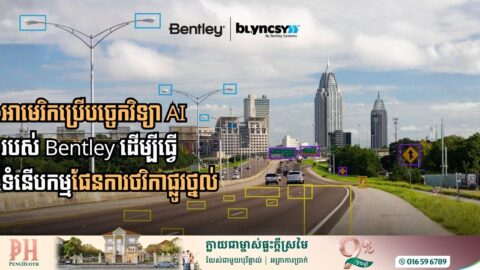
ALDOT Integrates Bentley’s AI to Refine Performance-Based Highway Budgeting

Alabama Utilizes Bentley Tech to strengthen data-driven maintenance planning The Alabama Department of Transportation (ALDOT) is enhancing its long-standing performance-based budgeting model by integrating Blyncsy, an AI-powered solution from Bentley Systems. For more than 15 years, ALDOT has led the way in using data to drive financial decisions, but the manual collection of condition data […]

Bentley Systems Breaks Bottlenecks with New iTwin Capture Workflow

Bentley Systems is redefining the digital twin landscape by launching a more flexible, scalable approach to reality modeling. The new iTwin Capture workflow aims to eliminate the traditional “hardware wall” and high upfront costs that have long hindered engineers and urban planners. For years, infrastructure professionals have struggled with massive datasets—from LiDAR point clouds to […]
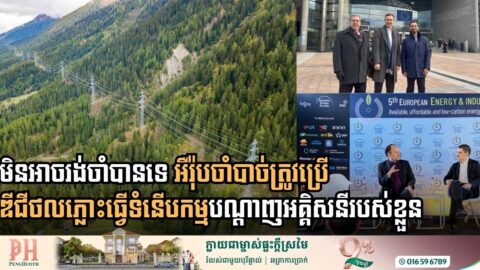
Europe’s Aging Power Grid Faces Digital “Makeover” to Meet 2030 Climate Goals

With many distribution grids expected to exceed their 40-year lifespan by 2030, EU policymakers and industry leaders are pivoting toward a “digital-first” strategy to prevent the system from buckling under the pressure of the green transition. The EU electricity infrastructure currently spans over a million kilometers, serving 600 million customers. To meet climate targets, the […]