Engineering Wonders of the World: Highest Railway Bridge on Earth Nears Completion in India

This article is the first in our new Engineering Wonders of The World series.

The world’s highest railway bridge is in a rugged, mountainous area of northern India – and it is a sight to behold. Hovering 1,170 feet above the Chenab River in the Kashmir Valley of the Himalayas, the steel, arch-supported bridge is taller than the Eiffel Tower. Designed by WSP, the global engineering and design services company, the bridge is also a feat of engineering, ingenuity and digital technology.

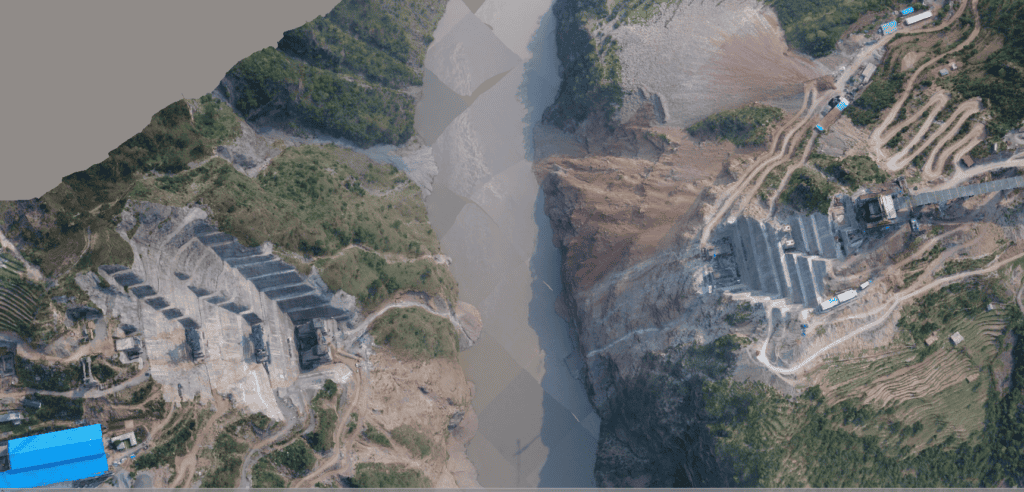
Construction workers and engineers faced formidable challenges, including gaping valleys with steep, rocky slopes, extreme weather that brought high winds, snow and ice, and an isolated location. The Chenab Bridge is also in an active seismic zone.

The teams used huge, 3,000-foot cable cranes installed on opposite banks of the Chenab River to span the vertiginous chasm. They installed gravity-defying steel trestles and concrete pillars into the rocky walls that could withstand 8.0-magnitude earthquakes, 160 mph winds and temperatures of negative 68 F. But beyond heavy machinery, the project also required precise planning, detailed hazard analyses and sophisticated monitoring to ensure the safety and progress of construction.

This is where infrastructure engineering software came in. It helped designers and builders model the bridge’s minute structural details and improve safety and efficiency. 3D modeling allowed them to plan and build in rugged terrain and handle extreme engineering conditions. Another application ensured the project team could safely carry out critical site inspections on time.These solutions trimmed the surveying process by 225 days and cut construction inspection time by 80%.

Aerial view of design renderings depicting the rugged terrain along the river separating two construction sites.

Earlier this month, Indian Railways conducted a successful trial run of an eight-coach train across the record-breaking bridge, marking a significant step toward officially kicking off rail operations.

Officials are heralding the Chenab Bridge as a potential game-changer for local trade and tourism. The bridge enables all-weather rail connectivity, delivering expected boosts to industrial and agricultural sectors, and improvements to quality of life and productivity for commuters and citizens.

“The bridge and the greater connectivity it’s meant to create will be projected by New Delhi as another big victory for the region’s development,” Michael Kugelman, director of the South Asia Institute at the Wilson Center, said in a recent interview with CNN.

The Indian Ministry of Railways says the bridge represents a “monumental leap” toward integrating the Kashmir Valley with the city of Jammu and the broader Indian rail network. “This would foster social integration by facilitating easier movement of people and goods, thereby promoting cultural exchanges and regional development and boosting economic activities,” the ministry said in a press release.

The bridge is part of a large-scale project to accelerate socio-economic development in Kashmir Ladakh by connecting the remote border state with the rest of the country via the Indian Railway network. The Jammu-Udhampur-Srinagar-Baramulla Rail Link (USBRL) project, led by the Indian Ministry of Railways, will upgrade the area’s transportation infrastructure through a series of tunnels and bridges, including the Chenab Bridge.

The Srinagar-Jammu national highway is currently the only land route connecting Kashmir with greater India. Civilian and military travel on the winding, 185-mile road is unpredictable and treacherous due to frequent accidents, closures and congestion caused by harsh winter weather, heavy rains and landslides. The transport of apples, one of the region’s top agricultural products and economic drivers, takes two days by truck from the valley to New Delhi.

“We are getting lot of problems going across the road,” Anil Kumar Mehendru, vice president of the New Kashmir Fruit Association, told CNN. “Once we will be connected by train with the rest of India, it will be a big boost.”

Sources: Bentley’s Blog
By: Jay Moye

- Video Advertisement -

Related Post

MPWT and AIIB Review Feasibility Study for National Road 8 Upgrade Connecting Prek Tamak to Ponhea Kraek

High-level technical session examines environmental-social assessments and financial modeling to accelerate a critical transit corridor across eastern Cambodia Phnom Penh: Upgrading Cambodia’s strategic transport corridors gained momentum as government officials and international financial partners reviewed preliminary engineering and environmental evaluations for a vital regional thoroughfare on National Route 8. According to the meeting session on […]

Prime Minister Inaugurates 98-Kilometer Road Network Worth Nearly $44 Million in Northeastern Cambodia

Modernizing National Road 73 alongside Provincial Roads 377 and 377A, the $43.95 million project enhances climate resilience, boosts agro-logistics, and strengthens trade routes across Kratie and Tboung Khmum. In a major boost to northeastern Cambodia’s transport networks, Prime Minister Samdech Thipadei Hun Manet officially inaugurated three upgraded national and provincial road sections in Kratie and […]

Cambodia Advances Strategic Infrastructure Plan with Upgraded National Road 1 and New Mekong River Bridge

Discussions on JICA’s draft final report highlight a 53-kilometer road widening project and an Extradosed Bridge connecting Phnom Penh to Areyksat along the Southern Economic Corridor As Southeast Asian nations continuously upgrade their transport networks to drive economic integration and regional competitiveness, Cambodia is taking significant strides to modernize its core transit corridors. On Wednesday, […]

National Road 7 Expansion Project Nears Completion as Vital Economic Link Reaches 90% Finish

Accelerated construction on the Skun to Kampong Cham corridor aims for early delivery to boost regional trade and transport efficiency The expansion and upgrade of National Road 7, a critical infrastructure project connecting the Skun area to Kampong Cham city, has reached nearly 90% completion as of March 2026. This significant milestone was highlighted by […]

Cambodia Road Network Expands to Over 20,000 Kilometers in 2025

Strategic infrastructure development adds 426 kilometers to the national network to boost logistics and economic growth The total length of developed roads in Cambodia reached 20,733.91 kilometers by the end of 2025, marking a notable increase of approximately 426.32 kilometers compared to the previous year. This data was highlighted in the 2025 Annual Progress Report […]

Cambodia and Laos to Fast-Track Cross-Border Connectivity with New Ratanakiri-Attapeu Road Link

Joint inspection team to finalize construction zones this February to unlock new trade and economic opportunities Cambodia and Laos have reached a pivotal agreement to conduct a joint technical inspection aimed at defining the specific zones for a new road project connecting Ratanakiri province in Cambodia to Attapeu province in Laos. This initiative is a […]