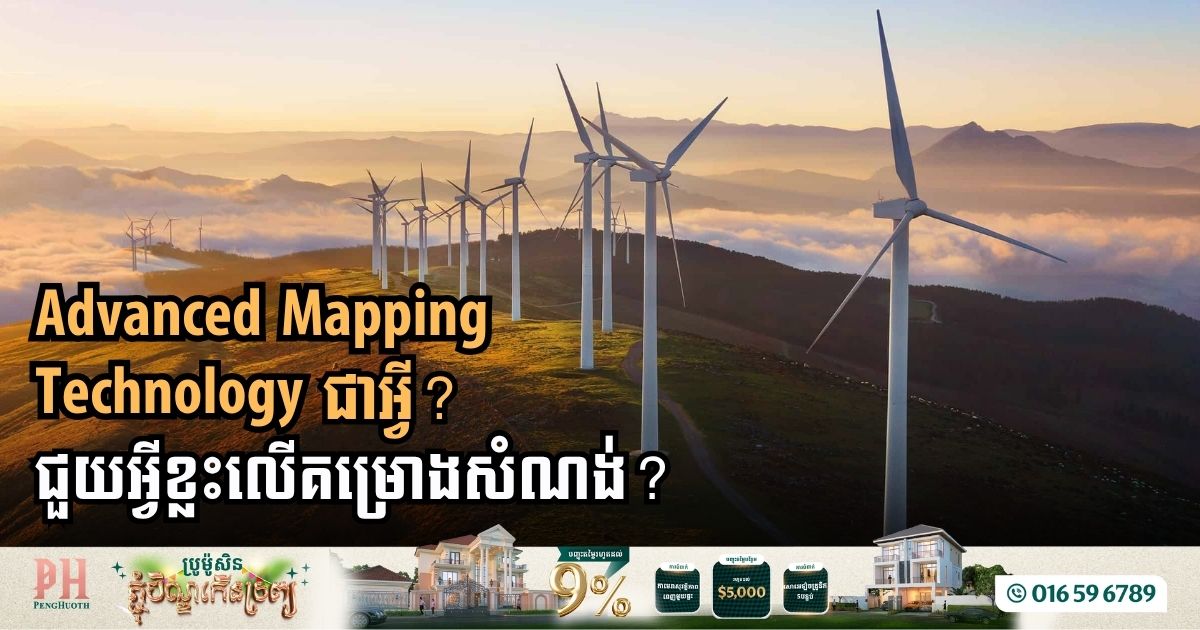
How Advanced Mapping is Revolutionizing the Energy Future

The energy sector is undergoing a massive transformation, driven by the adoption of advanced geospatial technologies that are making a “digital-by-default” approach essential for large-scale energy infrastructure programs.

These precision mapping solutions are fundamentally changing how energy assets—from oil and gas to renewables like solar and wind—are planned, constructed, and maintained, promising greater efficiency, accuracy, and sustainability.

Traditional surveying methods, often prone to manual error and inadequate for complex terrains, are being rapidly replaced by sophisticated geospatial systems. These solutions provide highly accurate data from the earliest planning stages, allowing engineers to create detailed 3D models.

This capability is proving vital for challenging projects, such as siting solar plants on remote hillsides or developing hydropower in complex valleys, enabling infrastructure designs that seamlessly fit into the existing landscape.

Key Impacts of Geospatial Solutions:

  • Enhanced Construction Accuracy: Geospatial data is used to guide heavy construction machinery with minimal deviation, crucial for laying foundations and constructing access roads. This precision reduces the need for expensive rework, saving both time and money.
  • Improved Collaboration: By providing a single, accurate data source, geospatial solutions ensure all stakeholders—engineers, architects, and construction crews—are coordinated, leading to smoother and more efficient project execution.
  • Resilience and Risk Mitigation: Integrating geospatial data with environmental models allows engineers to simulate real-world conditions. This predictive analysis can forecast how flooding might affect a geothermal plant or provide seismic data to design more earthquake-resistant wind turbines, significantly reducing the risk of failures and power outages.
  • Environmental Sustainability: The technology identifies sensitive areas like wetlands or wildlife habitats during planning, helping engineers design projects that minimize ecological disruption and ensure regulatory compliance.
  • Long-Term Asset Management: Beyond construction, geospatial tools are critical for ongoing maintenance. They are used to monitor the condition of power lines (e.g., vegetation encroachment), assess operational risks based on weather, and optimize maintenance routes, extending the lifespan of existing assets.

Recent advancements, such as Cesium’s 3D Tiles for rapid visualization of massive datasets and the integration of geospatial data into digital twins using platforms like Bentley’s iTwin, are making the technology more powerful and accessible.

A prime example of its success is in China, where PowerChina Hubei used a geospatial-data-rich digital twin to strategically site nearly 15,000 solar panels in undulating terrain. This detailed understanding of the natural environment at each panel’s location maximized the solar plant’s production.

Looking ahead, the integration of Artificial Intelligence (AI) and Machine Learning (ML) with geospatial data is set to enhance predictive analytics, allowing planners to anticipate challenges before they arise. Furthermore, drones equipped with these solutions are automating surveying in hard-to-reach areas, improving safety and data collection efficiency.

In essence, these advanced mapping technologies are not just tools for construction; they are foundational to building energy infrastructure that is resilient, environmentally responsible, and adaptable to future challenges.

- Video Advertisement -

Related Post

How Bentley Digital Twins is Reshaping Maritime Inspections

Major engineering firm Haskoning has revolutionized maritime infrastructure inspection by successfully completing a digital-first assessment of the Holyhead Deepwater Jetty in North Wales using Bentley Systems software. A critical asset supporting cruise vessels and contributing over GBP 4.75 million annually to the regional economy, the aging jetty required a comprehensive inspection of its 400 piles […]

Digital Twins: The New Shield Against El Niño’s Cascading Grid Threats

To combat the super El Niño looms for 2026, utility companies are now shifting away from traditional reactive repairs and toward proactive, data-driven resilience using Bentley Systems’ software. In 2025, utility companies are facing a dangerous new reality where weather disasters no longer happen in isolation. Modern power grids are increasingly vulnerable to cascading failures—where […]

AI and Connected Data: The Key to Rebuilding Europe’s Infrastructure

At the Bentley Illuminate 2026 conference, industry leaders revealed that Europe’s massive infrastructure goals—including Germany’s €500 billion investment cycle—rely on a digital transformation powered by Artificial Intelligence (AI) and connected data. As the continent faces aging assets and a shortage of engineers, technology is no longer optional; it is the primary engine for growth. The […]

AI Drones Take Over Bridge Inspections, Saving Millions

The United States is swapping human climbers for AI-powered drones to fix over 600,000 bridges along the Mississippi River, a faster, cheaper, and safer way to maintain crumbling infrastructure. Traditionally, inspecting a massive structure like St. Paul’s Robert Street Bridge is a nightmare. Engineers have to dangle from ropes, snap thousands of photos by hand, […]

The Tech Behind Bentley’s Immersive Digital Twins

In the world of massive infrastructure, the biggest challenge isn’t just building a bridge—it’s helping people visualize it before it exists. Bentley Systems is solving this through its iLab innovation hub, where lead designer Liana O’Cleirigh is deploying a suite of high-tech tools that turn complex engineering data into immersive, human-scale experiences. At the heart […]

How Data-Driven Workflows Are Changing Engineering Delivery

For decades, the engineering and construction industry has relied on the exchange of digital files—the familiar DWGs and PDFs—as the bedrock of project delivery. However, as global infrastructure grows in complexity, a new paradigm is emerging. Experts are calling for an evolutionary crossroads where the industry moves beyond static file handovers toward dynamic, data-driven workflows. […]