What kind of immovable properties are taxable?

With the real estate sector booming, especially in the land and housing markets in Cambodian cities and provinces, understanding the types of taxable immovable property is important for property developers, land broker agencies and the general public to process their tax payment as required by law.

What kind of immovable properties are taxable?

The definition of “Immovable Property” is clearly spelled out in article 13 of the 2010 Law on Finance. The term refers to lands, houses, and other constructions directly built on land. In Cambodia, real estate is taxed only if the property is worth more than 100 million riels, or approximately US$25,000 and must fall under any of the following categories:

  1. Land: Refers to land without buildings and/or land with buildings
  2. House: Refers to a place to live
  3. Buildings or constructions: Refers to buildings and constructions that are connected to land.

Whereas the untaxable immovable property is a kind of property that is worth of 100 million riels or less, according to article 14 of the 2010 Law on Finance, untaxable immovable properties include:

  1. Agricultural land: Such as farmland, ranch land or salt fields. If any part of the agricultural land on which the buildings or constructions are built and not permanently used for agricultural activities, all those parts are taxable.
  2. State properties: Immovable property that is owned by the Royal Government or a governmental institution that is listed as state property.
  3. Religious and charity property: Immovable property belonging to any community or individual that operates only for purely religious and charitable purposes. They are still taxable if the properties are only temporarily rented or given away to someone not for charitable purpose.
  4. Diplomatic property: Immovable property belonging to foreign diplomatic missions or consulates, international organisations and technical cooperation agencies of any state acknowledged by the Royal Government.
  5. Majeure Force: Immovable property that is seriously damaged by force majeure events.
  6. Incomplete buildings: Any home or building under construction less than 80% complete and not yet used. But even if the immovable property is not in use, the land is still subject to tax; and
  7. SEZs Property: Immovable property in special economic zones that directly serves only production activities.

Who is liable for property taxes?

According to the above law, a taxpayer is referred to as a natural person or a legal entity that is determined by law to pay the property tax in various categories. Such persons or entities include:

  1. Proprietor: Refers to a natural person or legal entity which holds a title of possessory right over immovable property or a certificate of ownership over immovable property issued by the cadastral administration.
  2. Occupier: Refers to a natural person or legal entity which doesn’t holds a title of possessory right over immovable property or a certificate of ownership over immovable property issued by the cadastral administration.
  3. Final beneficiary: Refers to a natural person or legal entity which is entitled to the right of use, the right to enjoy, the right of management and the right of final residence on that real estate. A successor is one example of the final beneficiaries.

This means that even if we do not own the property, if we are the one who occupies or gets the direct benefits from the property, then we are liable for property taxes.

In short, the type of taxable property in Cambodia depends on the amount of the property value, type of ownership and the purpose of using that property. Not all of the immovable property owners are subject to be taxed, and it does not mean that all of more than 100 million riels property owners are taxable. It also depends on for what purpose the property is used.

For instance, Ms. “A” owns a hectare of land in Siem Reap. She built a three-storey house on a half-hectare of the land. For the remaining land, she runs a livestock farm. All three-storey houses, in cases worth over 100 million riels, and a half hectare of land on which the houses are built are subject to property tax. The other half hectare of her livestock farm is not taxable as long as the business is approved by the department of the Ministry of Agriculture, Forestry and Fisheries.

Notably, unused properties are also subject to tax, especially land without construction and land with construction but abandoned in cities and areas as defined by the ” Unused Land Appraisal Committee (ULAC).”

- Video Advertisement -

Related Post

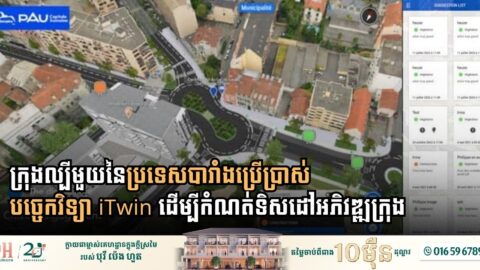
French City Turning 3D Tech Into a Blueprint for the Future

Pau is redefining the future of urban living by utilizing a cutting-edge “digital twin” to transform city planning. By creating a comprehensive 3D virtual model of the entire city, officials have moved beyond static paper reports to offer residents an interactive view of how proposed developments will fit into the landscape. This technology has been […]
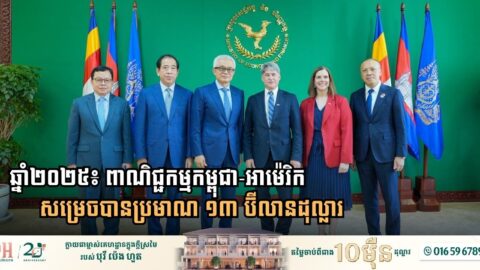
Bilateral Economic Strength: Cambodia-US Trade Reaches $13 Billion as American Investment Climbs to $1 Billion

Finance Minister Aun Pornmoniroth and US-ASEAN Business Council Leader Brian McFeeters Reaffirm Commitment to Driving High-Value Private Sector Growth Across Key Industrial Sectors Economic cooperation between Cambodia and the United States reached a major financial benchmark as total bilateral trade volume reached approximately $13 billion in 2025. The figures were highlighted in an official press […]
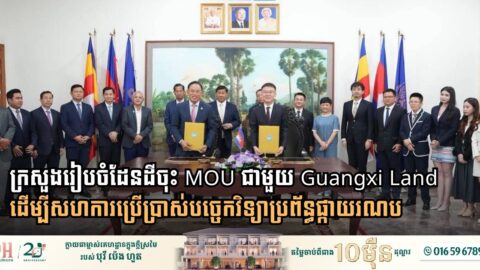
MLMUPC Signs MoU with Guangxi Land to Enhance Land and Urban Management via Satellite Technology

The partnership aims to modernize cadastral mapping, urban planning, and spatial data infrastructure, bolstering Cambodia’s competitive standing within ASEAN Phnom Penh: Amid intensifying regional competition across Southeast Asia to build smart cities and modern spatial infrastructure, Cambodia has made a decisive move to integrate space technology into its land management framework. On July 28, 2026, […]
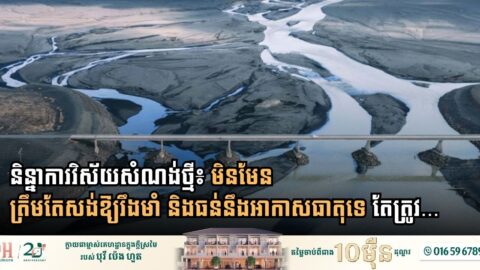
Infrastructure Leaders Turn to Digital Twins and AI to Combat Climate Risks

A new study by Bentley Systems and Verdantix has shown that leading infrastructure companies around the world are shifting their focus toward digital twins and artificial intelligence (AI), aiming at building more effective climate-resilient infrastructure. The study was revealed at London Climate Action Week, where industry leaders and policymakers gathered to exchange ideas, discuss challenges, […]
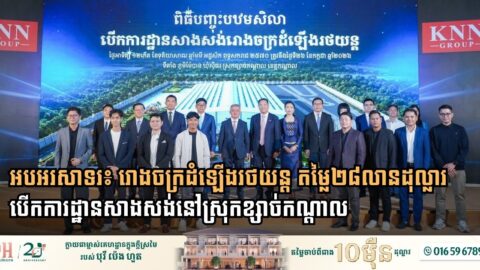
KNN Automotive Breaks Ground on $28 Million Vehicle Assembly Plant in Kandal

Cambodia’s industrial sector took another major step toward high-value manufacturing as KNN Automotive, a subsidiary of KNN Group, officially broke ground on a $28 million vehicle assembly plant in Ksach Kandal district, Kandal province. The groundbreaking ceremony held on July 26, 2026, was presided over by Chea Vuthy, Secretary General of the Cambodian Investment Board […]
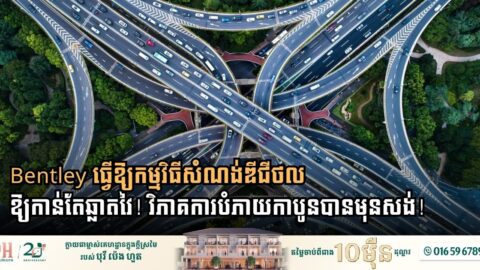
Bentley Systems Expands Carbon Analysis Tools for Infrastructure Projects

Bentley Systems is highlighting its carbon analysis software as a tool to help infrastructure organizations reduce emissions, improve project efficiency, and comply with increasingly strict environmental regulations. The software, available through Bentley Infrastructure Cloud, is designed to help engineers and project teams assess the carbon impact of infrastructure projects from the earliest stages of planning […]