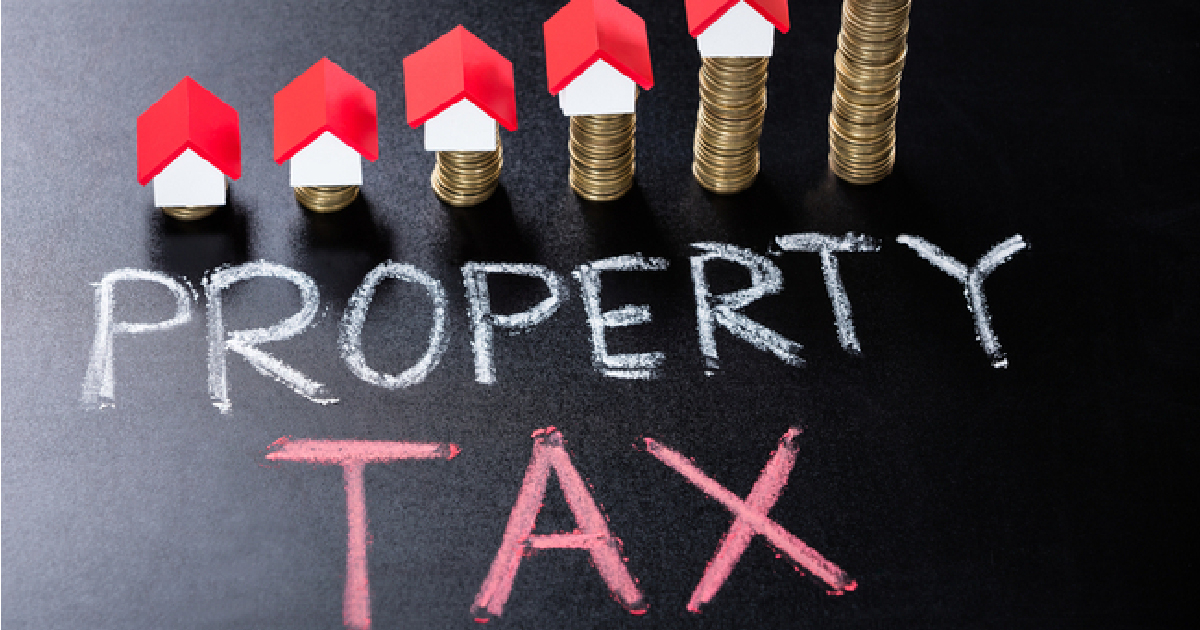
What kind of immovable properties are taxable?

With the real estate sector booming, especially in the land and housing markets in Cambodian cities and provinces, understanding the types of taxable immovable property is important for property developers, land broker agencies and the general public to process their tax payment as required by law.

What kind of immovable properties are taxable?

The definition of “Immovable Property” is clearly spelled out in article 13 of the 2010 Law on Finance. The term refers to lands, houses, and other constructions directly built on land. In Cambodia, real estate is taxed only if the property is worth more than 100 million riels, or approximately US$25,000 and must fall under any of the following categories:

  1. Land: Refers to land without buildings and/or land with buildings
  2. House: Refers to a place to live
  3. Buildings or constructions: Refers to buildings and constructions that are connected to land.

Whereas the untaxable immovable property is a kind of property that is worth of 100 million riels or less, according to article 14 of the 2010 Law on Finance, untaxable immovable properties include:

  1. Agricultural land: Such as farmland, ranch land or salt fields. If any part of the agricultural land on which the buildings or constructions are built and not permanently used for agricultural activities, all those parts are taxable.
  2. State properties: Immovable property that is owned by the Royal Government or a governmental institution that is listed as state property.
  3. Religious and charity property: Immovable property belonging to any community or individual that operates only for purely religious and charitable purposes. They are still taxable if the properties are only temporarily rented or given away to someone not for charitable purpose.
  4. Diplomatic property: Immovable property belonging to foreign diplomatic missions or consulates, international organisations and technical cooperation agencies of any state acknowledged by the Royal Government.
  5. Majeure Force: Immovable property that is seriously damaged by force majeure events.
  6. Incomplete buildings: Any home or building under construction less than 80% complete and not yet used. But even if the immovable property is not in use, the land is still subject to tax; and
  7. SEZs Property: Immovable property in special economic zones that directly serves only production activities.

Who is liable for property taxes?

According to the above law, a taxpayer is referred to as a natural person or a legal entity that is determined by law to pay the property tax in various categories. Such persons or entities include:

  1. Proprietor: Refers to a natural person or legal entity which holds a title of possessory right over immovable property or a certificate of ownership over immovable property issued by the cadastral administration.
  2. Occupier: Refers to a natural person or legal entity which doesn’t holds a title of possessory right over immovable property or a certificate of ownership over immovable property issued by the cadastral administration.
  3. Final beneficiary: Refers to a natural person or legal entity which is entitled to the right of use, the right to enjoy, the right of management and the right of final residence on that real estate. A successor is one example of the final beneficiaries.

This means that even if we do not own the property, if we are the one who occupies or gets the direct benefits from the property, then we are liable for property taxes.

In short, the type of taxable property in Cambodia depends on the amount of the property value, type of ownership and the purpose of using that property. Not all of the immovable property owners are subject to be taxed, and it does not mean that all of more than 100 million riels property owners are taxable. It also depends on for what purpose the property is used.

For instance, Ms. “A” owns a hectare of land in Siem Reap. She built a three-storey house on a half-hectare of the land. For the remaining land, she runs a livestock farm. All three-storey houses, in cases worth over 100 million riels, and a half hectare of land on which the houses are built are subject to property tax. The other half hectare of her livestock farm is not taxable as long as the business is approved by the department of the Ministry of Agriculture, Forestry and Fisheries.

Notably, unused properties are also subject to tax, especially land without construction and land with construction but abandoned in cities and areas as defined by the ” Unused Land Appraisal Committee (ULAC).”

- Video Advertisement -

Related Post

Kampong Chhnang Emerges as a Growing Industrial Hub with Over Two Thousand Enterprises

Governor Sun Sovannarith outlines the province’s rapid economic expansion and strategic location during a high-profile gathering with Acting Head of State Hun Sen Kampong Chhnang Province has experienced a notable surge in industrial activity, now hosting a total of 2,712 factories, enterprises, and handicraft bases across its jurisdiction. Among these operational establishments, 42 are classified […]

Cambodia and China Celebrate Opening of New $30 Million Rubber Factory in Tboung Khmum

Jointly inaugurated by Prime Minister Hun Manet and Ambassador Wang Wenbin, the Kims Rubber facility aims to boost agro-industrial exports to the European Union Cambodia has officially inaugurated a major international-standard rubber processing facility in Tboung Khmum Province, marking another step forward in the nation’s agricultural modernization. Valued at approximately $30 million, the factory is […]

Bentley Systems Unveils Ai-Powered Software To Accelerate Substation Design

Bentley Systems has launched OpenUtilities Substation+, a new model-based design platform featuring built-in “agentic” AI to safely automate complex engineering workflows​ in the utilities infrastructure sector. The + version was launched following the surge in global electricity demand from widespread electrification and new data centers. The utilities sector faces immense pressure to design power substations […]

Construction of Bassac River Bridge Linking Chak Angre Krom and Prek Pra Reaches 73% Completion

The construction of the highly anticipated bridge across the Bassac River, connecting Chak Angre Krom to Prek Pra, has achieved a major milestone, reaching 73% completion by the end of May 2026. According to the inspection team on 01 June 2026, led by HE Soung Heng, Secretary of State and Project Director, to monitor the […]

Borey Peng Huoth Unveils Major New Residential Project Linked to Upcoming Prek Pra Bridge

The Phum Nimith Project connects Chbar Ampov directly to Hun Sen Boulevard, promising rapid value appreciation and exclusive launch incentives Borey Peng Huoth, one of Cambodia’s prominent real estate development corporations, has announced the official grand opening and sales launch of its newest residential development, named the Phum Nimith Project. The highly anticipated launch event […]

Cambodia Evaluates Environmental Impact of Planned Lubricant Factory in Kandal

Cosmic Oil Cambodia Co., Ltd. has proposed the development of a brand-new lubricant oil production factory spanning more than four hectares of land in Kandal Province. The industrial initiative progressed further following a formal assessment update shared via the Ministry of Environment on May 26, 2026. To thoroughly evaluate the potential footprint of the project, […]