Mixed Use and Retail Development: a Story of Value-added by Design

A mixed-use and retail development is a real estate mission with planned integration of combinations of retail, office, residential, hotel, recreation or other functions. It is pedestrian-oriented and contains elements of a live-work-play environment. From a developer’s perspective a development should maximize space usage, bear upscale amenities and strong architectural expression that tends to mitigate traffic and sprawl.

A mixed-use development is not a standardized product form. It acclimatizes in locality because of its existing and appearance in a city-center or upcountry area. The density levels are generally higher in a city-center setting but not necessarily in some cases or depending on market outlook by country.

In Thailand or countries in South East Asia, there is a strong trend for property developers considering a mixed-use development as being a popular format as an extension to their core business lines, particularly from residential, because it is perceived as having the convenience of live-work-play options in a single location and satisfying its inhabitants’ desire to live in a community environment in a big city. However, there are issues of risk inmixed-use developments and this is where design thinking comes in play.

Design thinking for mixed-use developments is a concept whereby a design should reflect the dynamic of public space for place making with a combination of architecture and the right mix of retails and entertainment. The design should speak to the space and vice versa. Design can instill and provide good leverage between the designer’s concept, the community perspective, communications, and, most importantly, connectivity that creates values and cultures.

Mixed-use is all about place making by design thinking. The best definition for place making in this context is a creation of vibrant, pedestrian-friendly areas with a mix of complementary land uses whereby a designer’s thoughts bear a significant aspect throughout the development process.

In terms of retail, place making by design thinking means shopping or dining that is less about selling and more about creating an experience for anyone. Mixed-use should be sensitive to the market area’s history or its prospective attitude and strongly visually tie its design features into it. The mixed-use design needs to be superior in all of its aspects; it could be of moderate quality in some aspects but not all. The idea leading to success for such developments is based on upon striking the right dynamic balance.

Seamless design is another relatively new concept for the retail market in Asia based on the design thinking paradigm. The architect becomes the client’s consultant by infusing and collaborating with multi-faceted or multi-branded concepts of individual space usage thus effectively transmuting architectural, interior, communication and landscape designs into a single original master design based on the platform.

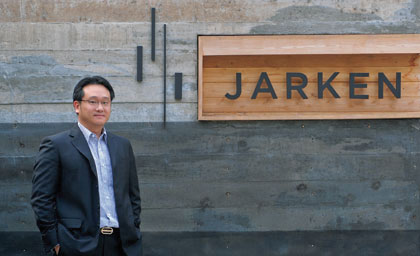
At JARKEN we believe that innovation arises from creativity, intelligence, and understanding. There are no absolute answers in design without strong and rigorous attempts to pursue any unanswered quests. To add value onto a built environment, mixed-use and retail should answer to a large number of publics over time horizon. Financial and economic aspects for success may be of great importance, but so are astuteness and belief in design that allows for the interaction of both.

By JARKEN Group of Companies

- Video Advertisement -

Related Post

Driving the Value Chain: Kampong Speu Tyre Plant Hits Monthly Production Capacity of Over 60,000 Units

Following an inter-ministerial inspection led by the CDC, Sundance Industries ramps up export-driven commercial manufacturing, signaling Cambodia’s strategic transition toward heavy industrial processing… The manufacturing ecosystem in Kampong Speu Province has achieved a new milestone, with a prominent automotive component and tyre factory demonstrating the capacity to manufacture over 60,000 units per month. This manufacturing […]

Australia Backs Mega Solar Project via Infrastructure Bonds

Through a partnership with SchneiTec Jupiter, a $150 million infrastructure bond aims to expand domestic solar capacity and reduce reliance on volatile fuel imports. The Australian Government is actively paving the way for large-scale investments into Cambodia’s clean energy ecosystem, aiming to significantly decrease the Kingdom’s dependence on foreign fuel imports in the coming years. […]

A $117 Million Economic Lifeline: Prime Minister Hun Manet Inaugurates Newly Expanded National Road 7

The newly upgraded 4-lane highway connecting Skun and Kampong Cham town is projected to deliver a 15.27% economic return, slashing travel times and boosting agricultural trade… In a major boost to Cambodia’s internal logistics network, a vital 45.489-kilometer section of National Road 7 connecting the Skun roundabout to the Kizuna Bridge roundabout in Kampong Cham […]

Borey Peng Huoth Partners with FTB to Launch Unprecedented 7.25% Fixed-Rate Home Loans

On the morning of July 11, 2026, a milestone partnership took place at the Borey Peng Huoth Grand Star Platinum sales office located in Chbar Ampov district. Borey Peng Huoth, one of Cambodia’s premier residential developers, officially signed a Memorandum of Understanding (MoU) with the Foreign Trade Bank of Cambodia (FTB) to introduce an exclusive […]

Toyota Launches Advanced Hilux Travo Assembly Line in Cambodia

Presided over by high-level Cambodian and Japanese officials, the manufacturing expansion drives local sourcing to 20% and signals surging global corporate confidence in the Kingdom’s industrial ecosystem. Toyota Tsusho Manufacturing (Cambodia) has officially inaugurated a state-of-the-art production line for its globally recognized next-generation vehicle, the Toyota Hilux Travo, marking a pivotal expansion in Cambodia’s rapidly […]

France Advances Massive Canal Project with Digital Engineering

France is currently undertaking the construction of the Seine-Nord Europe Canal, a €7.3 billion project set to become the continent’s most ambitious waterway initiative in a century. Stretching 107 kilometers, the canal will provide France with direct freight access to major northern European ports like Rotterdam and Antwerp. To overcome the immense engineering challenges of […]