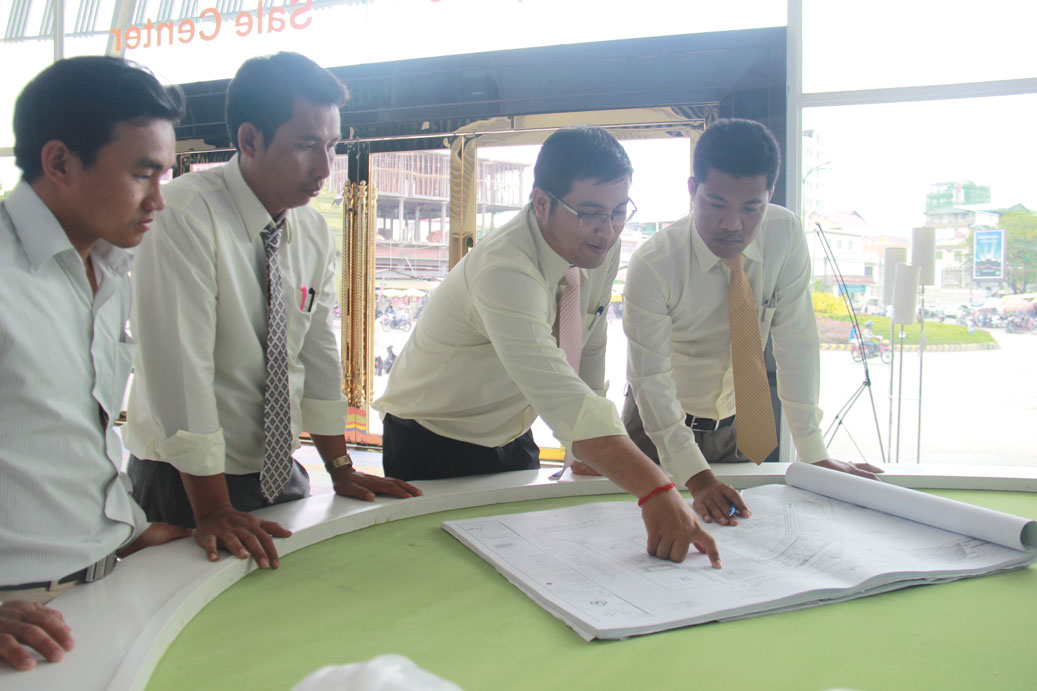
The Role of Building Inspectors Explained

The sheer number of processes behind successfully completing a quality building, from commissioning to designing to constructing, means that inspectors play a crucial role. However, many remain uncertain of the exact role of inspectors on construction projects.

Tieng Samphors, Head of Independent Inspectors of Mega Asset Management Co., Ltd, a subsidiary of leading real estate developer Overseas Cambodian Investment Corporation (OCIC), shared his experiences with Construction & Property Magazine.

“Inspection duties provide so many benefits to the building owner including ensuring the building is built to proper technical, safety and quality standards, being well landscaped, saving costs and materials, meeting the schedule and budget so as to minimise environmental impact during and after completion,” he said.

Generally, inspector’s responsibilities change during different project stages. At the drawing stage, the landscape or architecture design is not a priority as this is based on the negotiations between architect and the owner.

But in this interim stage, inspectors mainly focus on how the foundations and structural works are designed to ensure they will meet the technical requirements for wind resistance, handling load, and meeting planned schedule including the cost to see where costs can be saved for the owner.

During the building stage, they inspect construction technologies, safety at and around the site, quality assurance and quality control. In this stage, they mainly inspect the plan drafted by structural engineers based on the soil testing and compare it with their own tests. If any errors are found, they will inform contractor to immediately make changes.

Although assigned people control each part of a building project, inspectors need to inspect everything by coordinating with them. If they find any errors, they will discuss them with the respective responsible staff to seek solutions.

Independent inspectors are not controlled by the project manager. They can directly report any serious errors they find to the developer, seek approval from the architect, and then report them back to the constructor for changes based on international standards.

Though it seems like inspectors would require high qualifications and comprehensive knowledge on building works, Sampors explained that inspectors can have similar qualifications to other engineers or architects. “Inspectors usually keep learning from real practice, experiences with different projects, mistakes and they sometimes seek advice from their lecturers at school.”

A career building inspector since 2008, Samphors works with a team of over 20 inspectors at his company who mainly focus on the structural and foundation works of OCIC projects.

Projects that hire consultants don’t usually need inspectors since the consultancy will fulfill the dual role as site inspector and designer to ensure the plans and works progress properly.

Some developers use both inspectors and consultancies on specific projects, according to Samphors. OCIC projects Olympia City and Reviera Condominium have hired consultancies working together with inspectors to provide double checks.

However, some highly technical work requires qualified consultants because the developer’s inspectors cannot deal with it. By observing and learning from the consultants though it is hoped the inspectors can undertake those tasks in future.

The size of a project also impacts whether permanent inspectors or consultants are used. “For short-term projects, developers don’t usually hire permanent inspection staff as it costs more than hiring the consultancy, but for long-term projects, developers like OCIC must hire permanent inspection staff because it costs them less than hiring consultancy firms,” explained Samphors.

Just like in other technical areas, inspectors for large and small developers in Cambodia face challenges, such as lacking of a full range of testing equipment to enhance their work, and adequate human resources.

“So far, most of the graduate engineers we recruit from local universities don’t have enough practical skills at real construction sites and have just learned the theories,” Samphors pointed out. “When facing real work, they can’t deal with it, so we need to spend a lot of time and effort to train them ”.

- Video Advertisement -

Related Post

Kampong Cham Becomes First Cambodian Province to Finalize Precise Local Administrative Boundary Maps

Landmark mapping initiative paves the way for advanced economic corridors, digital integration with Google Maps, and comprehensive rural modernization under the Pentagonal Strategy In a historic milestone for Cambodia’s local governance and territorial management, Kampong Cham has officially become the first province in the nation to establish accurate, clear, and definitive administrative boundary maps for […]

Cambodia Nears Completion of Strategic Border Ring Road in Northeastern Provinces

Funded by the Border Infrastructure Fund, the infrastructure project in Mondulkiri and Ratanakiri achieves over 95% of its construction targets Cambodia’s ambitious infrastructure initiative to establish a continuous border ring road is nearing full completion, with construction teams successfully executing the vast majority of planned developments in Mondulkiri and Ratanakiri provinces. From the commencement of […]

Bentley Systems Unveils OpenUtilities Substation+ to Fix Fragmented Grid Design          

Bentley Systems has launched OpenUtilities Substation+, an AI-supported 3D design software designed to eliminate fragmented utility data. By unifying isolated civil, electrical, and structural information into a single standards-aligned model, the platform fixes the data gaps that stall automation and derail digital twin initiatives. By consolidating these distinct disciplines into a single architecture, the software […]

Chinese Enterprises Expand Industrial Footprint in Svay Rieng Special Economic Zone

Two manufacturing firms pledge capital to the Qilu SEZ following a successful provincial delegation visit to Shandong Province and Zibo City Svay Rieng Province is poised for further industrial expansion as two Chinese companies have officially committed to investing in the region’s prominent Qilu Special Economic Zone. This new capital injection aims to significantly expand […]

Borey Peng Huoth Unveils Phum Nimith Project Bridging Major Economic Hubs in Phnom Penh

On the occasion of its official sales launch on June 5, 2026, Borey Peng Huoth unveiled its brand-new residential masterpiece, the Phum Nimith Project. Serving as the inaugural development of the company’s highly anticipated third phase, known as Vibol Phum, this project is uniquely situated within a sprawling 600-hectare mixed-use development enclave owned by Borey […]

Execution Over Ambition: Bentley Systems Drives the Next Era of Wind Energy Infrastructure

At the WindEurope 2026 conference, the wind energy sector marked a major shift from setting ambitious clean energy targets to executing them at scale. Driven by corporate power purchase agreements and massive demand from data centers, the industry is moving away from government subsidies. However, this rapid growth faces significant hurdles, including complex permitting processes, […]