 English
 ខ្មែរ


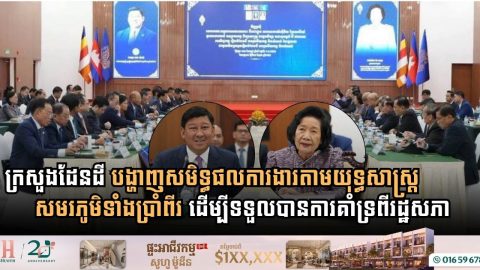
National Assembly and Ministry of Land Management Review Progress Across Seven Strategic Battlefronts
- 7 November 2026
Firm Commitment to Advancing Urban Aesthetics, Infrastructure Quality, and Sustainable Living Standards Toward the 2050 Vision National Assembly Palace: During the inter-committee meeting between the National Assembly and the Ministry of Land Management, Urban Planning and Construction held on October 27, 2026, the Ministry outlined its rigorous implementation of work tasks across its seven strategic […]
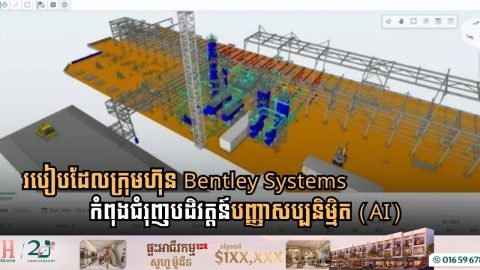
Transforming Infrastructure: How Bentley Systems is Spearheading the AI Revolution
- 7 November 2026
As global urbanization accelerates and the demand for resilient infrastructure surges, the engineering capacity gap remains one of the industry’s greatest hurdles. To address this challenge, Bentley Systems has unveiled a groundbreaking suite of next-generation, AI-powered capabilities designed to empower professionals rather than replace them. Grounded in real-world infrastructure context, these innovations aim to dramatically […]
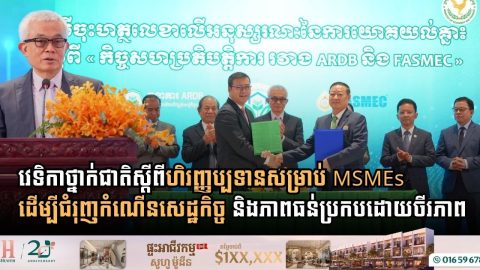
The 1st National Forum on Financing for MSMEs 2026 to Robust Financial Ecosystems to Drive Sustainable Economic Growth
- 6 November 2026
Efforts to bolster the operational capacity and financial inclusion of Micro, Small, and Medium Enterprises (MSMEs) achieved a significant milestone with the convening of the 1st National Forum on Financing for MSMEs 2026, held under the central theme of “MSME Access to Finance”. The grand forum officially commenced on the morning of October 27, 2026, […]
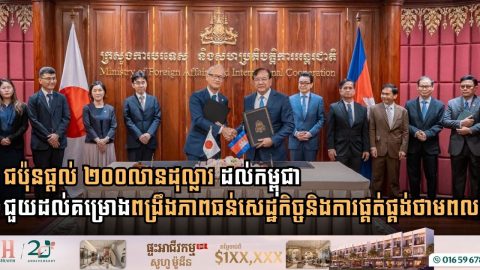
Japan Extends $200 Million Concessional Loan to Boost Cambodia’s Economic Resilience and Energy Security
- 6 November 2026
A landmark financial agreement signed by senior diplomats aims to reinforce supply chains, stabilize energy management, and deepen the comprehensive strategic partnership between the two nations. Japan has officially extended a 30 billion Japanese yen concessional loan, equivalent to approximately $200 million, to support Cambodia in executing the project on enhancing economic resilience and stable […]
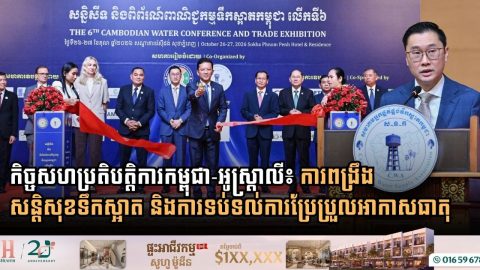
Cambodia-Australia Cooperation Strengthens Clean Water Security Amid Rising Climate Change Pressures
- 5 November 2026
The 6th Cambodian Water Conference and Trade Exhibition Unveils Innovative Technologies and Strategic Partnerships to Ensure Sustainable Water Supply Phnom Penh: Amid escalating global and regional pressures driven by climate change, the Ministry of Industry, Science, Technology, and Innovation, the Cambodian Water Supply Association, and the Australian Embassy in Cambodia jointly hosted the 6th Cambodian […]
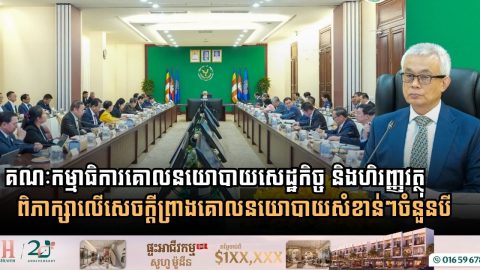
The Economic and Financial Policy Committee Deliberates on Three Major Draft Policies
- 5 November 2026
Government Leadership Drives Industrial Modernization, Workforce Upskilling, and Labor Market Development for the Next Ten Years Efforts to accelerate national economic growth and diversify the production base advanced significantly as His Excellency Aun Pornmoniroth, Deputy Prime Minister, Minister of Economy and Finance, and Chairman of the Economic and Financial Policy Committee (EFPC), led a high-level […]