 English
  ខ្មែរ
ខ្មែរ 
Advancing Sustainable Transport: Cambodia’s Vision for Economic Resilience and Regional Integration
- 2 October 2026
Cambodia highlights infrastructure progress under Pentagonal Strategy–Phase I, emphasizing multi-modal transport development, reduced logistics costs, and smart digital systems Beijing: Advancing sustainable transport systems and embracing digital innovation have become essential drivers for reinforcing economic resilience, facilitating international trade, and deepening regional integration. On the morning of September 22, 2026, during the Global Sustainable Transport […]
Ministry of Land Management Urges Construction Sector Modernization to Drive Economic Flow and Elevate Living Standards
- 25 September 2026
Ministry leadership highlights strict enforcement of the Law on Construction, master planning, and technical certification systems to safeguard urban safety and improve residents’ quality of life Phnom Penh: Modernizing the construction and real estate sector remains a critical pillar for sustaining national economic growth and elevating living conditions across Cambodia. On September 10, 2026, the […]
Cambodia’s Land Ministry Expands Legal Framework with Over 230 Regulatory Instruments to Upgrade Construction and Urban Standards
- 13 September 2026
Ministry enacts 65 legal codes and advances 165 draft regulations to ensure safety, structural quality, and sustainable urban development across the Kingdom Phnom Penh: Establishing a comprehensive legal framework and clear technical guidelines remains a foundational priority for the Royal Government of Cambodia in regulating urban development and building practices. In early September, the Ministry […]
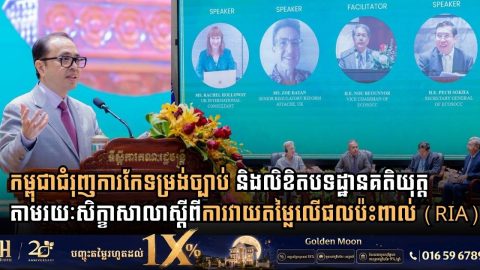
Cambodia Accelerates Legal Reforms Through National Workshop on Regulatory Impact Assessment and Good Practice Regulation
- 7 September 2026
Permanent Deputy Prime Minister Vongsey Vissoth leads multi-agency session with British experts to refine regulatory drafting and enhance economic competitiveness Phnom Penh: Modernizing Cambodia’s legal ecosystem and improving the efficiency of regulatory frameworks achieved a key institutional benchmark aimed at strengthening public administration and fostering a predictable business environment. On August 25, 2026, the Office […]
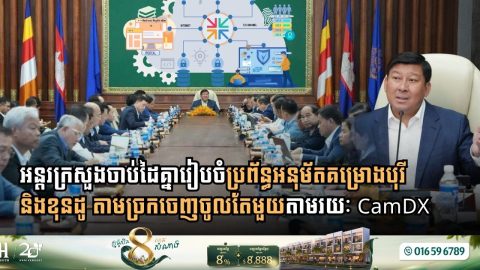
Cambodia Streamlines Borey and Condo Approvals Through Inter-Ministerial CamDX Framework
- 3 September 2026
Ministry of Land Management coordinates multi-agency integration via the single-window system to reduce real estate investment risks and enhance buyer confidence Phnom Penh: Real estate development and housing administration in Cambodia have entered a transformative phase aimed at establishing transparent investment protocols and protecting consumer rights. On August 26, 2026, the Ministry of Land Management, […]
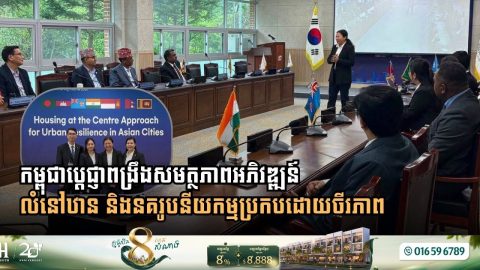
Cambodia Enhances Sustainable Urban Planning Capacity Through Regional Training in South Korea
- 2 September 2026
Housing ministry delegates participate in UN-Habitat supported program focusing on the “Housing at the Centre” approach to build climate resilience across Asian cities Gangwon State: As rapid urbanization and environmental vulnerabilities continue to reshape municipalities across Asia, sustainable housing strategies have emerged as a critical foundation for resilient urban development. Addressing these systemic challenges, delegates […]