 English
  ខ្មែរ
ខ្មែរ 

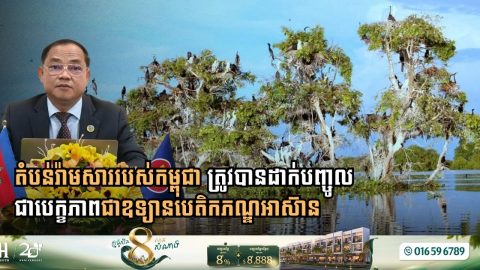
Prek Toal Ramsar Site Officially Nominated as Cambodia’s Third ASEAN Heritage Park
- 23 August 2026
Unanimous endorsement by ASEAN member states paves the way for Battambang’s iconic wetland sanctuary to join Virachey and Bokor National Parks as a major conservation milestone The Prek Toal Ramsar Site, located within the Tonle Sap Biosphere Reserve in Battambang province, has achieved a major international milestone after being officially nominated for designation as an […]
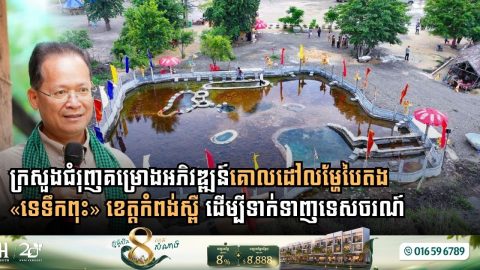
Ministry of Environment Accelerates Development of “Te Teuk Pus” Natural Hot Springs into Green Destination in Kampong Speu
- 17 August 2026
Led by Minister Eang Sophalleth, the project aims to establish sustainable tourism infrastructure, uplift local indigenous livelihoods, and safeguard rare thermal waters and surrounding biodiversity The Royal Government of Cambodia, through the Ministry of Environment, is advancing plans to transform the “Te Teuk Pus” natural hot springs into a premier green relaxation destination in Kampong […]
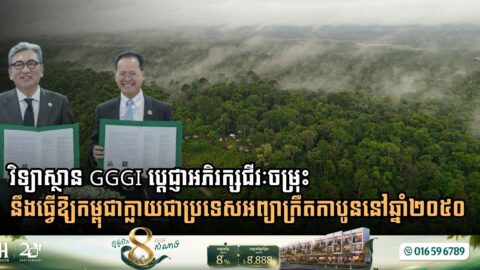
GGGI and Ministry of Environment Partner to Advance Biodiversity and Carbon Neutrality by 2050
- 6 August 2026
A newly signed cooperation agreement for 2026 to 2028 focuses on climate resilience, forest restoration, and Article 6 carbon market development across Cambodia Cambodia is reinforcing its commitment to a sustainable future through an expanded partnership with the Global Green Growth Institute, aimed at safeguarding national biodiversity and accelerating the Kingdom’s journey toward net-zero emissions. […]
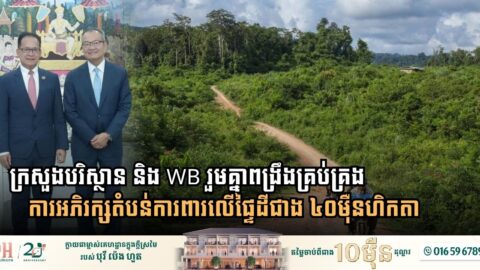
Ministry of Environment and World Bank Join Forces to Protect Vast Ecological Landscapes
- 23 July 2026
Cambodia is taking monumental strides toward a sustainable future, reinforcing its dedication to ecological preservation and green development. In a powerful demonstration of international cooperation, the Ministry of Environment and the World Bank have officially committed to strengthening natural resource management to drive the Kingdom’s sustainable development. This strategic alliance aims to fortify conservation efforts […]
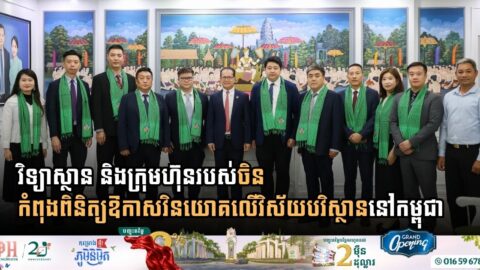
Chinese Research Institute and Major Corporations Explore Strategic Green Investment Opportunities in Cambodia
- 3 July 2026
In a significant move toward fostering sustainable economic ties, a high-level Chinese delegation comprising leaders from a prominent research institute and several major corporations has initiated talks to explore green investment opportunities within Cambodia. The collaborative effort took center stage during an official meeting held on the afternoon of June 23, 2026, at the Ministry […]
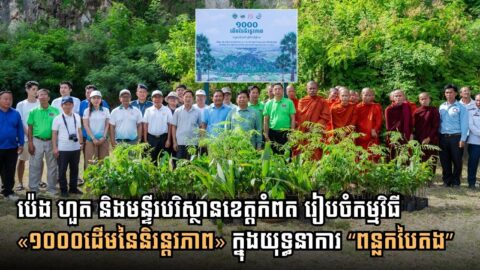
Rooting for the Future as Kampot Greens Its Iconic Landscape with Thousand Tree Initiative
- 2 July 2026
Peng Huoth Group joins forces with environmental authorities and IUCN to plant trees at Phnom Kampong Trach, supporting Cambodia’s 2050 carbon neutrality goal In a collaborative effort to expand Cambodia’s forest canopy and nurture a deep-seated culture of environmental stewardship, a major reforestation event successfully took place in the scenic landscapes of Kampot province. Organized […]